The quiet shift
"I've shifted from telling agents what to do, to asking them what to do, and pulling the best thread."
It sounds like a small change in vocabulary. It is not. It is one of the biggest shifts happening in how serious people work with AI right now — and most organizations have not noticed it yet.
For two years, the conversation around AI has been dominated by prompts. How to phrase them. How to chain them. How to stuff more instructions into them. That entire conversation assumes a very specific relationship: the human already knows the answer, and the model is a tool that types faster.
The most effective AI users have quietly walked away from that assumption. They have stopped issuing commands. They have started thinking out loud with a system that thinks back.
Three generations of AI work
It helps to name what has actually changed. There have been three generations of AI work in the last decade, and each one asks something different of the human sitting in front of the screen.
- ›Write SQL
- ›Summarize documents
- ›Generate code
- ›Review architecture
- ›Improve code
- ›Find bugs
- ›"What problem should we solve first?"
- ›"What opportunity are we missing?"
The people getting the most out of AI right now are almost entirely in the third generation. Everyone else is still trying to write a slightly better prompt.
Pulling the best thread
The phrase that keeps coming up in these conversations is pulling the best thread. It is worth taking seriously as a metaphor.
When you ask a good model an open question — not do this, but what should we do? — you rarely get one answer. You get a fan of possible directions. Some are obvious. Some are wrong. One or two are quietly excellent.
The skill is not in the asking. The skill is in the pulling. Looking at five plausible threads and recognizing which one has real leverage for your business, your customers, your quarter. Following it further. Discarding the rest.
That is not prompt engineering. That is judgment, applied at machine speed. And it looks nothing like the AI demos people are used to.
Context changes everything
There is a reason most enterprise AI still feels generic, even with the best models on the market. It is not the model. It is the absence of context.
Improve customer retention with a loyalty program, better onboarding emails, and a stronger nurture sequence.
Enterprise customers drop after identity verification. That stage has 3× the industry abandonment rate. Fixing it will likely move annual revenue more than a homepage redesign.
Same model. Same question. The difference is context. And once you have seen the difference, you cannot unsee it.
Why context engineering matters
Prompt engineering is not dead, but it is no longer where the advantage lives. The advantage now belongs to the teams that can feed AI trusted, well-shaped context on demand.
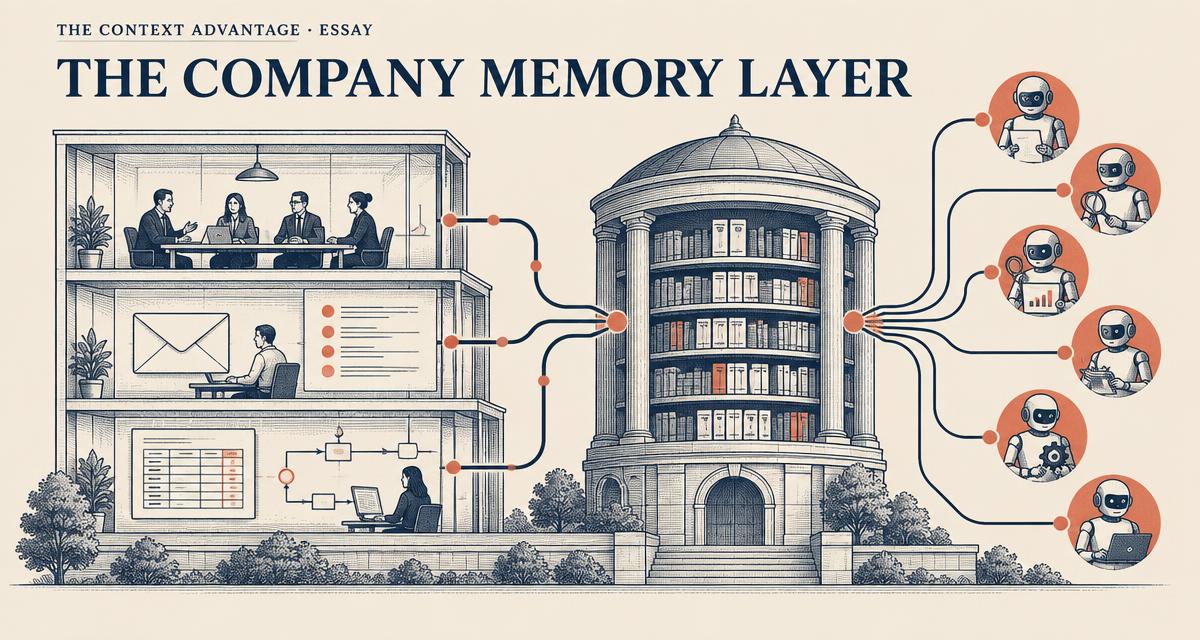
Every one of those layers used to be an internal chore. Nobody got promoted for maintaining the semantic layer. Nobody wrote a keynote about metadata quality. In the agentic era, those layers are the product. They are what turns a general model into a specific competitive advantage.
This is the shift that a small group of data professionals have already started calling, correctly, context engineering.
What this means for data teams
For most of the last decade, a data engineer's job was to move data reliably from one place to another. Ingest, transform, load, repeat. Pipelines were the product.
That is not going away, but it is no longer the job. In the agentic era, the highest-leverage work on a data team is not building another pipeline — it is building the organizational context that AI will lean on for the next ten years.
The data engineers who see this early will not be replaced by AI. They will be the ones building the systems that AI depends on — lakehouse, semantic models, knowledge graphs, metadata, governance, and the agents that inherit all of it by default.
The future is not more instructions
The temptation, in a moment like this, is to double down on the old habits. Longer prompts. More tools. Bigger context windows. Another round of demos.
The organizations that win the next decade will do something quieter and harder. They will invest in the context layer — the meaning, the memory, the governance — and they will train their people to think with AI instead of at it.
"The future isn't humans giving AI increasingly detailed instructions. It's humans bringing judgment while AI explores possibilities. The organizations that win won't simply build smarter AI. They'll build richer context."
Five moves for next week
- Notice one task this week where you told the model what to do — try asking what it thinks you should do instead.
- Write down the top three questions your business needs answered, not the top three prompts you want to run.
- Audit one AI feature: list every piece of context it can see, and every piece it silently cannot.
- Invest one hour in the semantic layer or a single definition your team disagrees on. That is context engineering.
- Identify one decision this quarter where AI could explore options and a human could pull the best thread.