Field notes from the agentic era.
Practical essays on enterprise AI, context engineering, and the 4 C's — Context, Control, Cost, and Choice. New pieces most weeks. No hype, no fluff.
 Latest
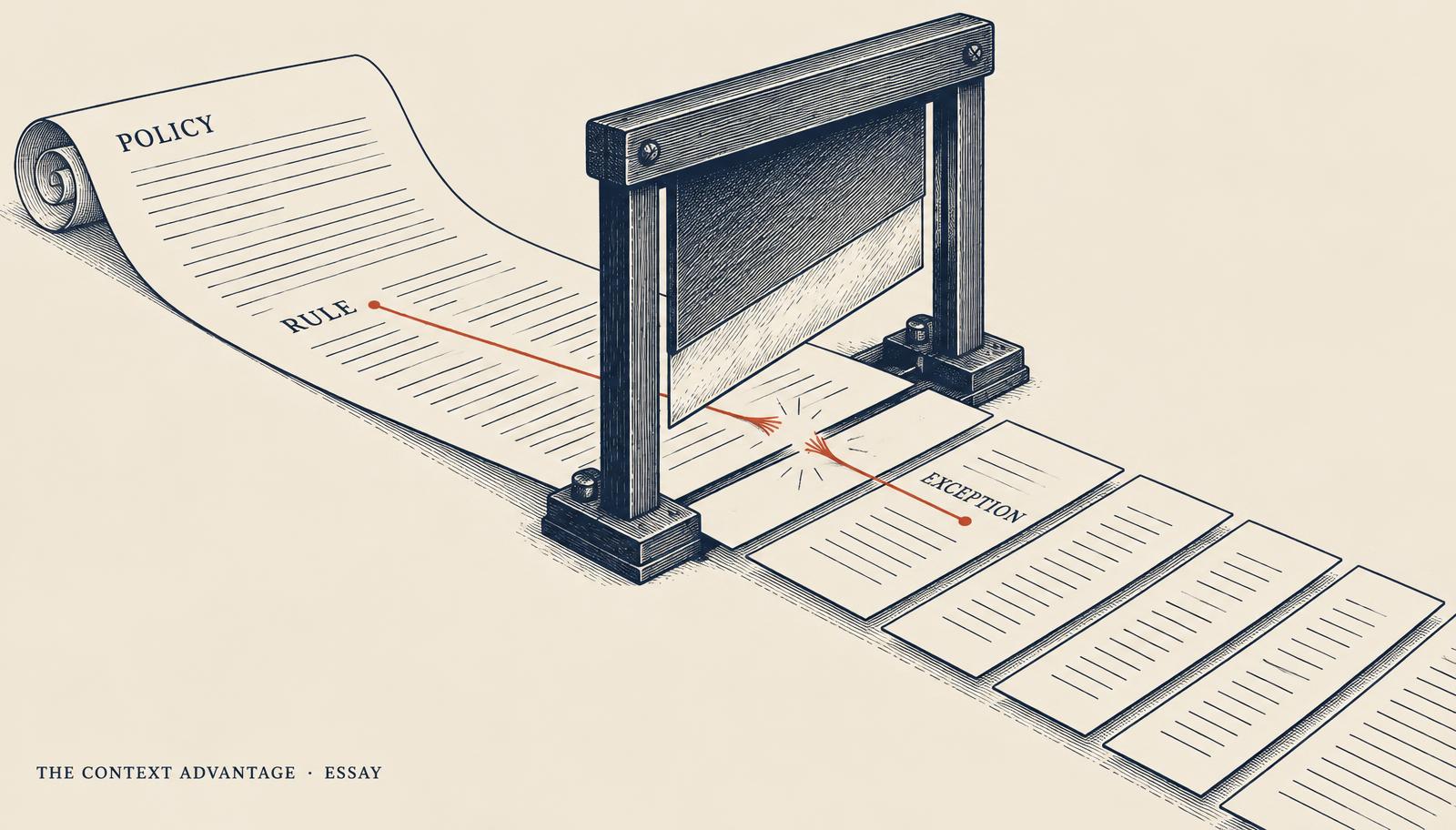
Why Document Chunking Destroys Business Context and What Production AI Teams Do Instead
Business meaning does not arrive in five-hundred-token rectangles. When a fixed-size splitter cuts a rule away from its exception, the model receives half of a truth and answers it with full confidence and a citation.
Read the essay
Latest essays
86 total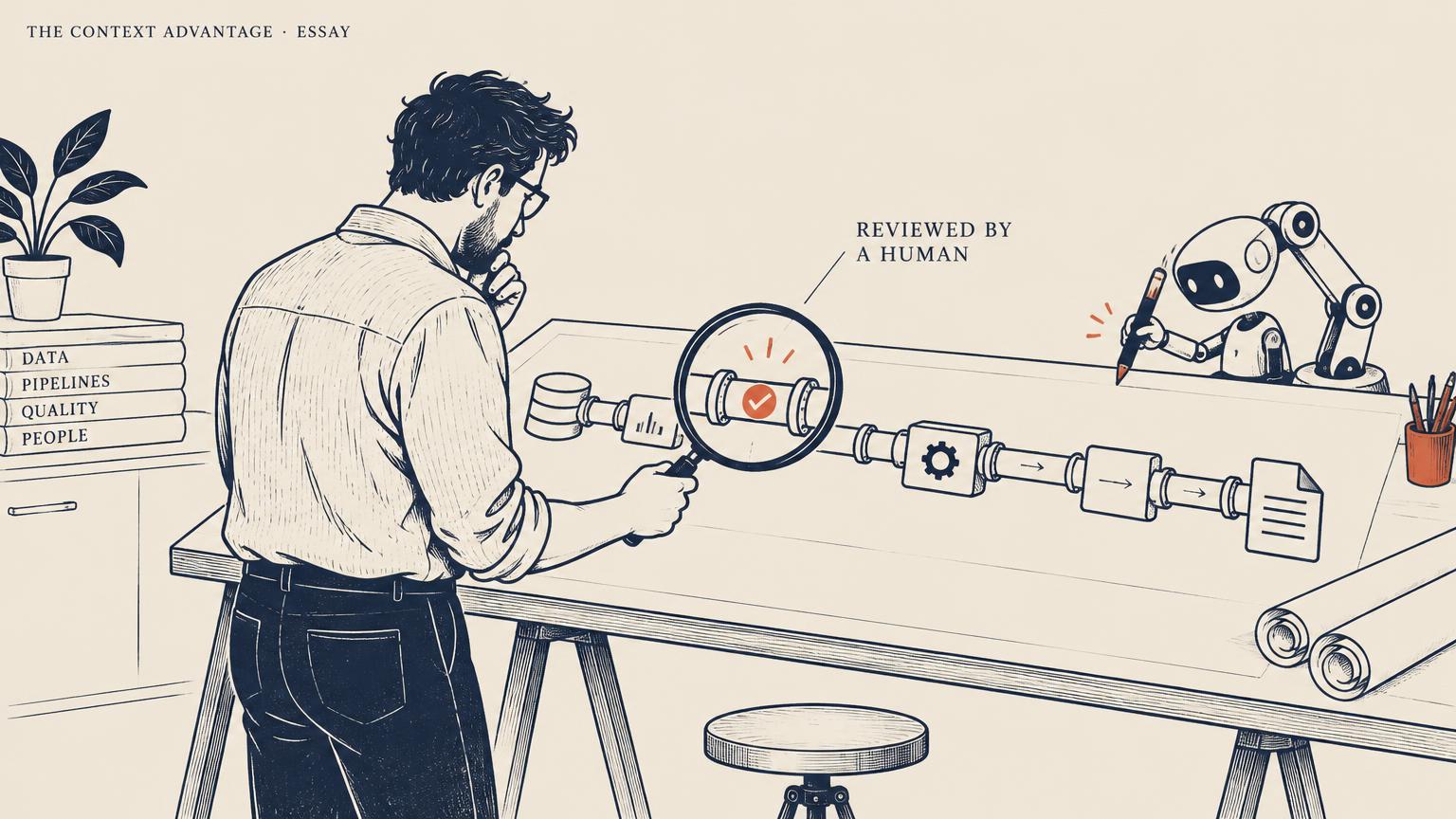 Career
How Data Engineers Prove Their Value When AI Agents Write the Pipelines
Agents can now draft a pipeline in minutes. That does not make the data engineer smaller. It moves the value from writing the code to deciding what the code must mean, proving it is right, and owning what happens next.
 Control
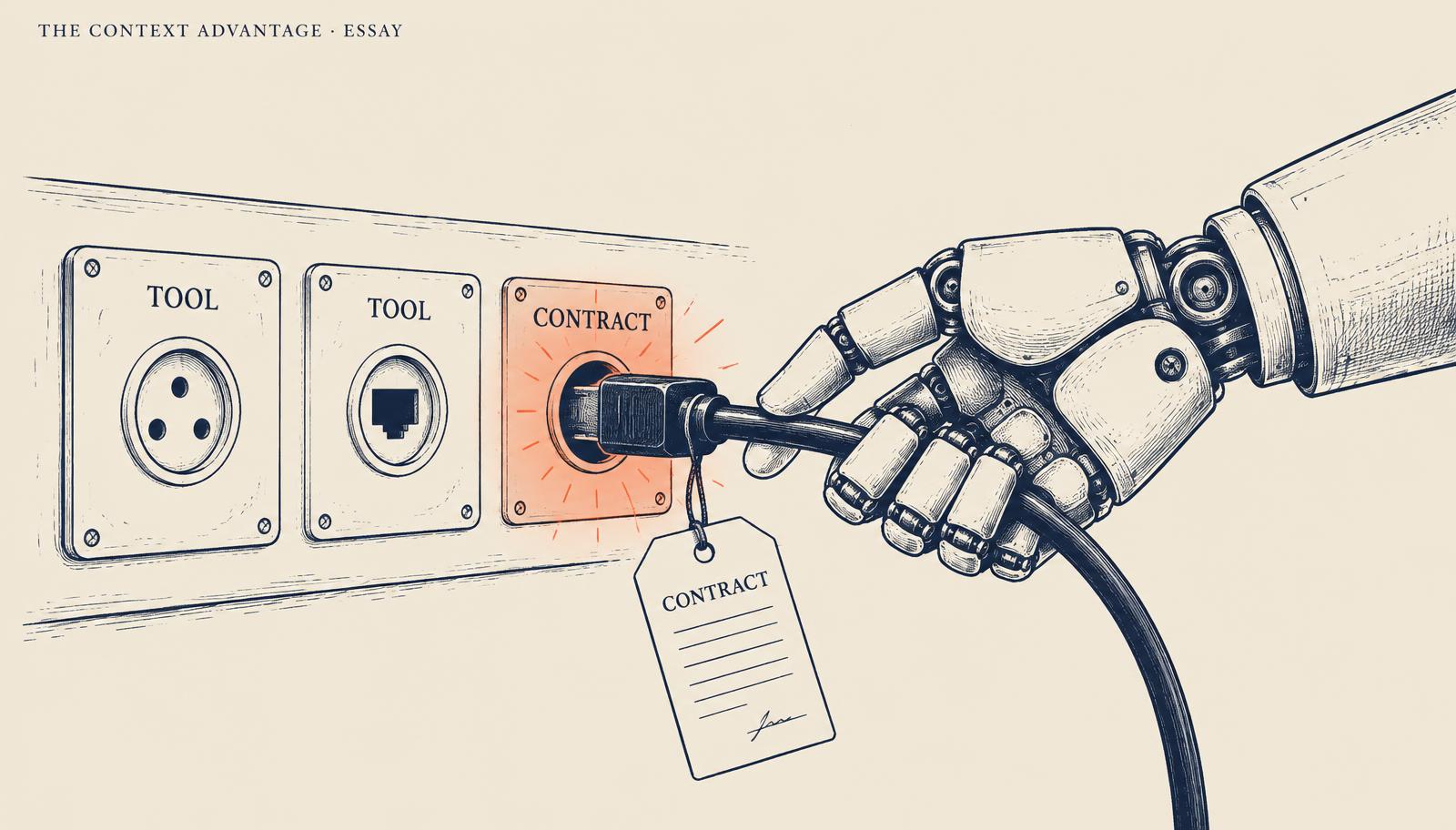
Why AI Agents Misuse Enterprise Tools and How Tool Contracts Fix It
Most agent failures in production are not reasoning failures. They are tool failures: vague descriptions, loose inputs, silent errors, and nobody who owns the interface. A written tool contract fixes all four.
 Context
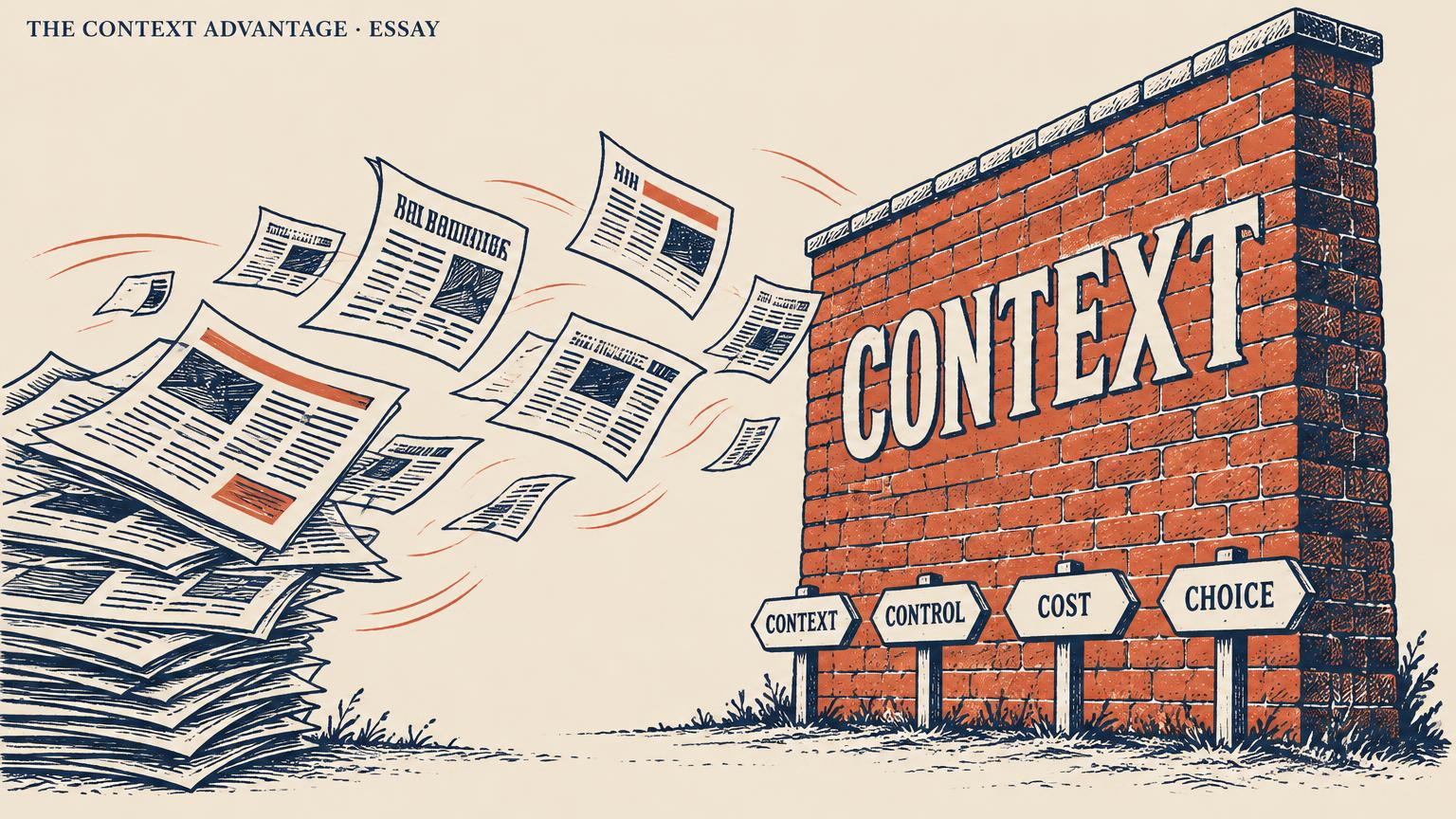
Why Every New AI Agent Announcement Still Hits the Same Context Wall in Production
The headlines change every week. The reasons enterprise agents stall do not. A practical way to read Data and AI news through Context, Control, Cost, and Choice before it reaches your roadmap.
 Context
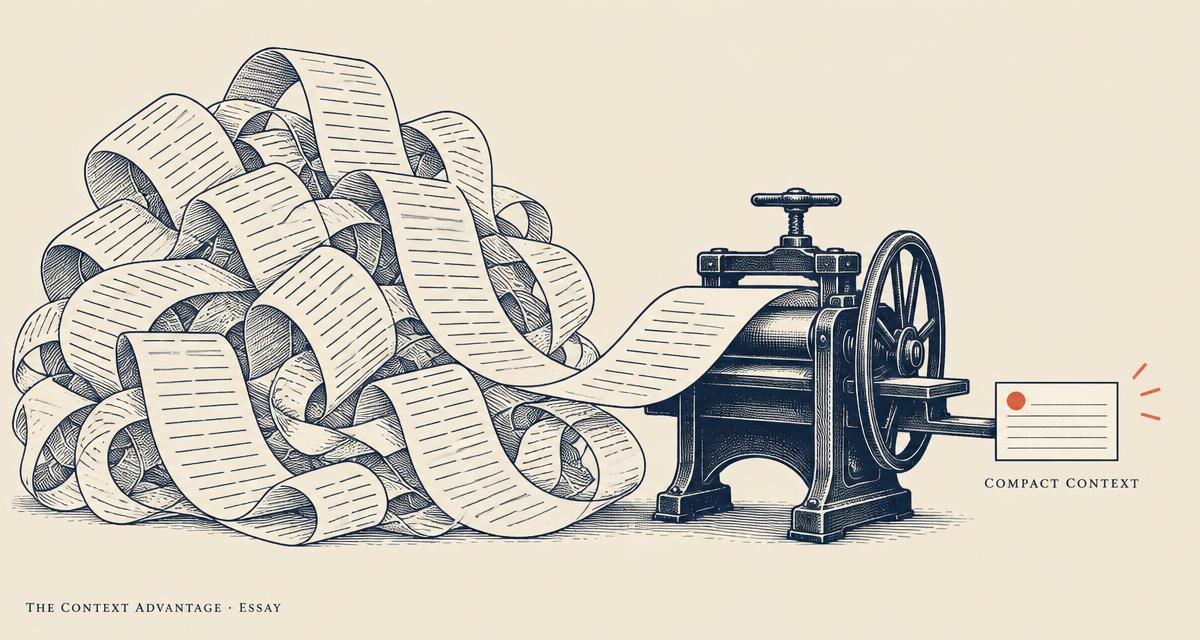
Why Context Compaction Beats Giant Token Windows in Production AI Agents
A million-token window is a storage limit, not a strategy. Production agents that stay fast, cheap, and correct keep a small, curated working memory, no matter how long the task runs.
 Control
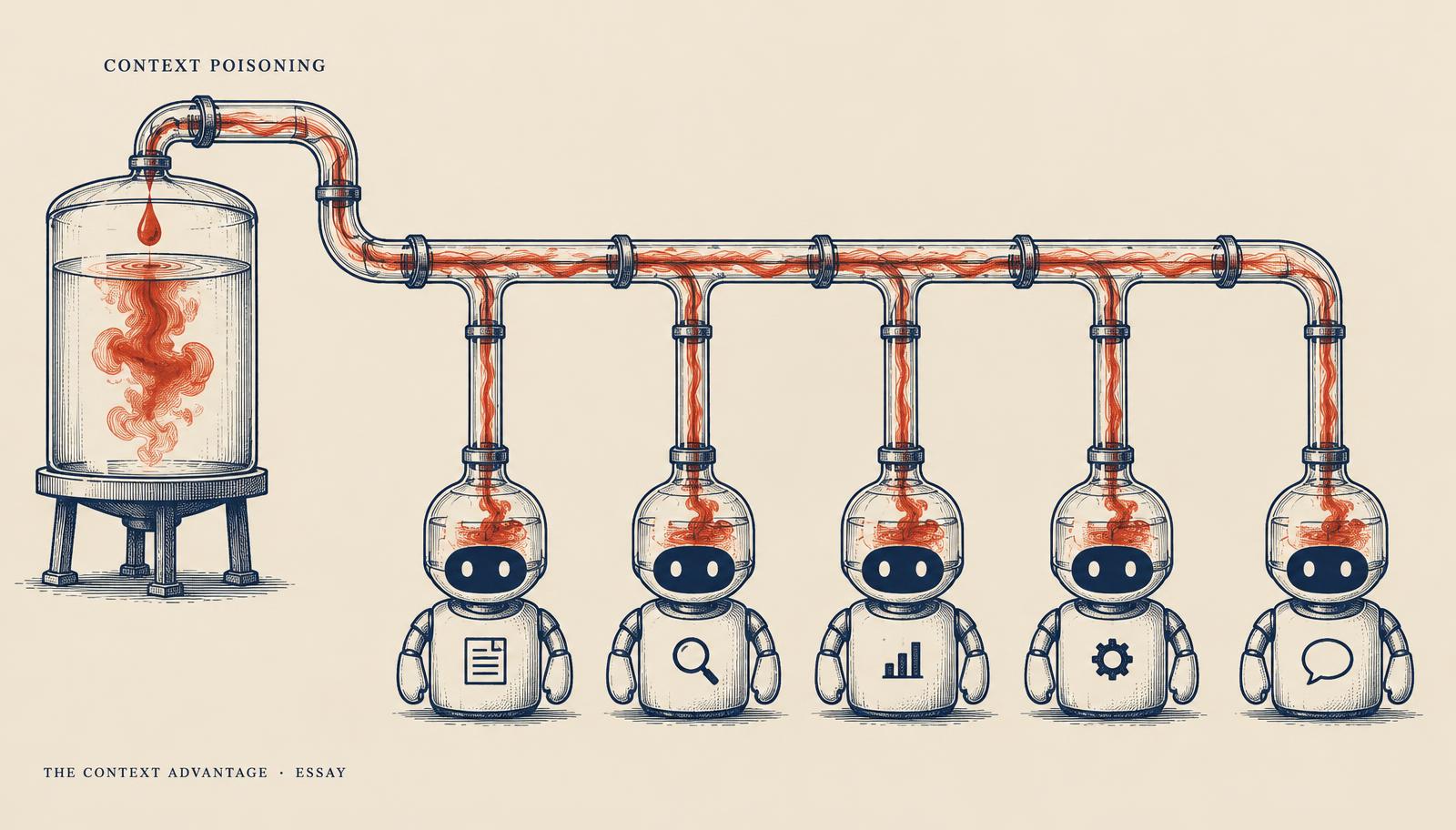
Context Poisoning: How One Bad Fact Spreads Through Every Agent
Traditional software fails loudly when the data is wrong. Agents fail politely. They reason fluently over a stale policy, act on it with confidence, and then write their conclusion into memory, where the next agent treats it as truth.
 Choice
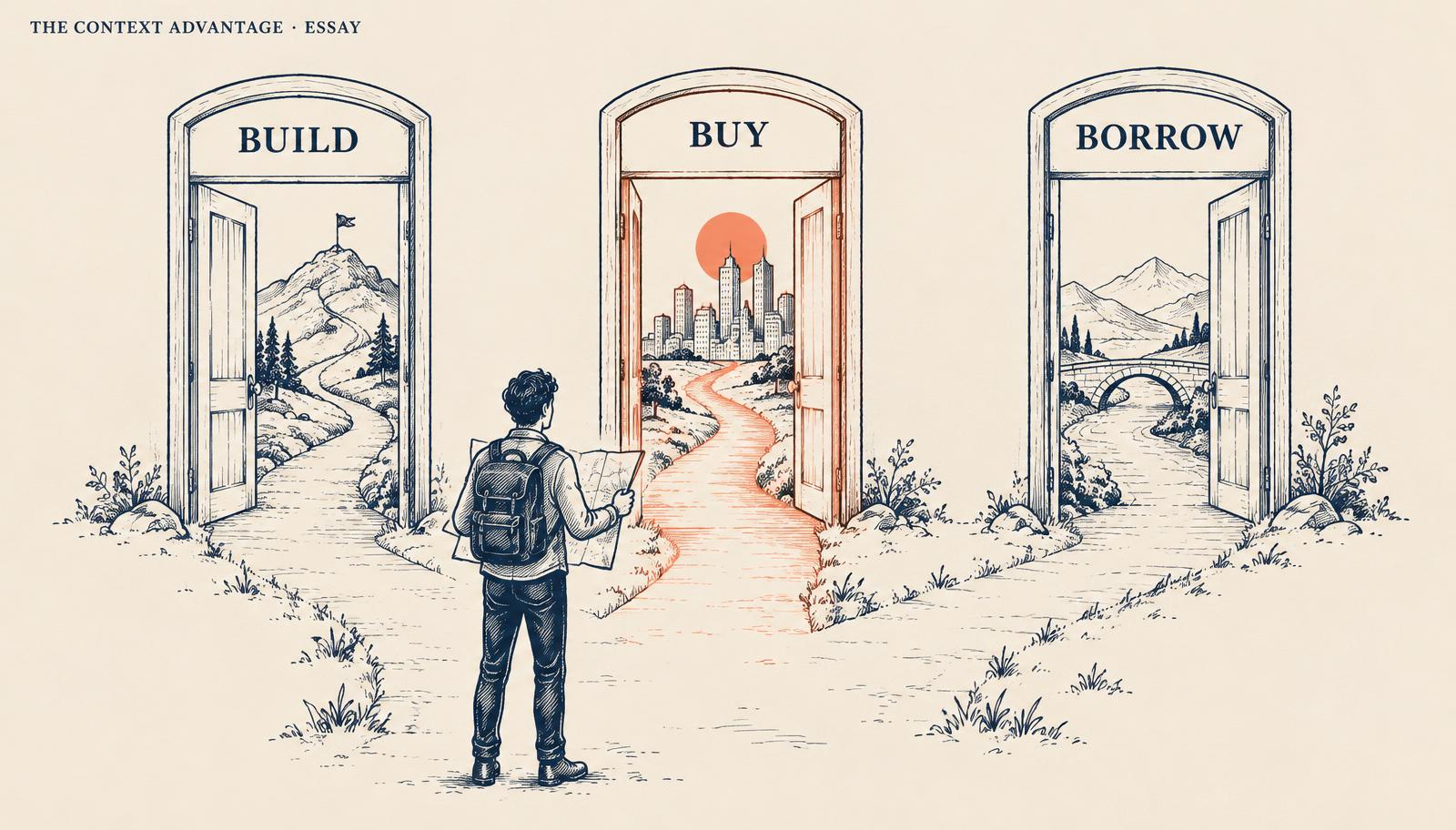
Build, Buy, or Borrow: The AI Platform Decision That Decides Your Exit
Every enterprise AI program eventually faces the same meeting: do we build our own agent platform, buy one, or borrow capability through an API? The usual answer is chosen for speed. The right answer is chosen layer by layer, and it is the one that keeps your exit cheap.
 Control
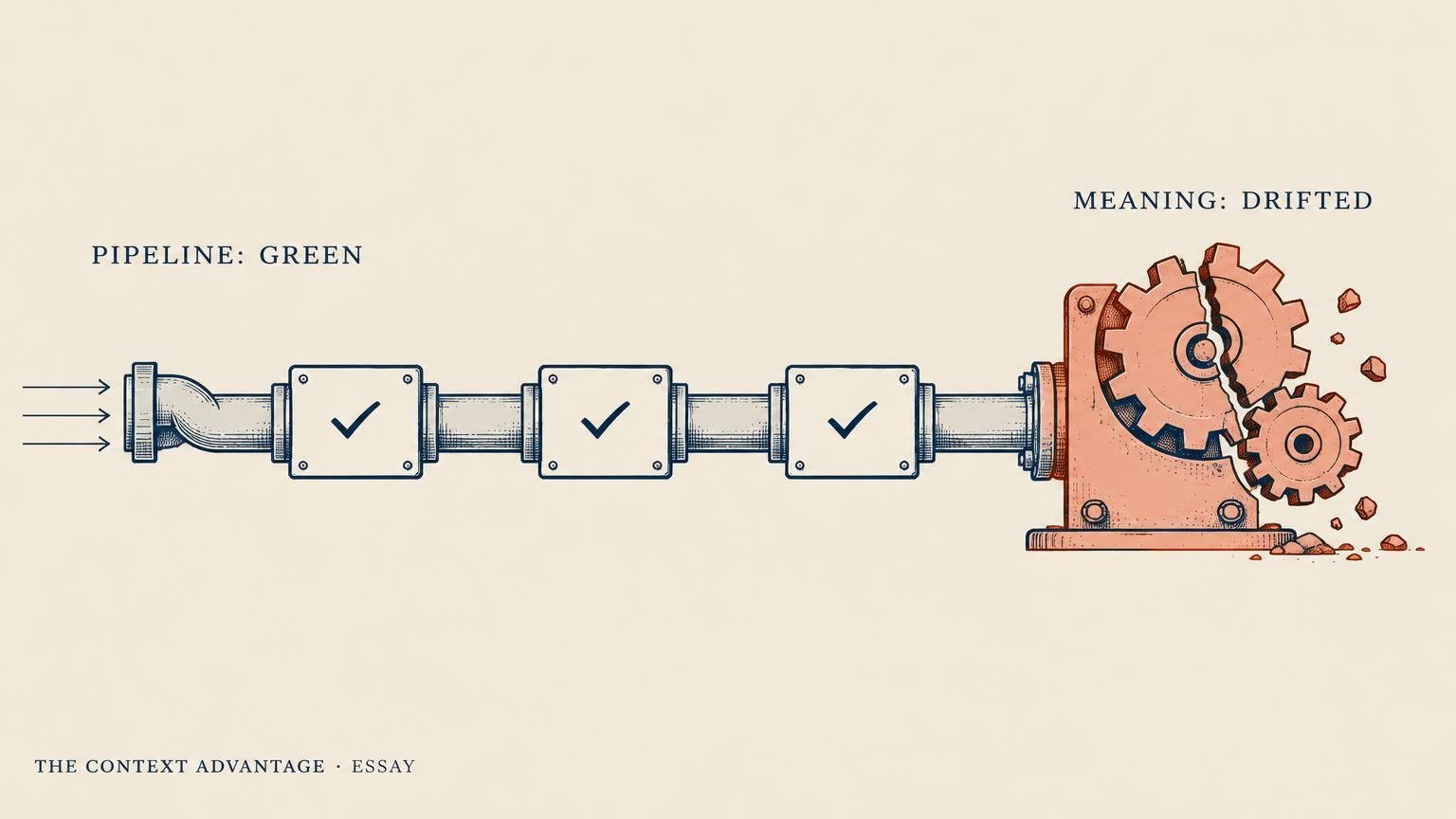
Semantic Drift: Why Green Pipelines Produce Broken Agents
Every check passed. Every table refreshed. Every API returned 200. And the agent still made the wrong call, because the meaning underneath the data moved while the structure stayed perfectly still.
 Cost
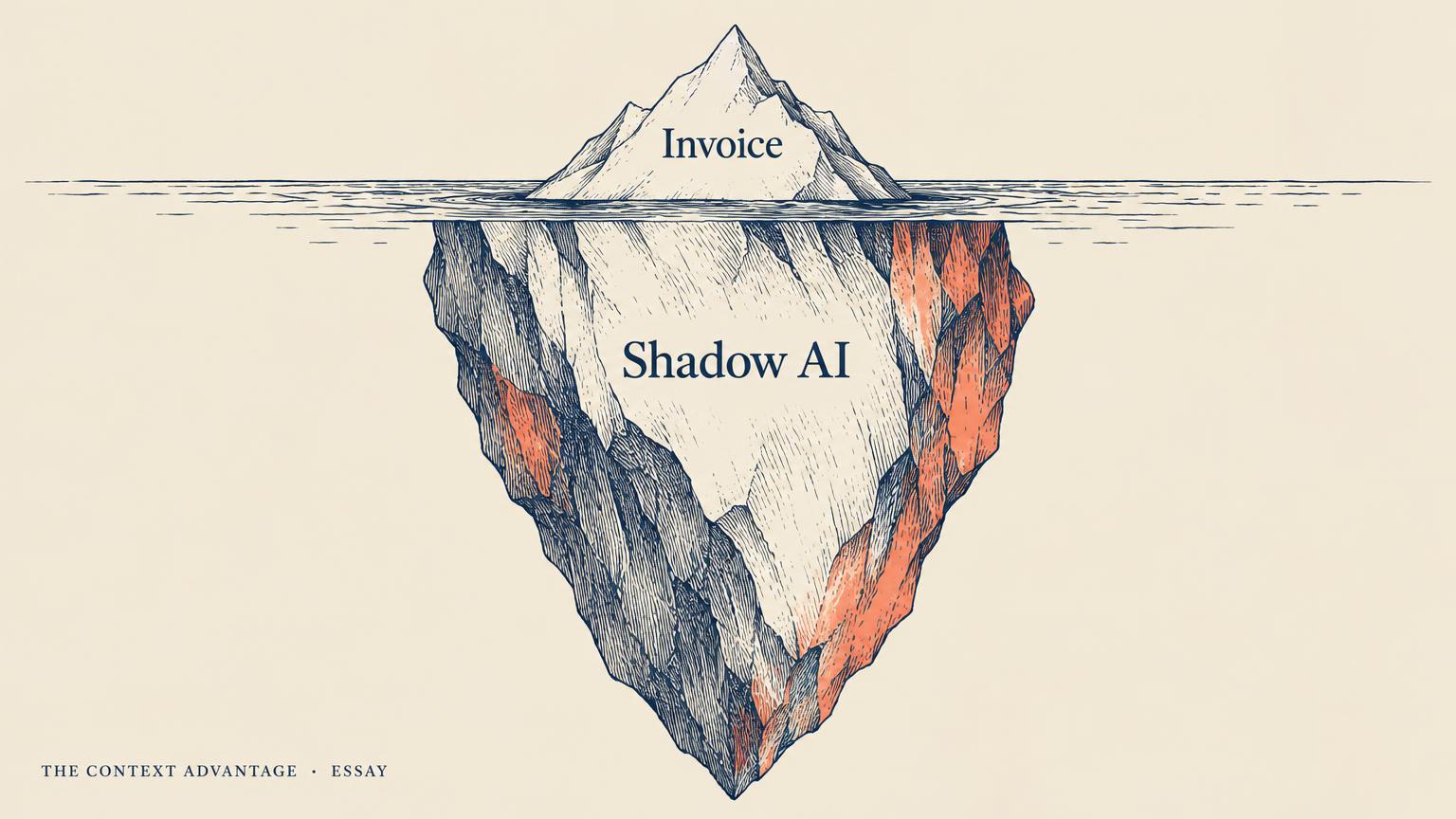
The Shadow AI Bill
Your AI invoice is the part of the iceberg you can see. Underneath it sit copilot seats nobody uses, personal API keys on expense reports, notebooks that call models in loops, and agents that nobody remembers launching.
 Context
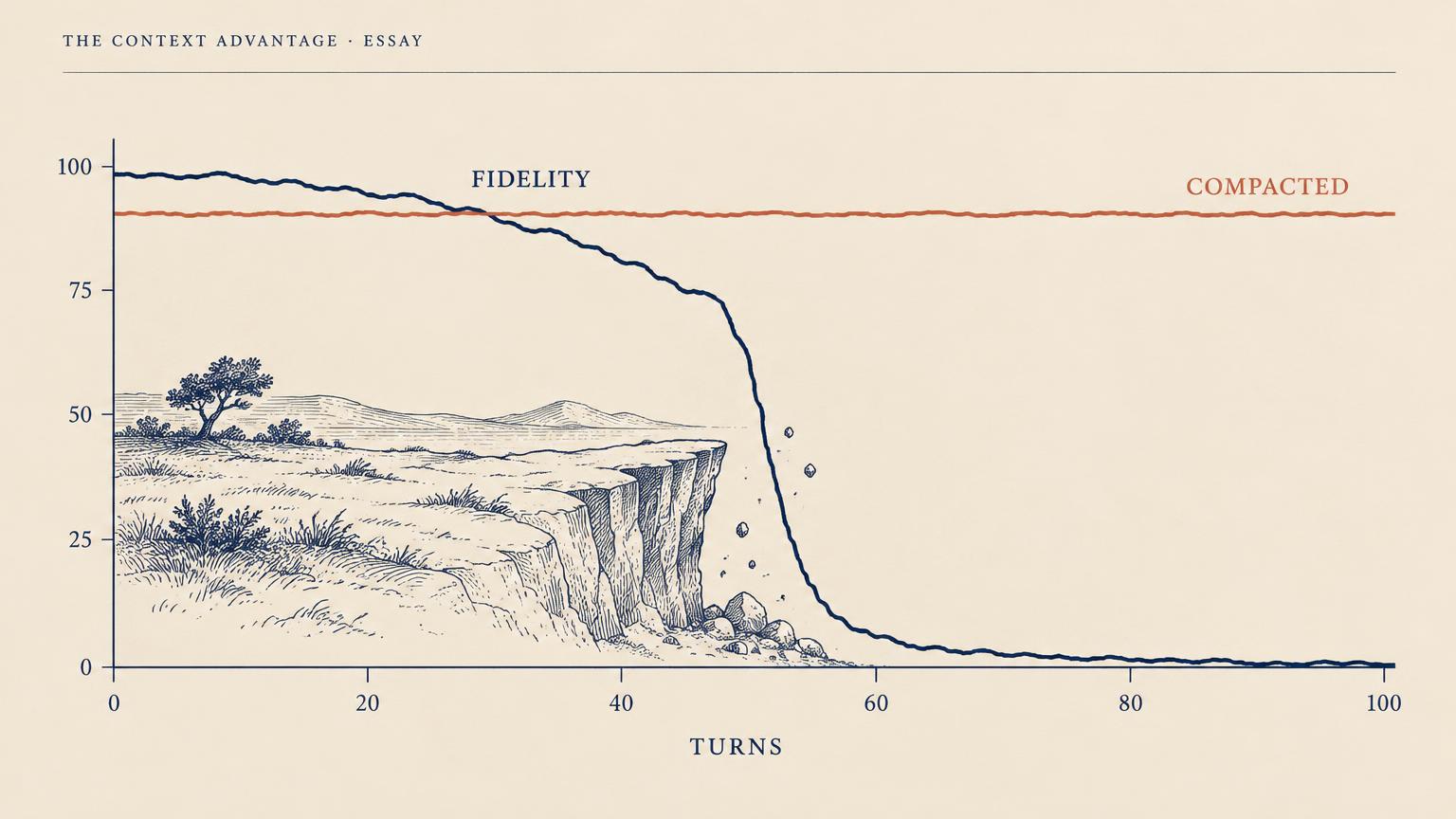
The Context Degradation Curve
Agents rarely fail on turn one. They fail on turn twelve, when the rules that mattered are buried under everything the conversation dragged along. A bigger window only moves the cliff.
 Choice
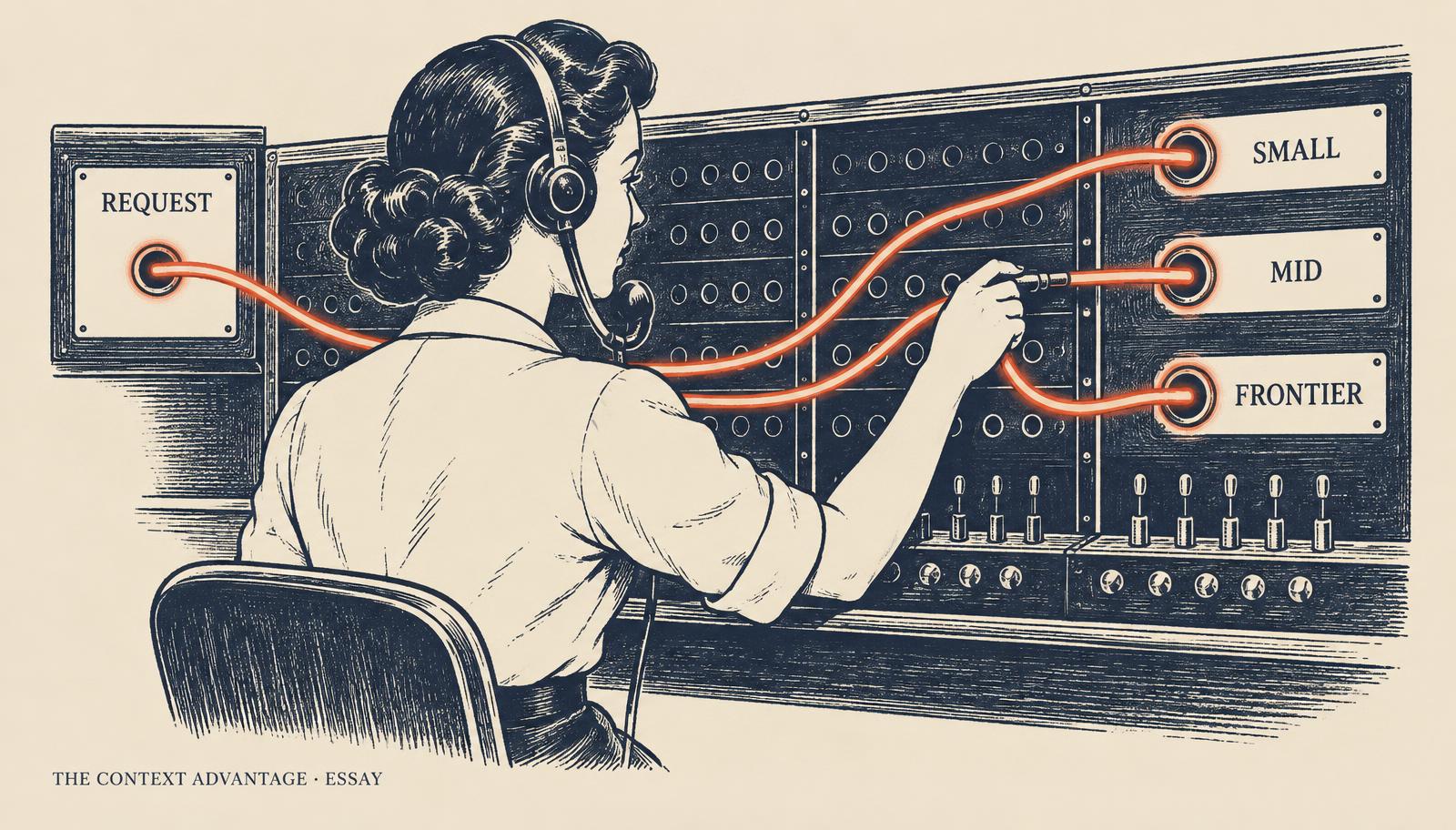
The Model Router: Stop Hardcoding Intelligence
A model name buried in fifty services is not a decision. It is a debt. The teams that keep their options open put one thin, governed layer between every request and every model.
 Career
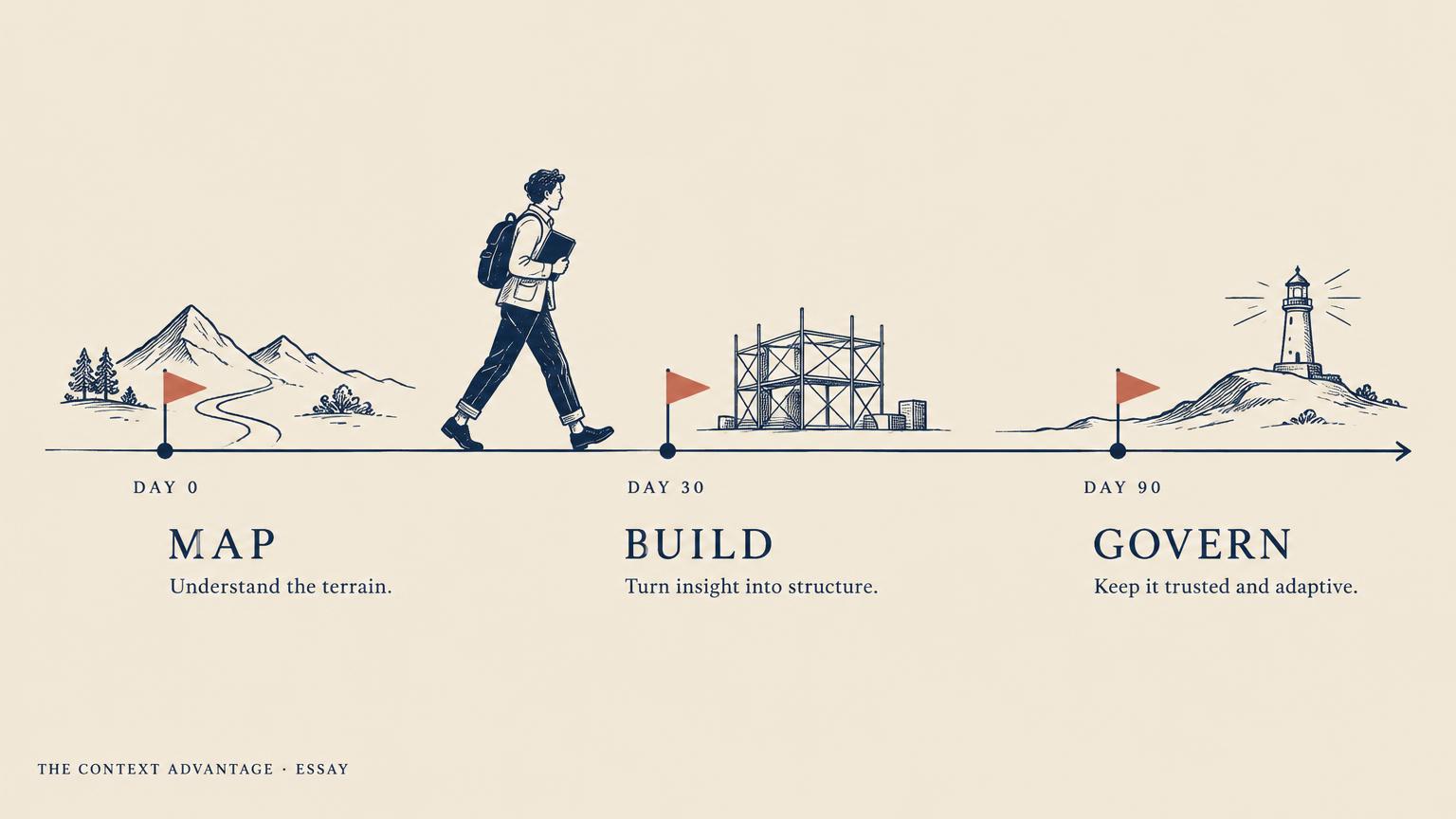
The Context Engineer's First 90 Days
Your first quarter is not about fine-tuning models. It is about turning what the organisation knows into context that is governed, versioned, and measurable.
 Control
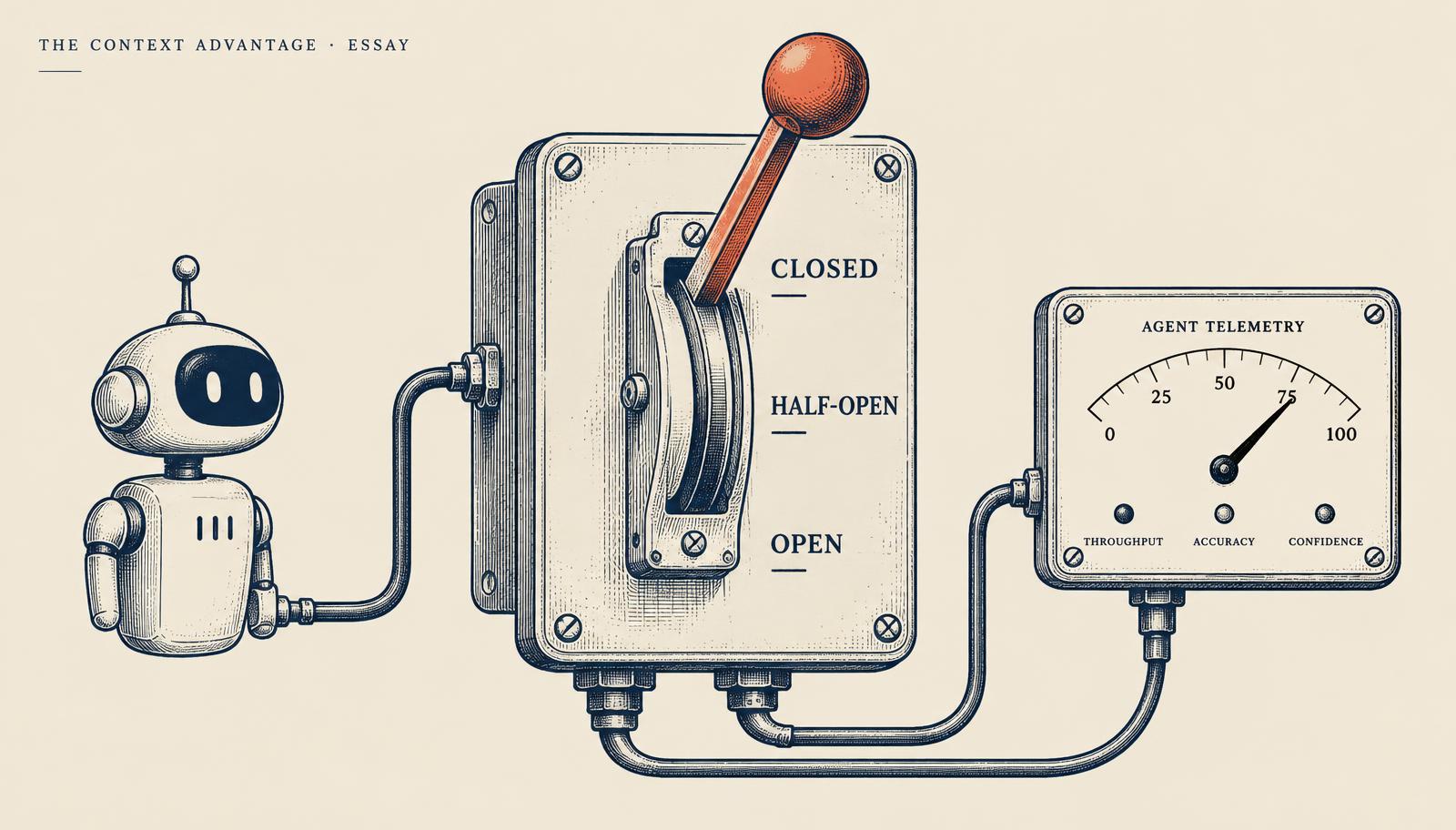
The Circuit Breaker Pattern for AI Agents
Retries rescue a flaky network. They make a confused agent worse. Every autonomous agent needs a deterministic shutoff that trips before a loop reaches production data.
 Cost
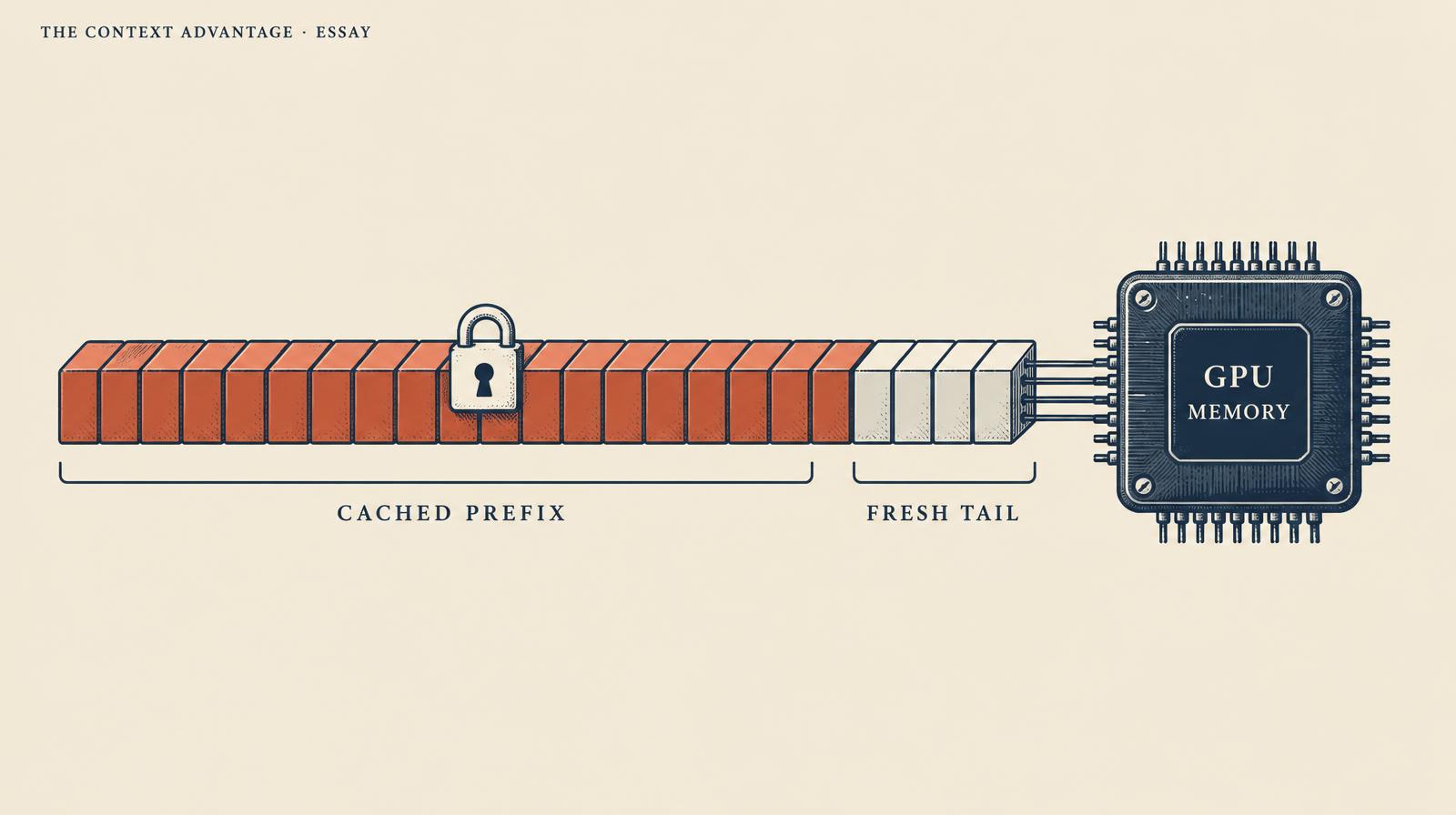
The KV Cache Discipline
Prompt caching can cut a multi-turn agent's input bill by most of its weight and halve its first-token latency. It only works if you stop treating the context window like an unordered bag of text.
 Career
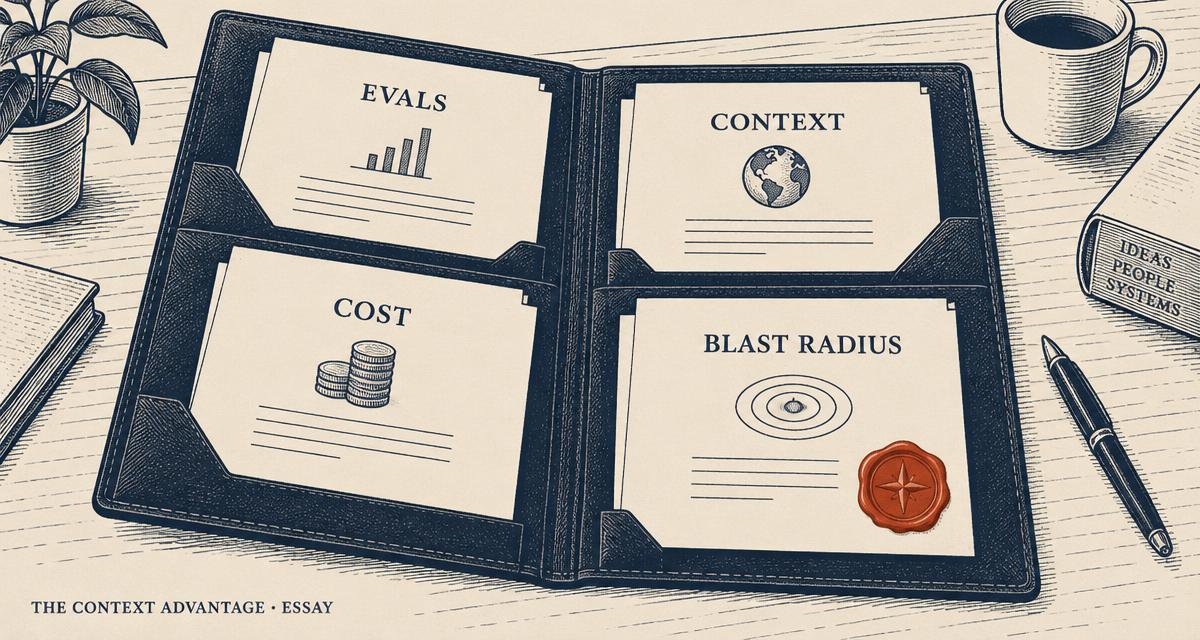
The Context Engineer's Promotion Packet
Shipping a demo gets polite applause. Proving that an agent is reliable, bounded, and worth its cost gets you promoted. These are the four pieces of evidence a promotion committee actually reads.
 Context
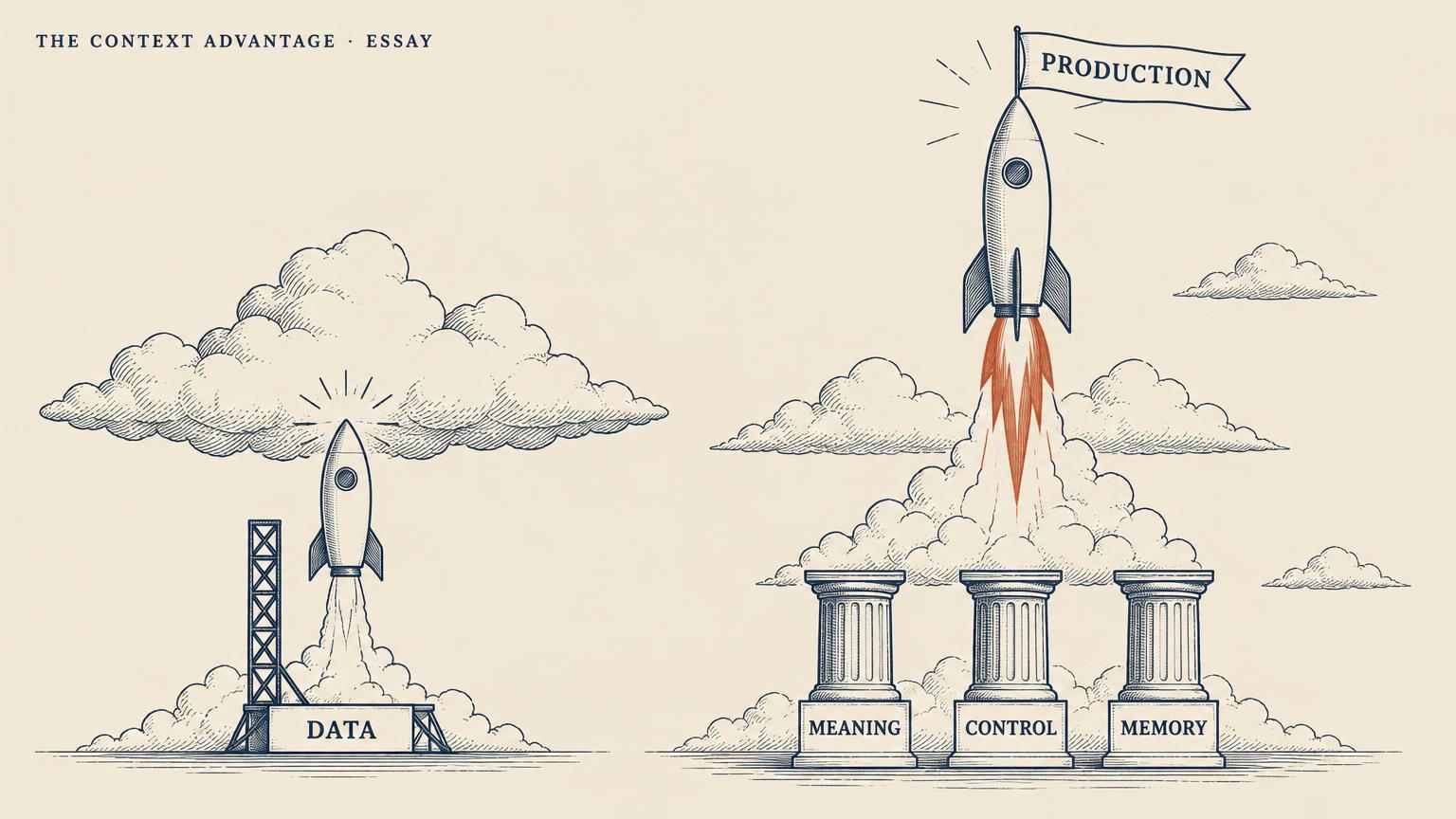
Data Gets AI Started. Context Gets It to Production.
Clean tables and an API key are enough to build a demo in an afternoon. Getting that demo past security, finance, and the first real customer takes something else entirely: the meaning, the permissions, and the memory of your business.
 Vision
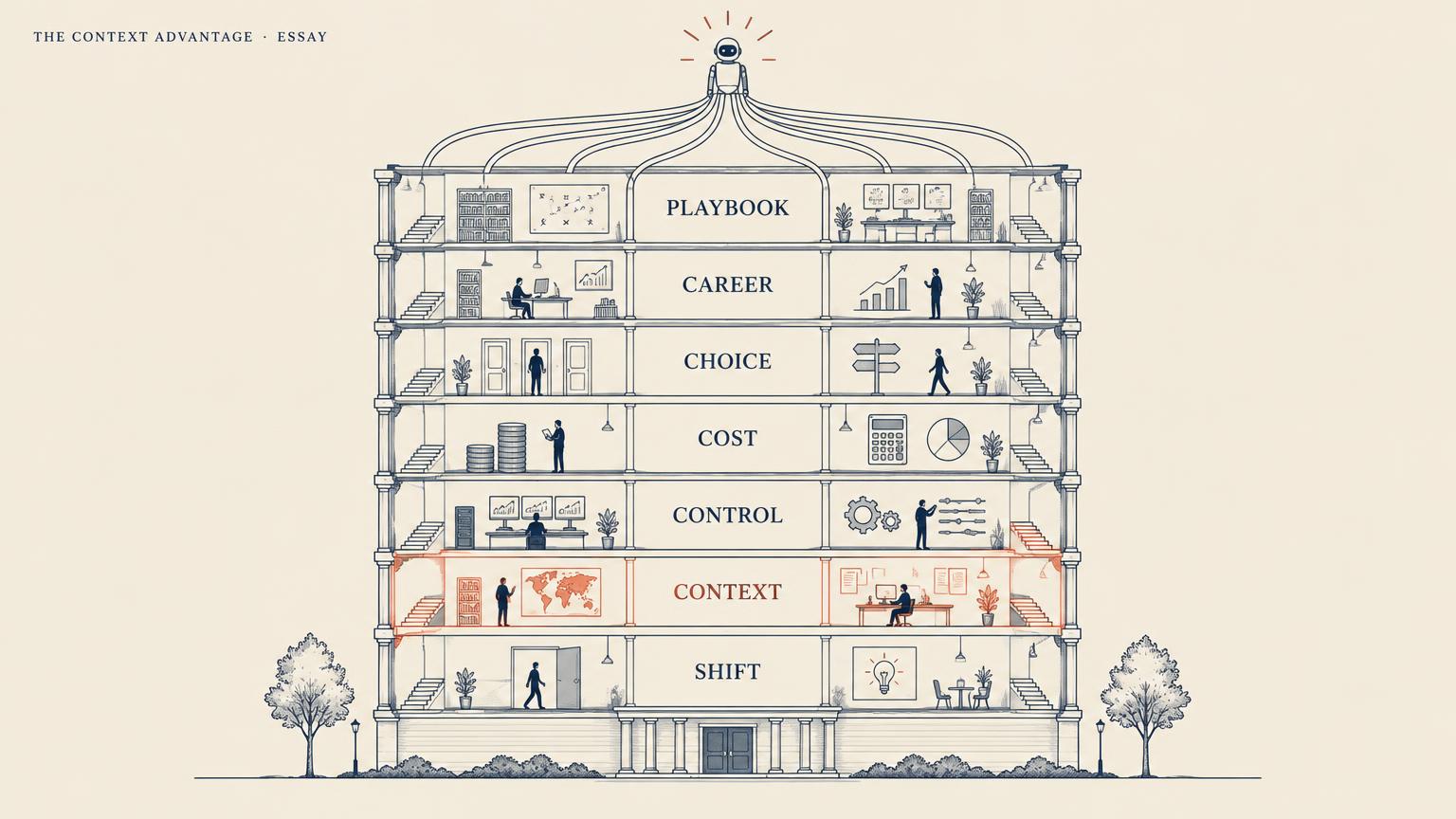
The 36-Chapter Map: What Production AI Taught the Living Book
A book about models expires in six months. A book about meaning, control, cost, and choice becomes more true every time a new model ships. Here is everything The Context Advantage now covers, why the newest chapters exist, and how to read the whole map in the order your work demands.
 Choice
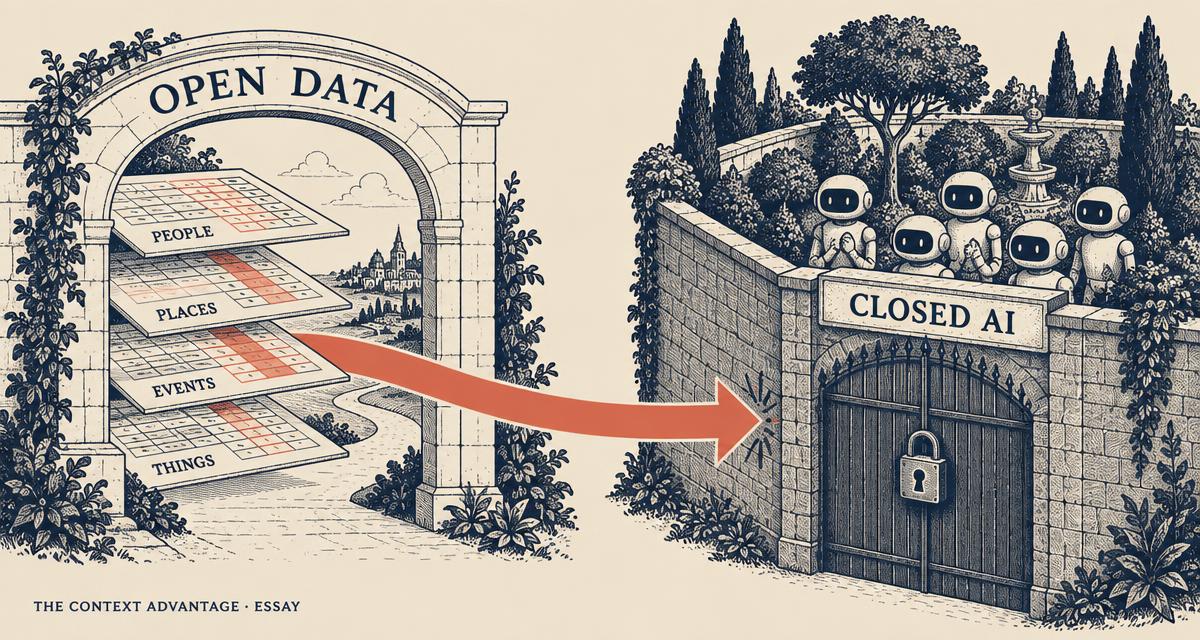
Do Not Trade Open Data for Closed AI
Your organisation spent a decade escaping proprietary data formats. Open tables, open catalogs, open engines. Then it signed an AI contract that puts the meaning, the memory, and the agents back inside a wall — and called it progress.
 Career
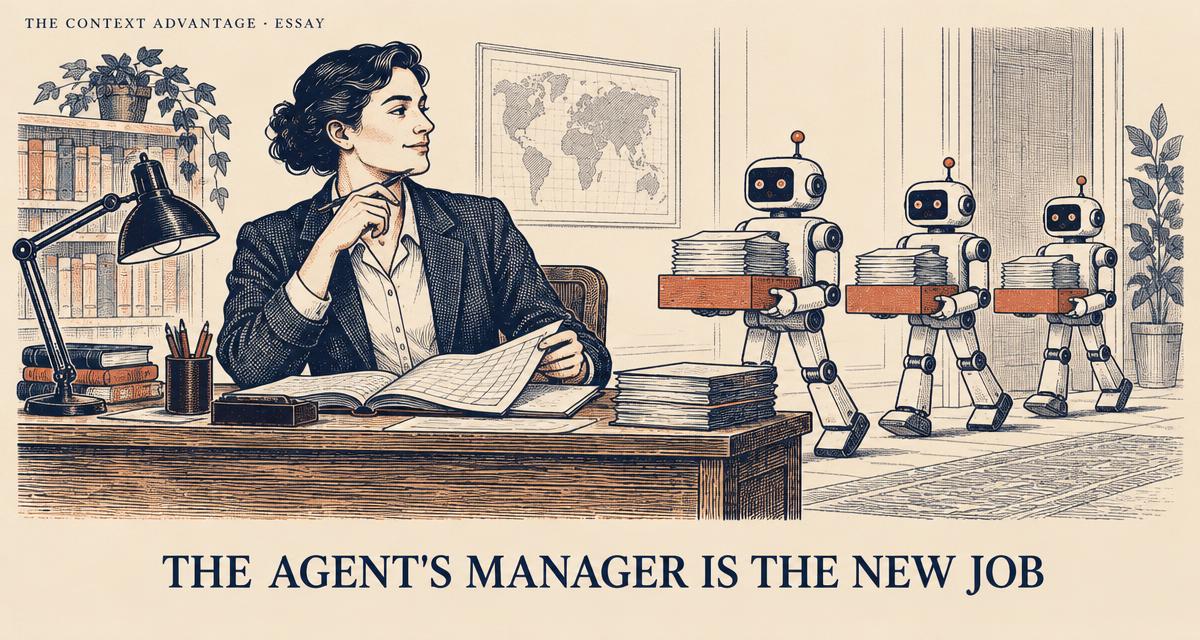
The Agent's Manager Is the New Job
Every wave of automation deleted the task and promoted the person who understood it. Agents are no different. The scarce role is not the prompt writer — it is the human who can brief, supervise, evaluate, and take responsibility for a machine that works.
 Choice
One Model Is a Single Point of Failure
Every serious system in your company has a backup. Your AI agent runs on one model, from one provider, with one pricing plan and one deprecation schedule. That is not an architecture. It is a bet.
 Context
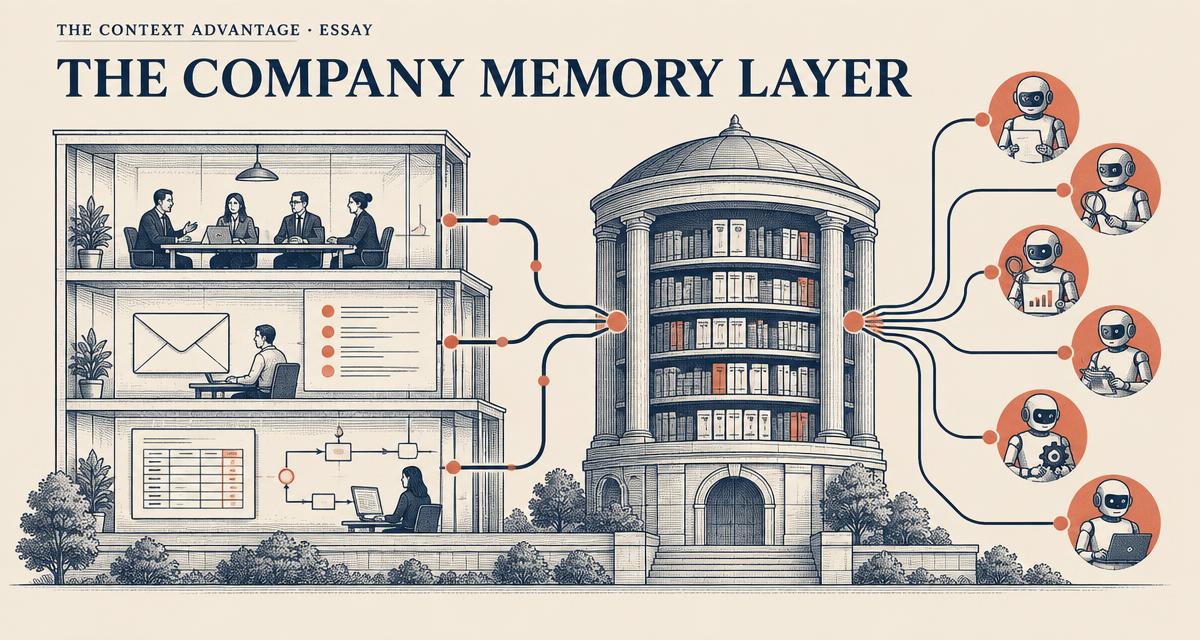
The Company Memory Layer
The next enterprise AI unlock is not another model. It is turning the decisions, definitions, exceptions, and lessons trapped in meetings and email into governed memory that agents can actually use.
 Control
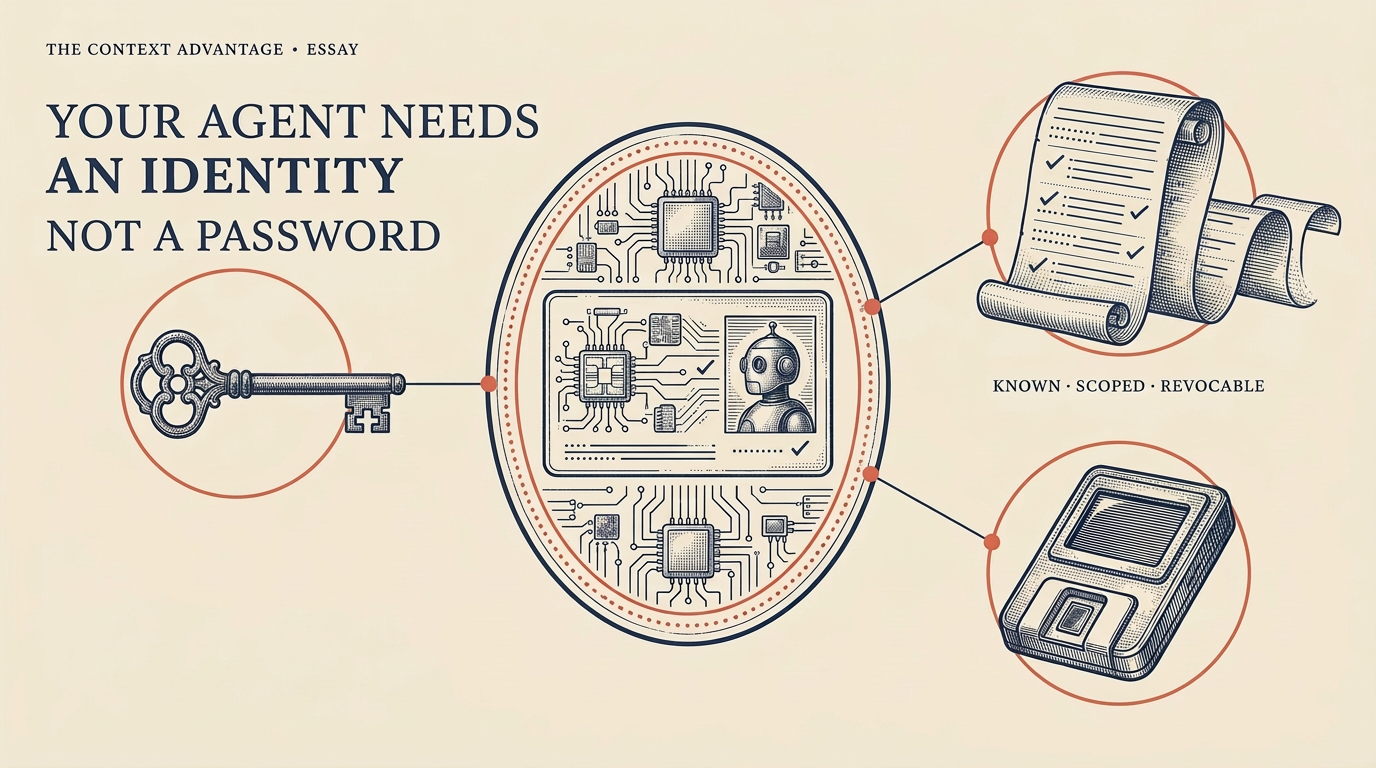
Your Agent Needs an Identity, Not a Password
Most enterprises gave their first agents a shared API key and called it access management. That key is now the least governed, most powerful account in the building.
 Cost
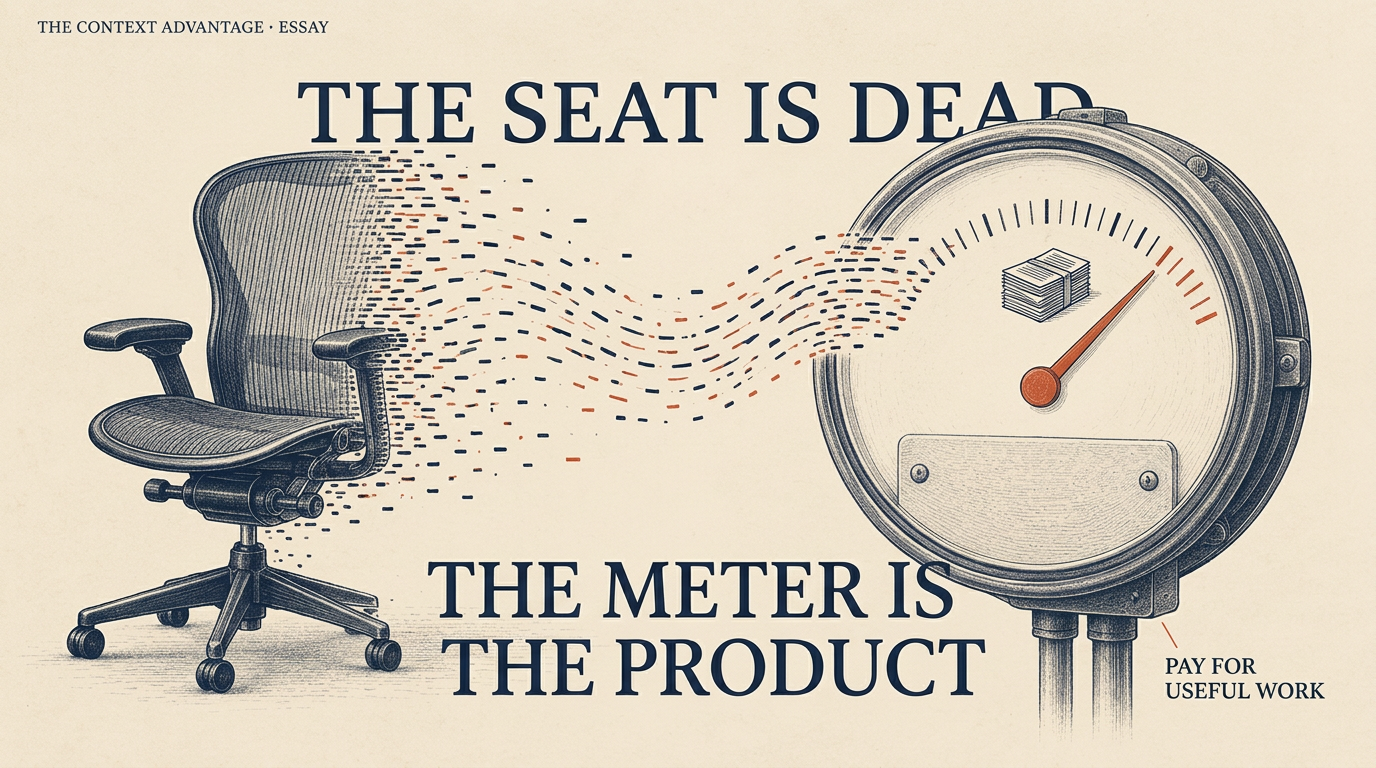
The Seat Is Dead. The Meter Is the Product.
Software used to charge for access. Agents charge for work. When the pricing model changes, everything about how you buy, govern, and measure AI changes with it.
 Cost
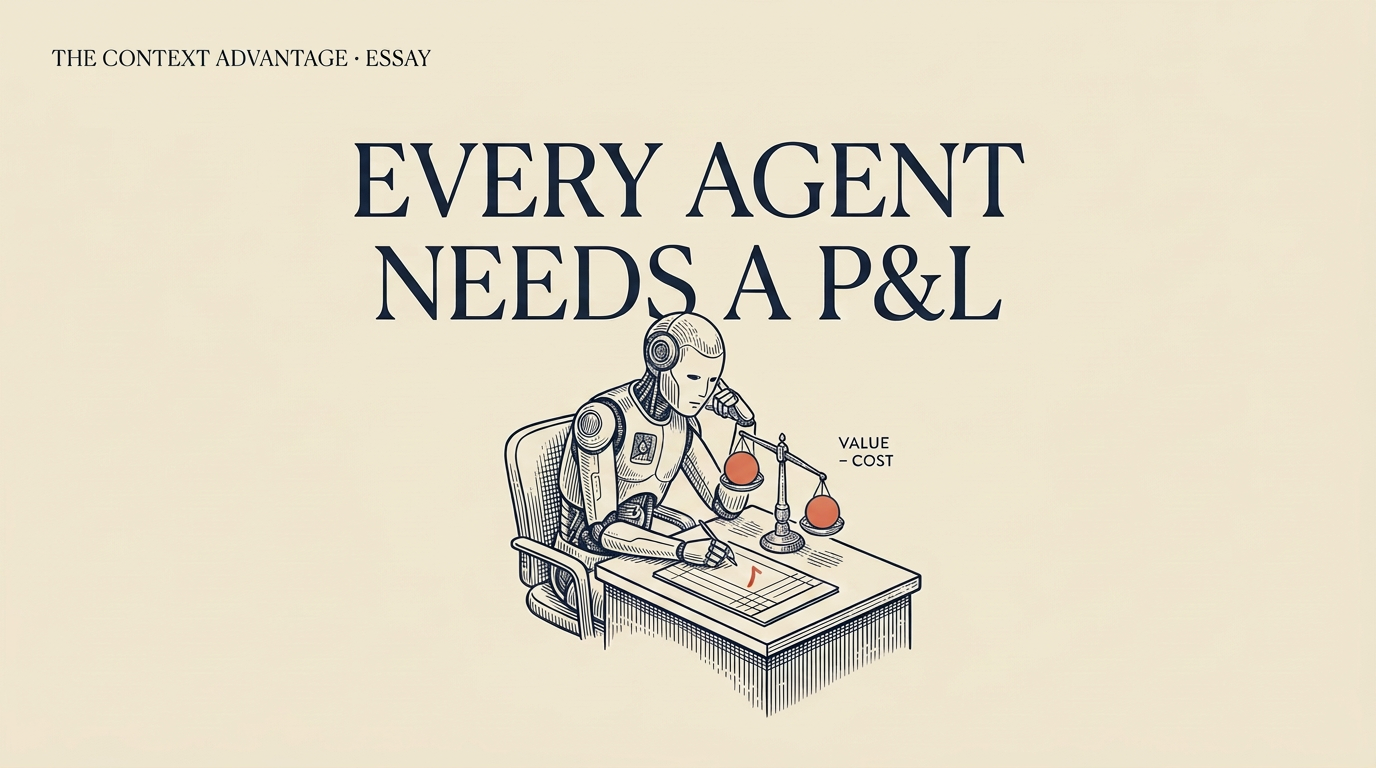
Every Agent Needs a P&L
If an agent has a budget, uses resources, creates value, and makes mistakes, it is already running a small business. The problem is that almost nobody gives it accounts.
 Control
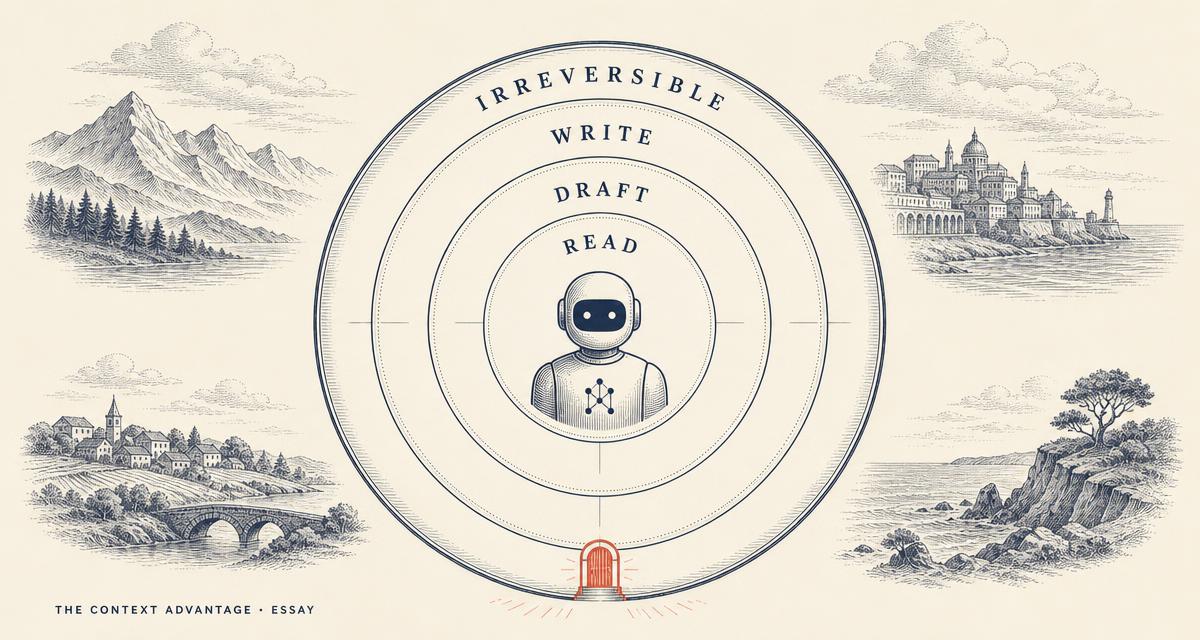
The Blast Radius
Everyone asks whether an agent is accurate. Almost nobody asks how much damage it can do when it is confidently wrong. Accuracy is a hope. Blast radius is a design decision.
 Career
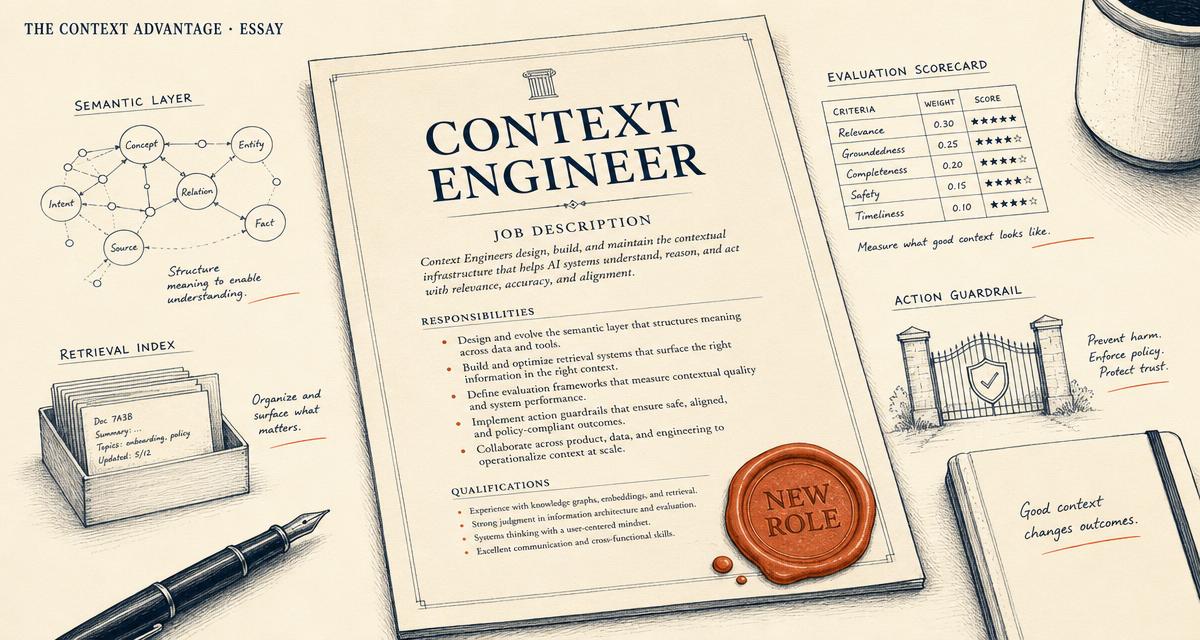
The Context Engineer Job Description
The newest role on the data team is not a prompt writer with a better title. It is the person who owns what the model knows, what it may do, how it is evaluated, and what the whole system costs. Here is the job description worth hiring against.
 Choice
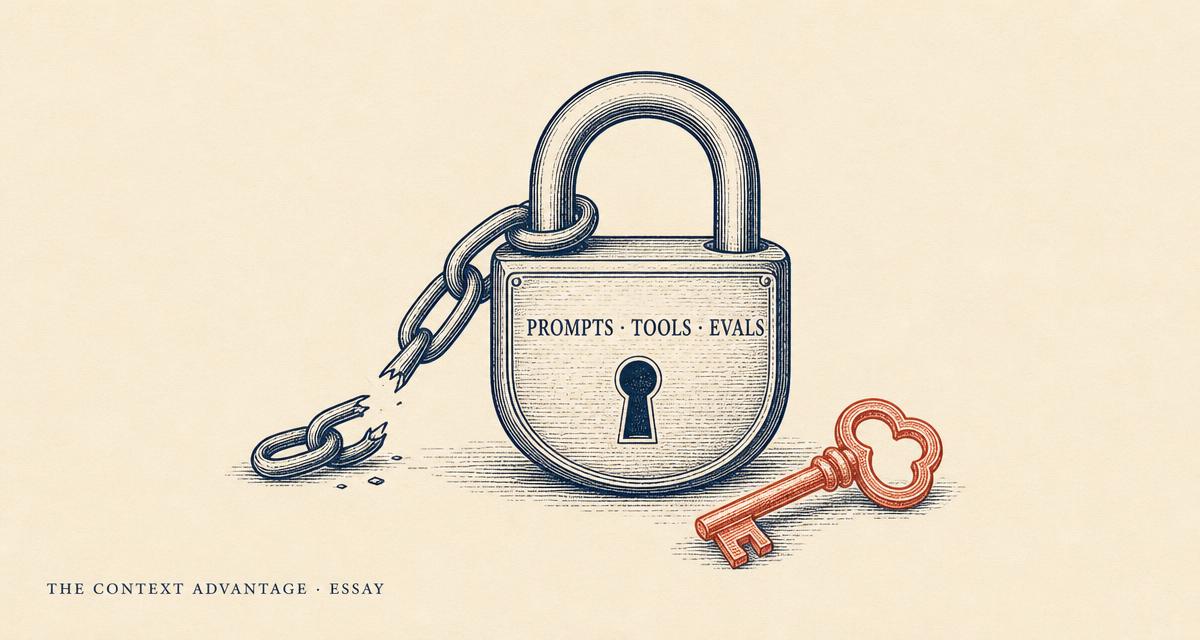
Open Weights Are Not Freedom
Self-hosting an open-weights model feels like the exit door from vendor lock-in. It is not. The real lock-in lives in the prompts, the tool schemas, the eval sets, and the context shape you wrote against one model's quirks. Weights are the cheapest layer to swap. The layers above them are where your freedom was quietly traded away.
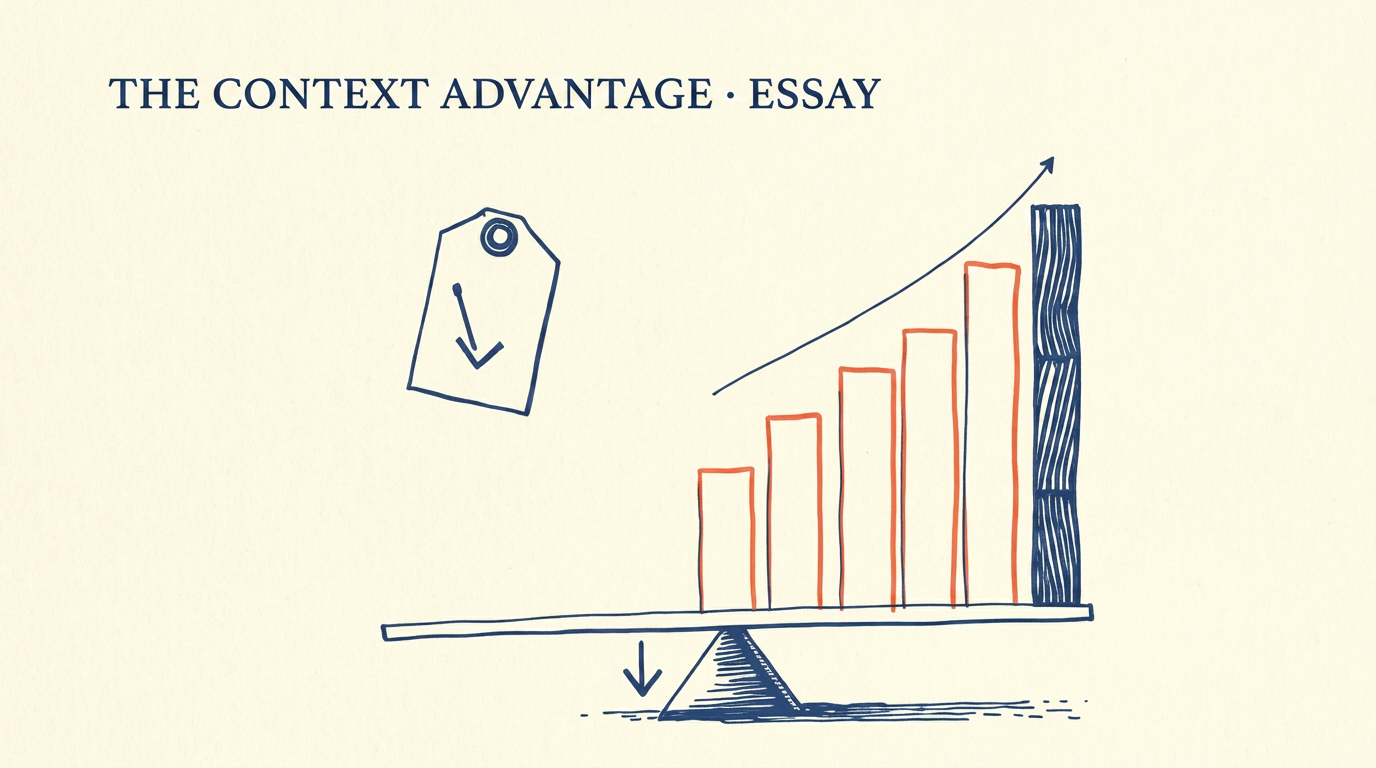 Cost
Cheaper Tokens Will Not Save Your AI Budget
Frontier prices fall every quarter and the bill keeps climbing. The reason is that the unit leaders track — price per million tokens — is the wrong denominator. The real budget is built from orchestration, retries, context, and control, and a falling unit price makes the first three worse, not better.
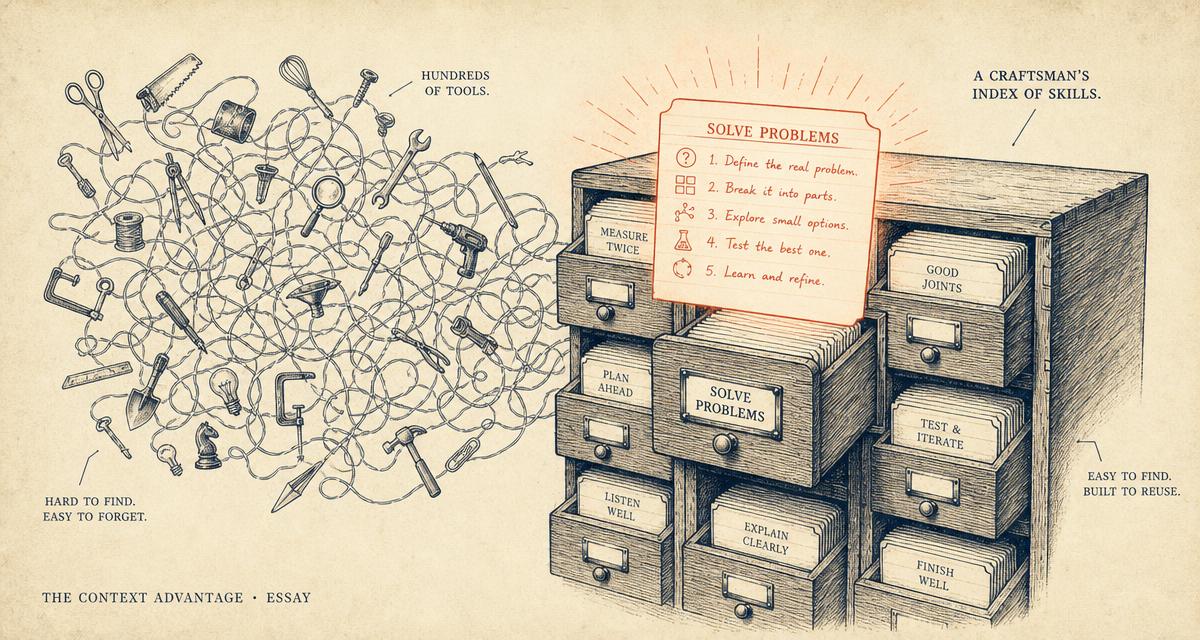 Control
The Skill Is the Unit of Work
Teams keep adding tools to their agents and wondering why reliability falls. The unit that actually travels between teams, models, and quarters is not a tool. It is a written, owned, versioned skill.
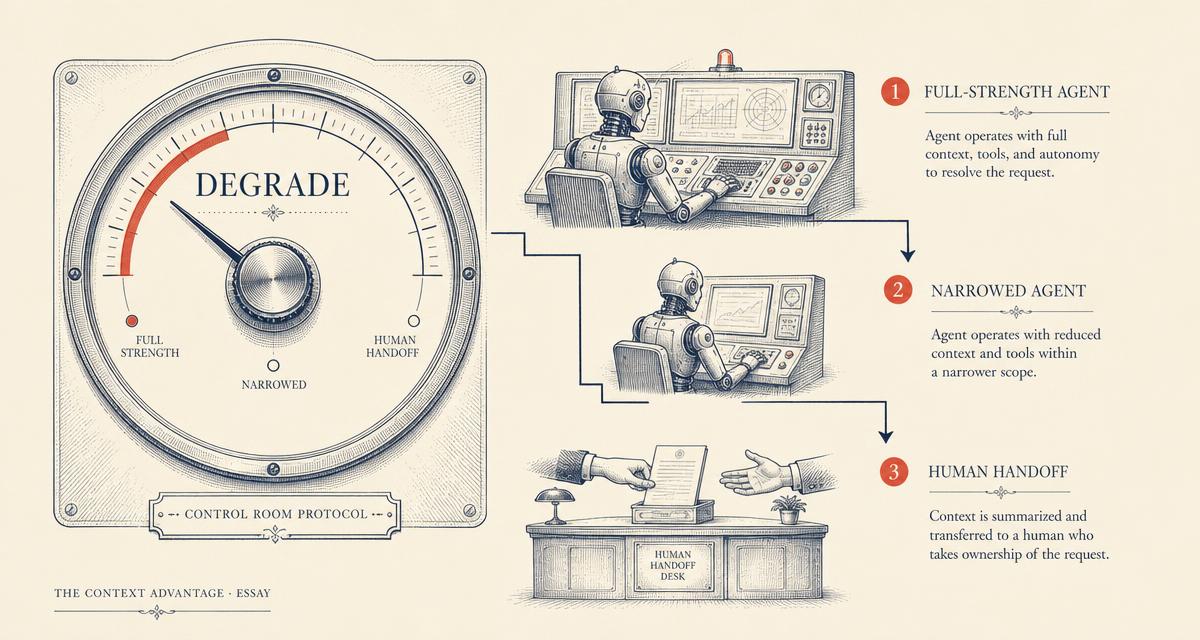 Choice
Design for the Bad Day
Your agent will lose its primary model, its retrieval index, or its favourite tool at some point this quarter. The only real question is whether it fails like a cliff or steps down like a staircase.
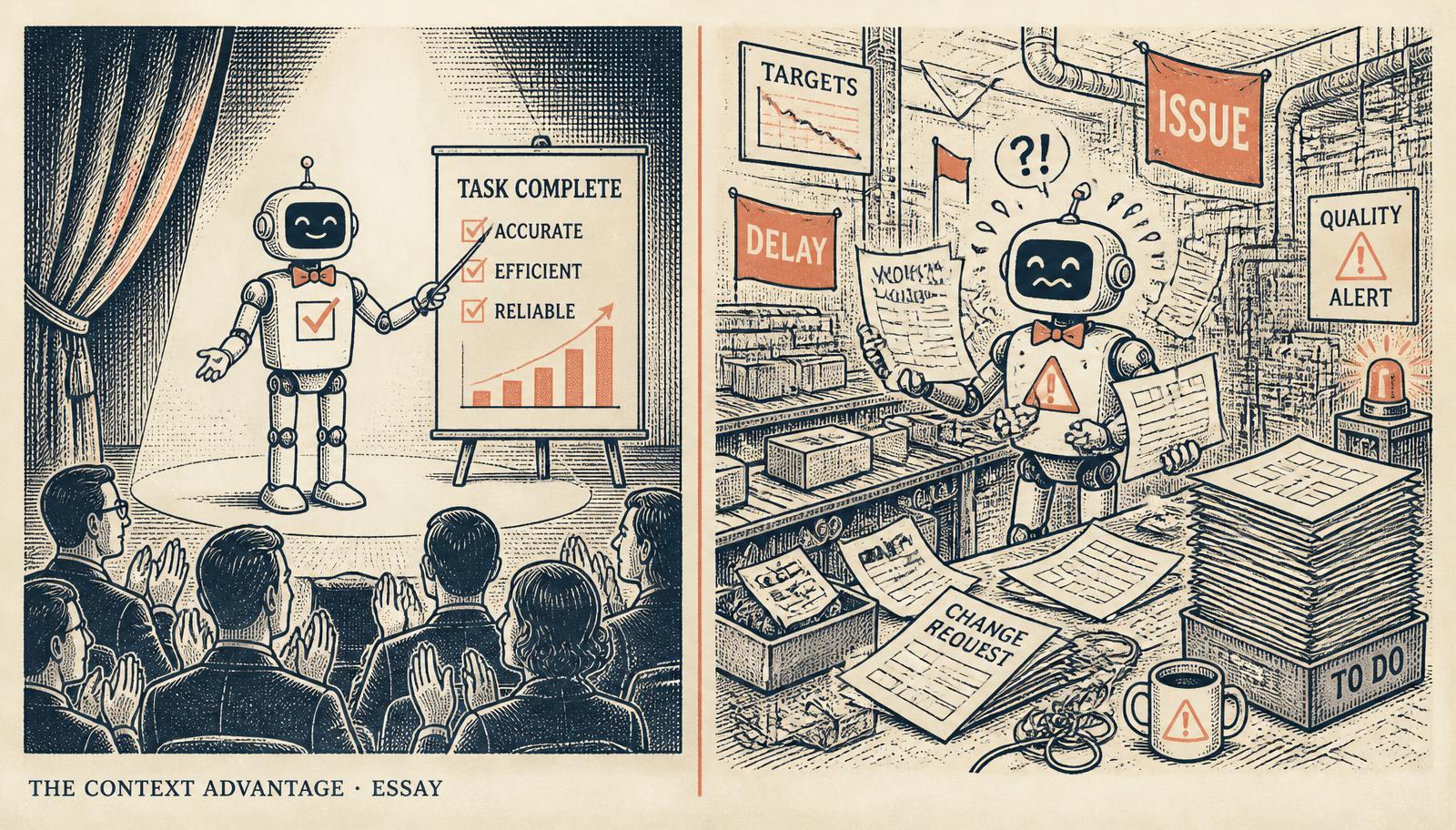 Control
The Evaluation Gap
Every agent passes the demo. That is what a demo is for. The interesting question is what happens on the two hundredth request, on a Tuesday, when nobody is watching and the underlying data moved last night.
 Vision
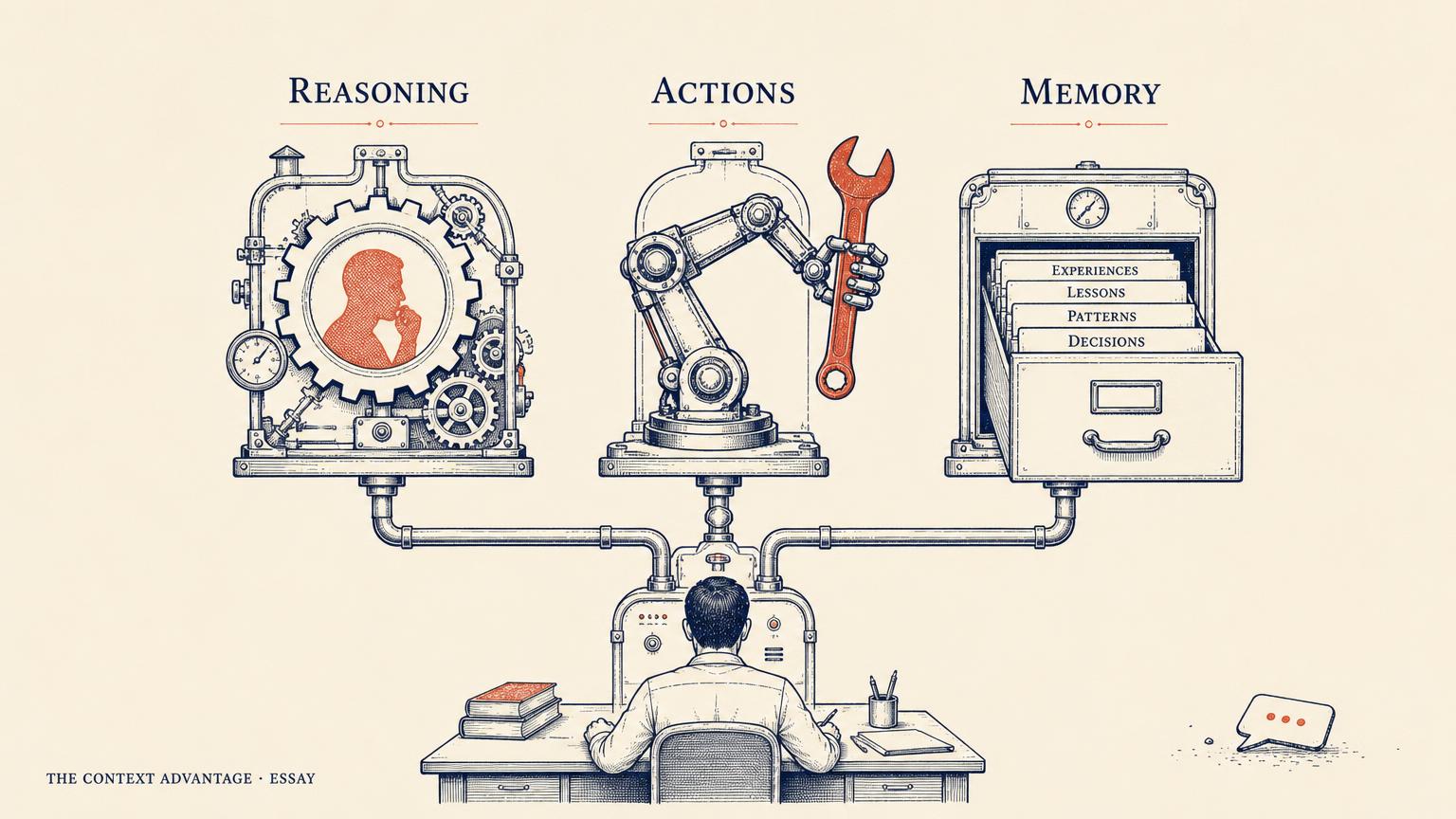
Reasoning, Actions, Memory
Most people still think an AI agent is a smarter chatbot. It is not. A chatbot can tell you what to do. An agent understands a goal, decides what to do next, uses tools, remembers what matters, and helps finish the work. Three words hold the whole idea together.
 Cost
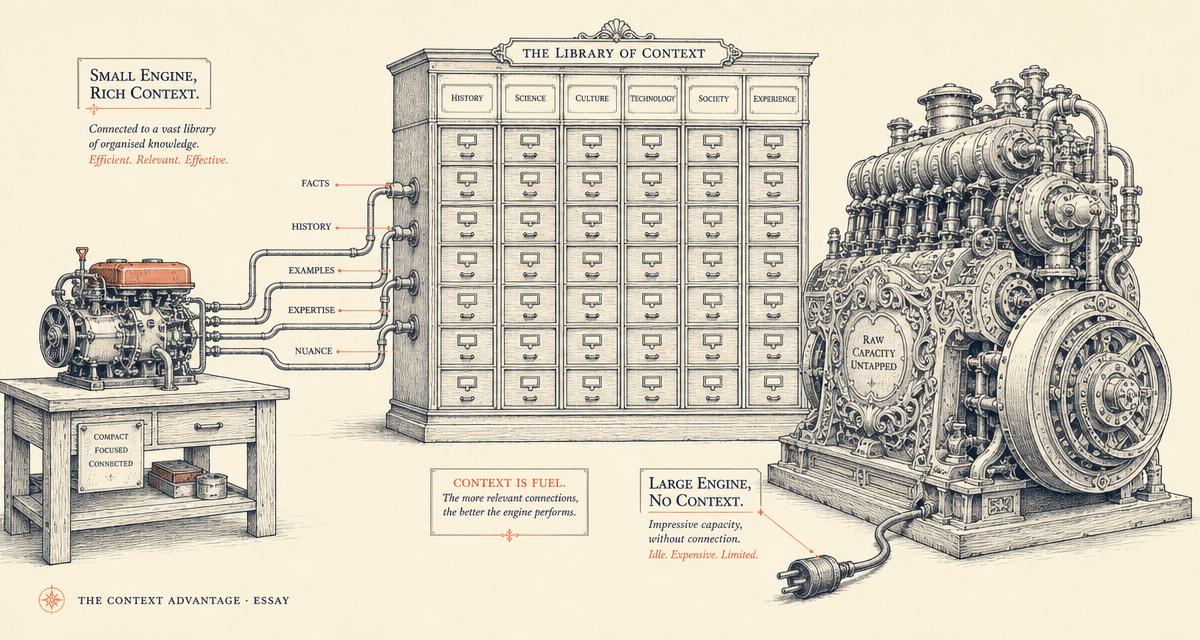
Small Models, Big Context
The cheapest agent in production is almost never the one running on the smallest model. It is the one that needed the fewest attempts to be right. That distinction is where the entire cost conversation actually lives.
 Control
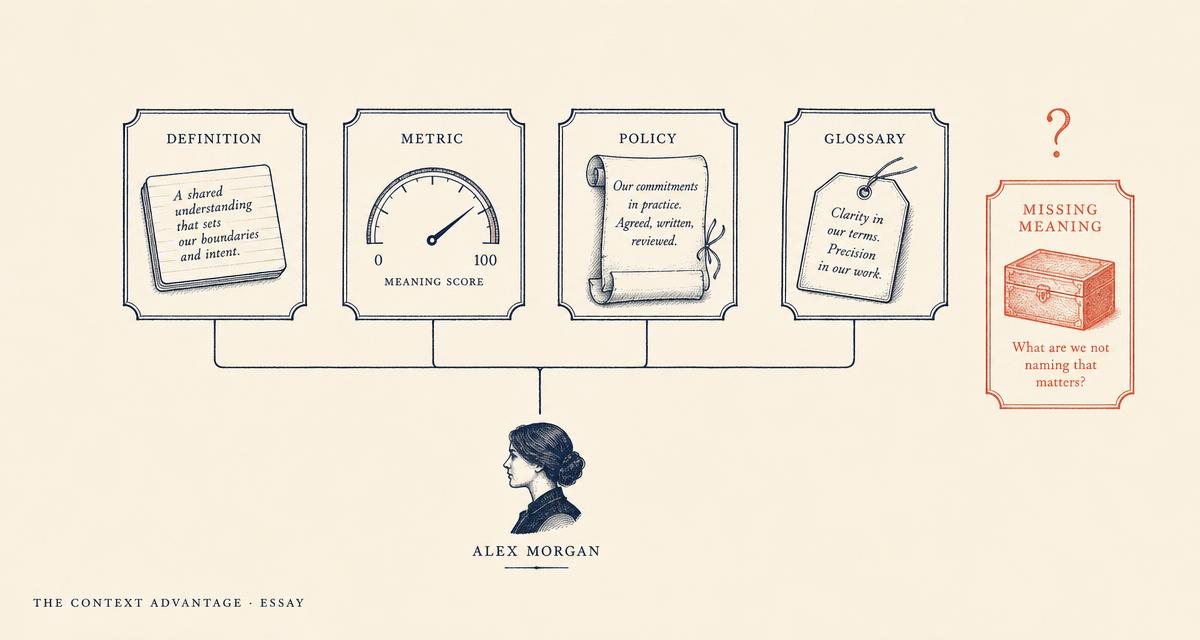
The Agent Org Chart
Every organisation has a chart that says who is accountable for people. Almost none has a chart that says who is accountable for meaning. That second chart is the one your agents actually run on.
 Context
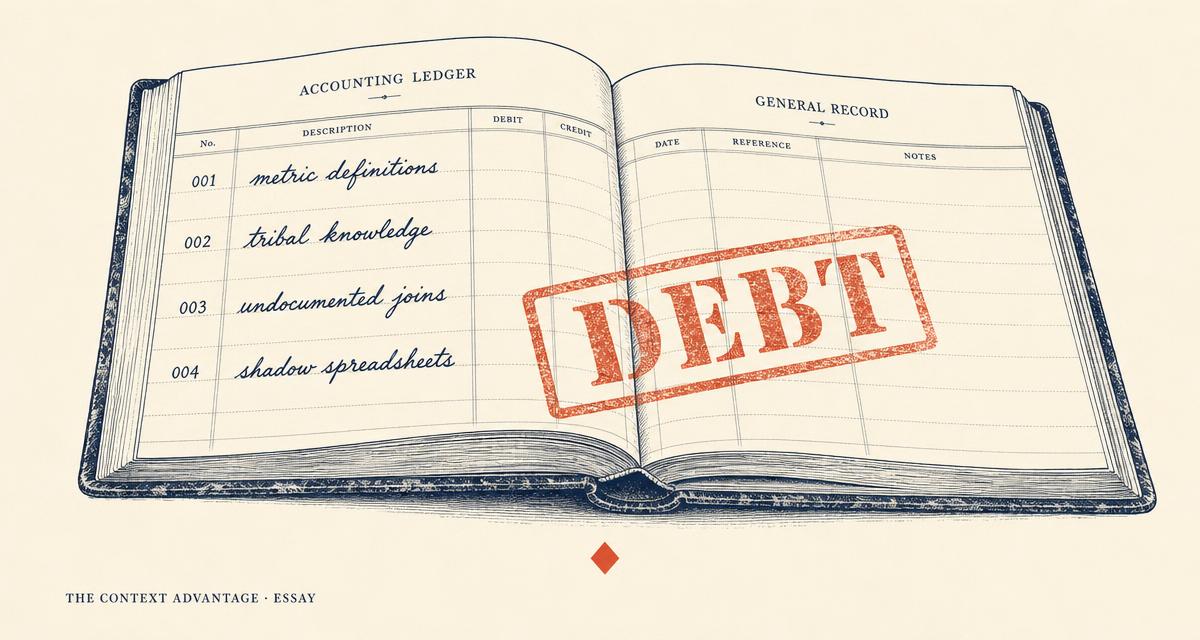
 Debt: The Liability That Never Shows Up on Your Balance Sheet
Every organisation carries a running balance of meaning it never wrote down. For twenty years that balance was survivable, because humans quietly paid the interest. Agents do not.
 Cost
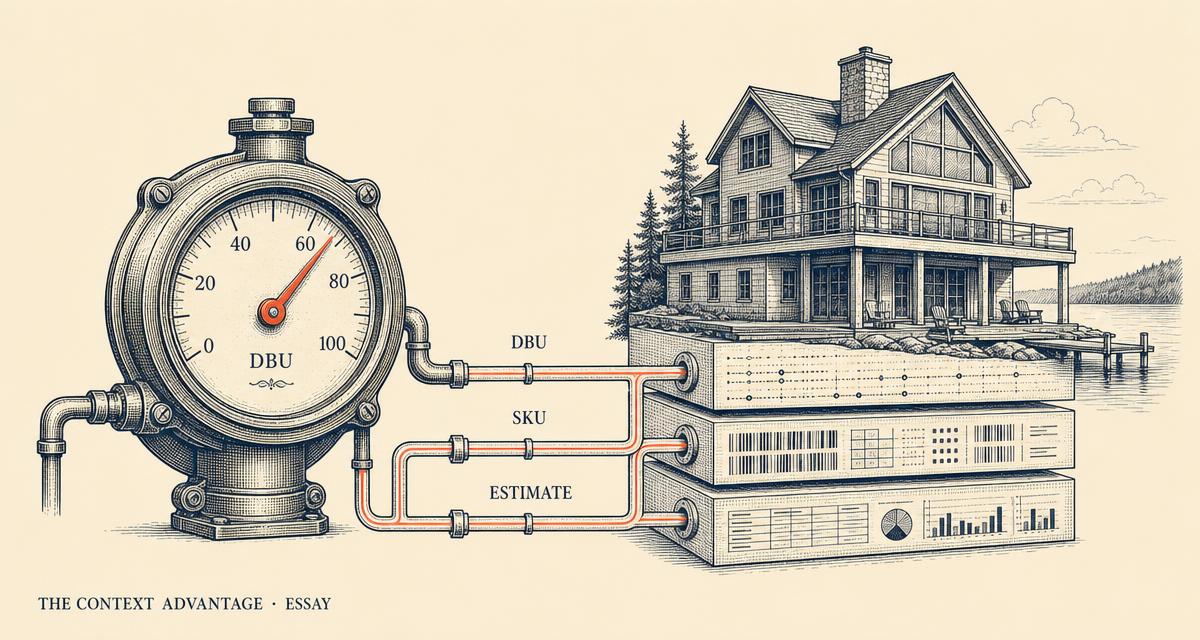
Lakemeter and the End of the Cost Conversation Nobody Could Win
Databricks Labs just open sourced a sizing tool that turns platform cost from a private spreadsheet into a shared, inspectable estimate. That sounds like a procurement detail. It is actually the missing instrument in the third C.
 Choice
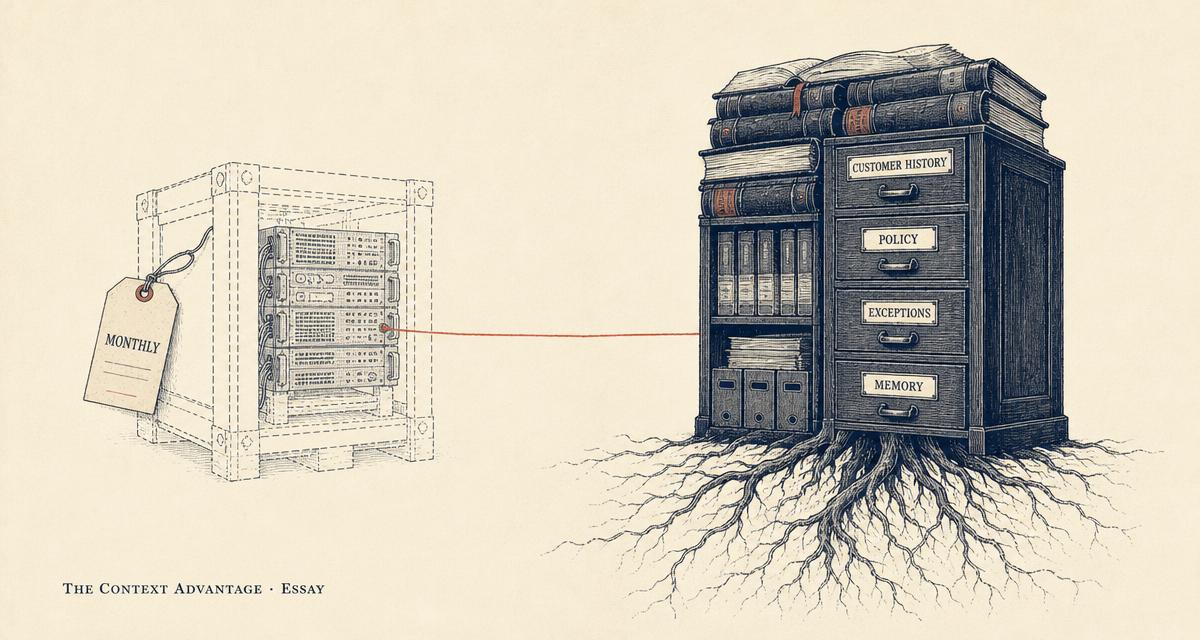
The Model Is Rented. The Relationship Is Yours.
Every competitor can lease the same frontier intelligence by the token. Nobody can lease your customer history, your policies, your exceptions, or the twelve years of judgement your people carry. That asymmetry is the whole strategy.
 Context
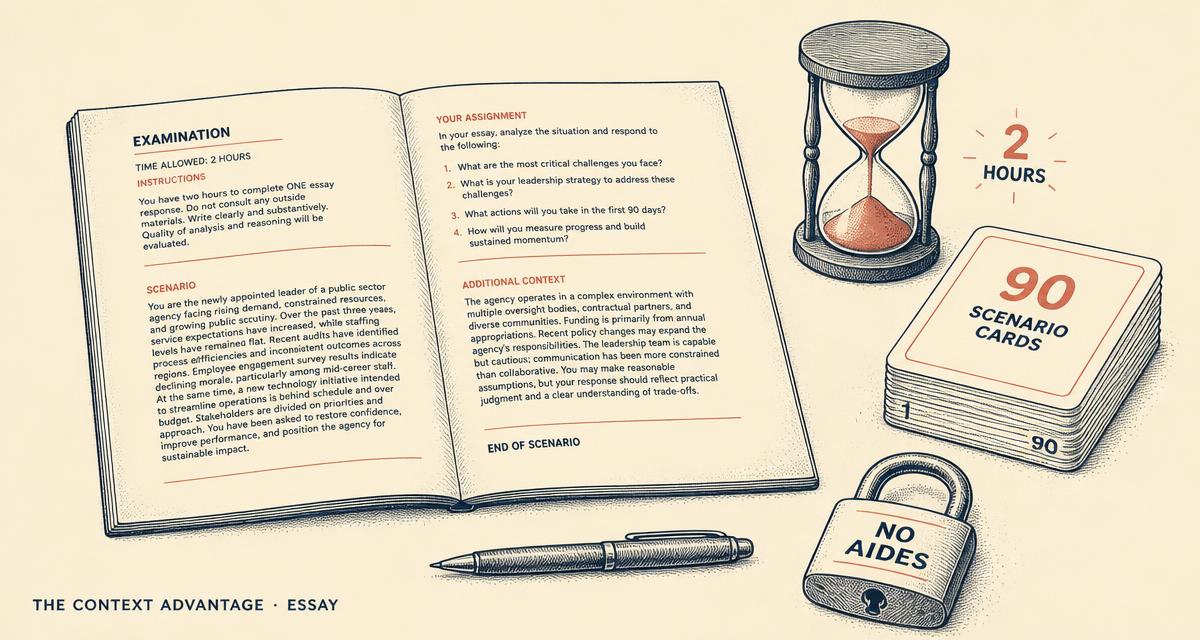
Inside the Context Engineer Beta Exam: What the First Candidates Learned
Ninety dense scenario questions in two hours, live proctored, no aides, results six weeks later. The first public beta report tells us what this certification really measures — and it is judgment, not recall.
 Cost
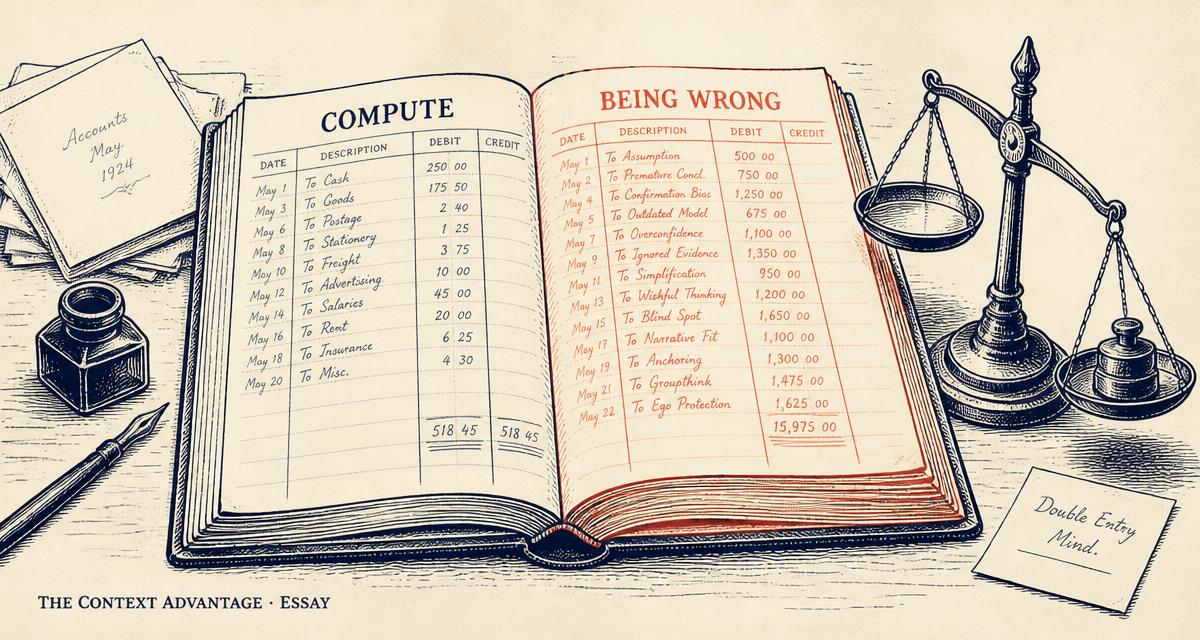
The Cost of Being Wrong
Every AI budget tracks the price of compute. Almost none of them track the price of error. That second number is larger, and it is the one that decides whether an agentic program survives its second year.
 Choice
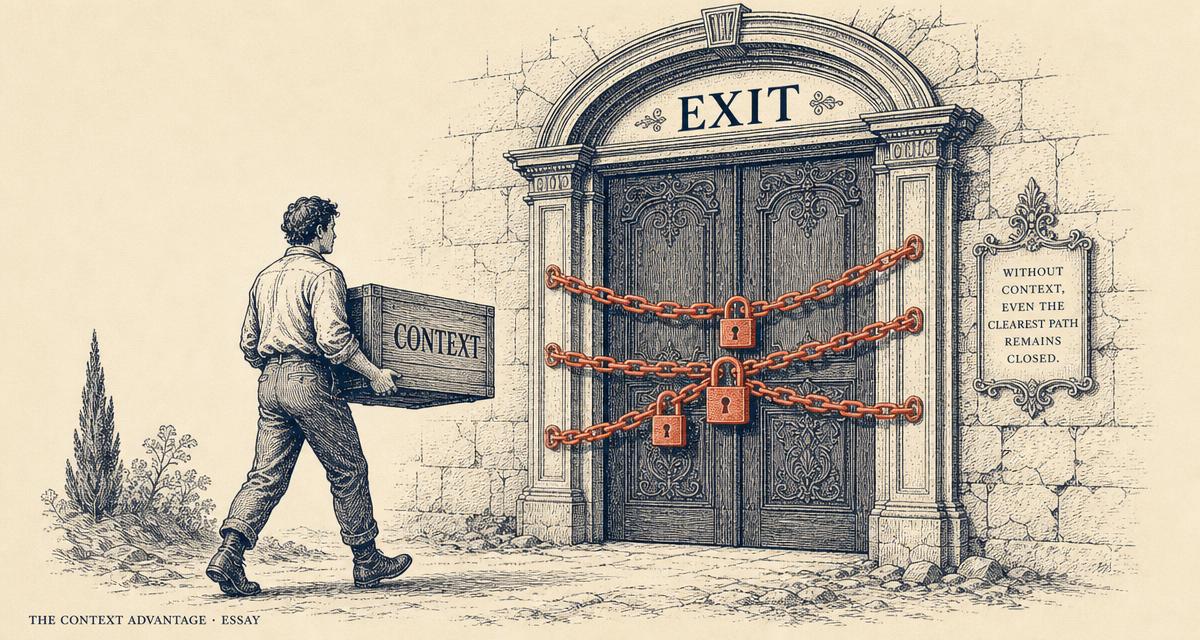
The Exit Test: Can You Actually Leave Your AI Vendor?
Every enterprise says it avoids lock-in. Almost none of them can prove it. The Exit Test is a single question with a measurable answer, and most AI programs fail it in the first ten minutes.
 Control
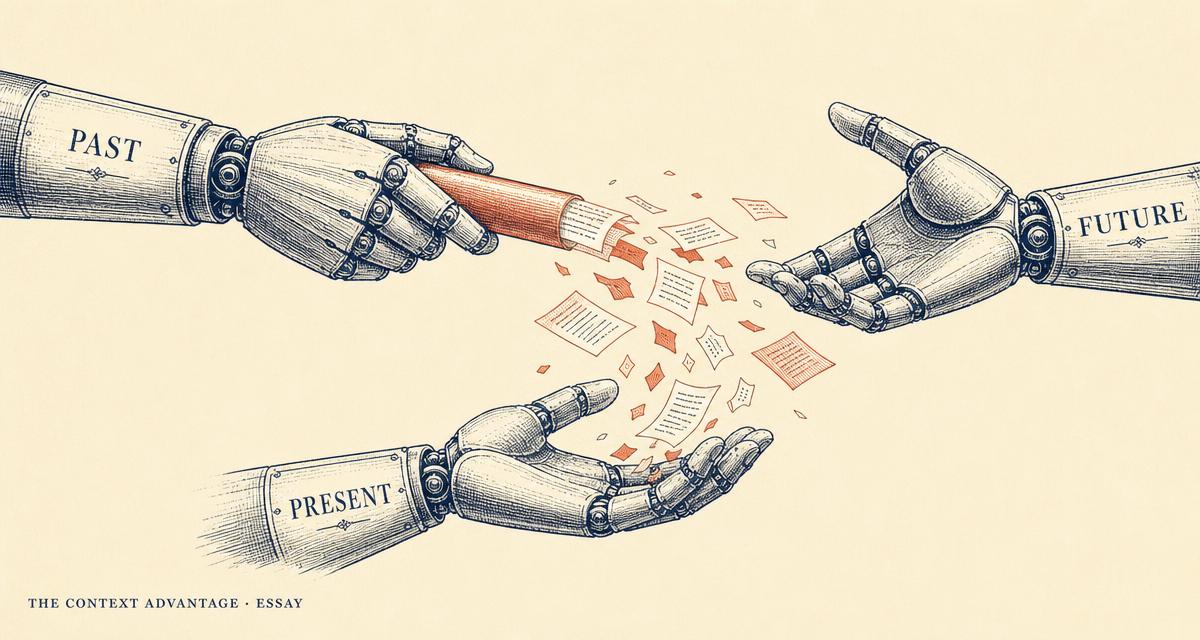
The Handoff Problem: Why Multi-Agent Systems Fail at the Seams
Every agent in your pipeline can be individually correct and the system can still be wrong. The failure does not live inside the agents. It lives in the space between them.
 Career
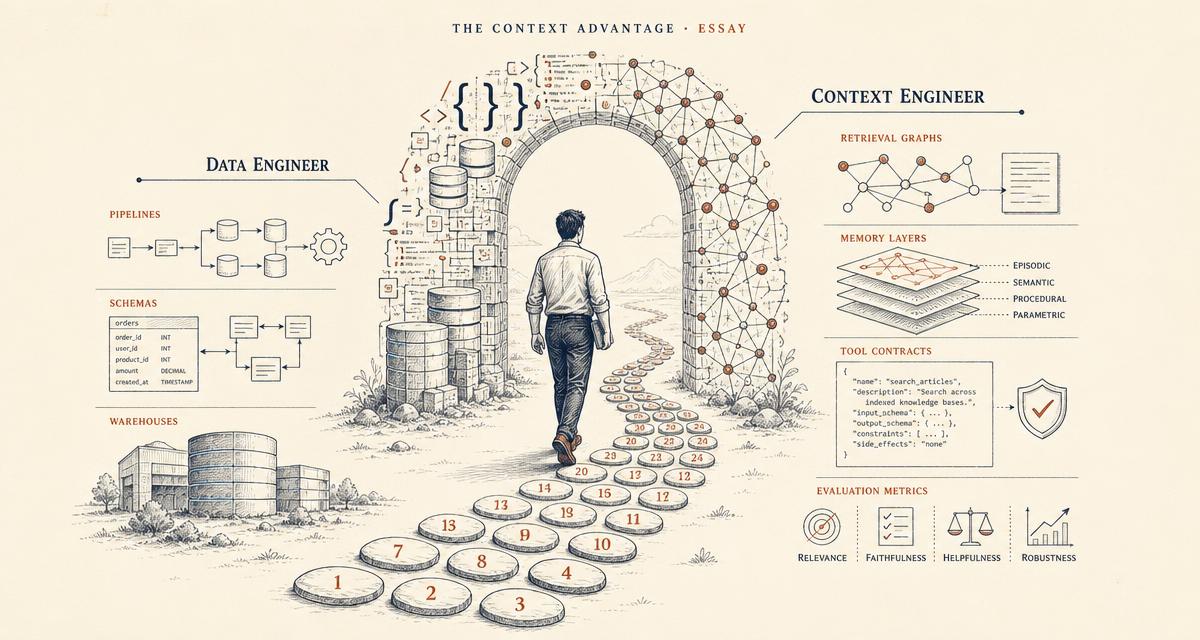
The 30-Day Path from Data Engineer to Context Engineer
You already own pipelines, schemas, semantics, and quality. The jump is not a new degree. It is a new lens. Here is a four-week transition plan, plus the free practice exam that proves the skill.
 Context
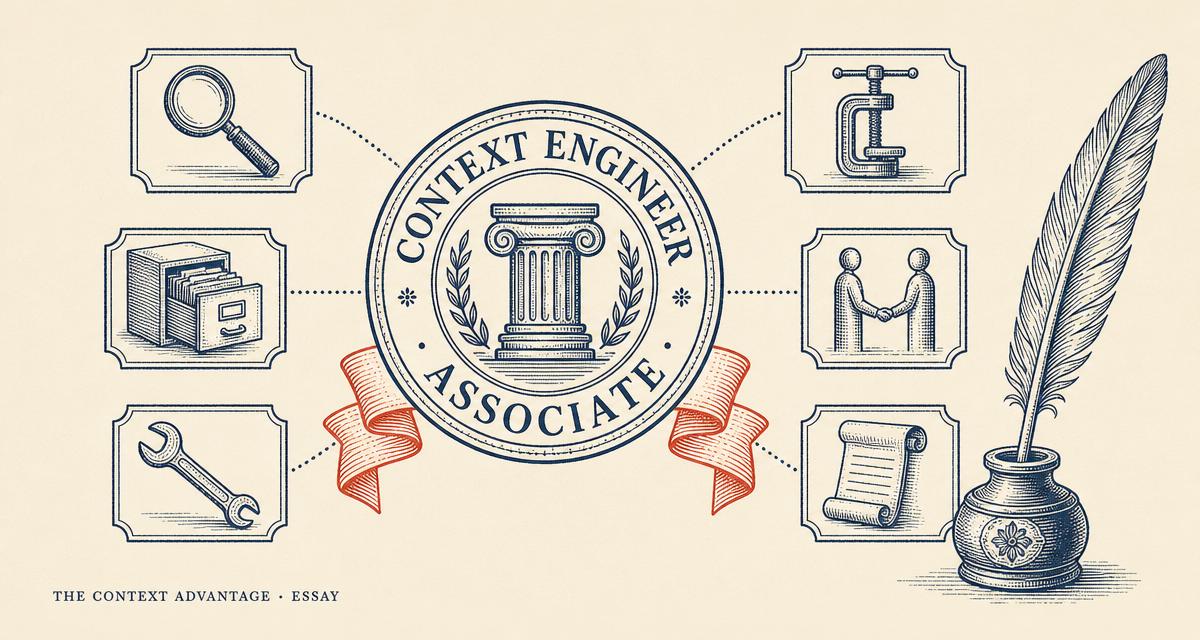
Databricks Just Made Context Engineering a Certification
The Certified Context Engineer Associate exam turns a job description into a blueprint. Here is what it tests, why the weights matter, and the free practice exam we built to go with it.
 Choice
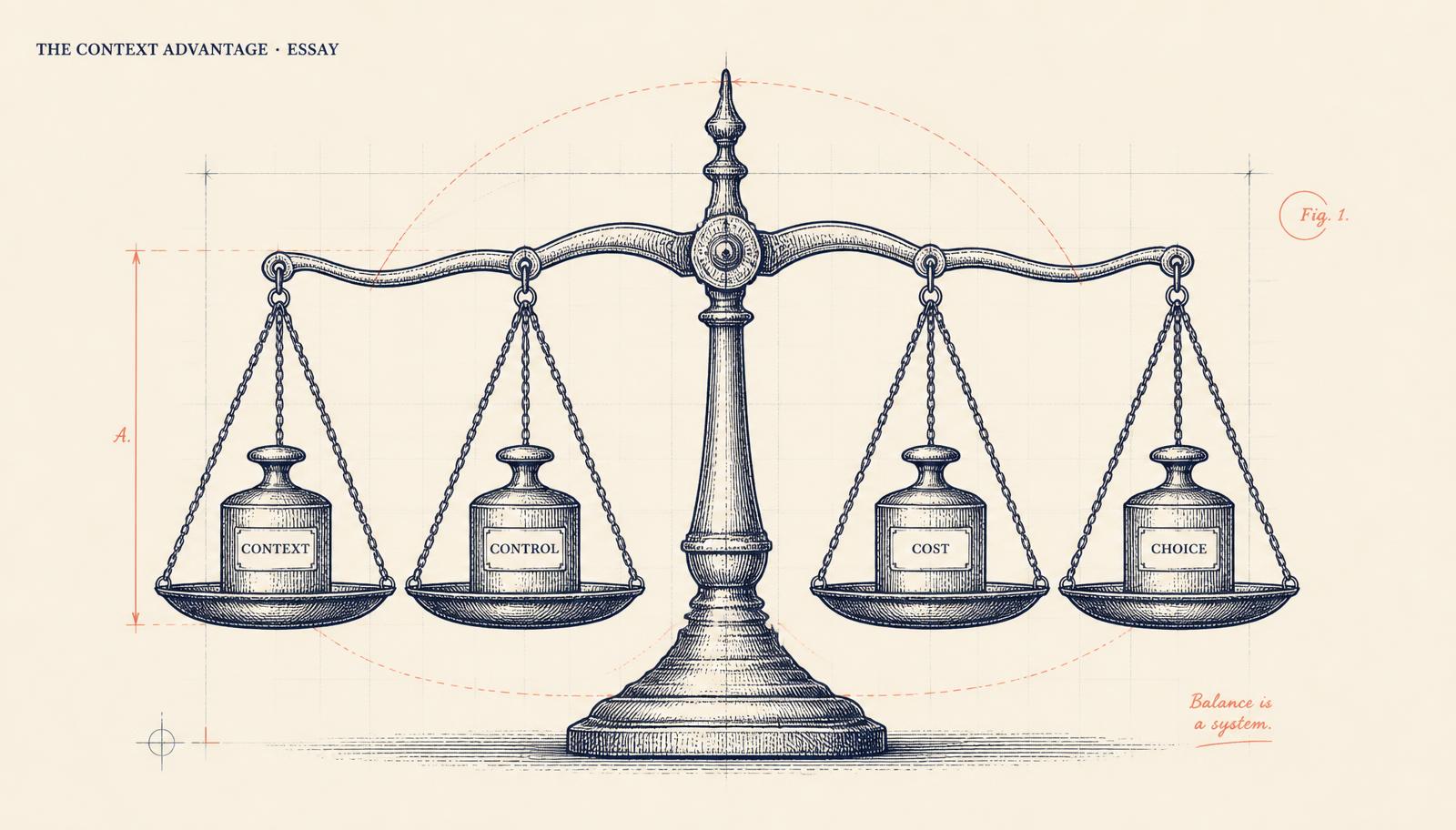
The AI Vendor Scorecard: How to Buy Without Getting Locked In
A buyer's guide to evaluating agent platforms through the only four questions that survive the next release: Context, Control, Cost, and Choice.
 Context
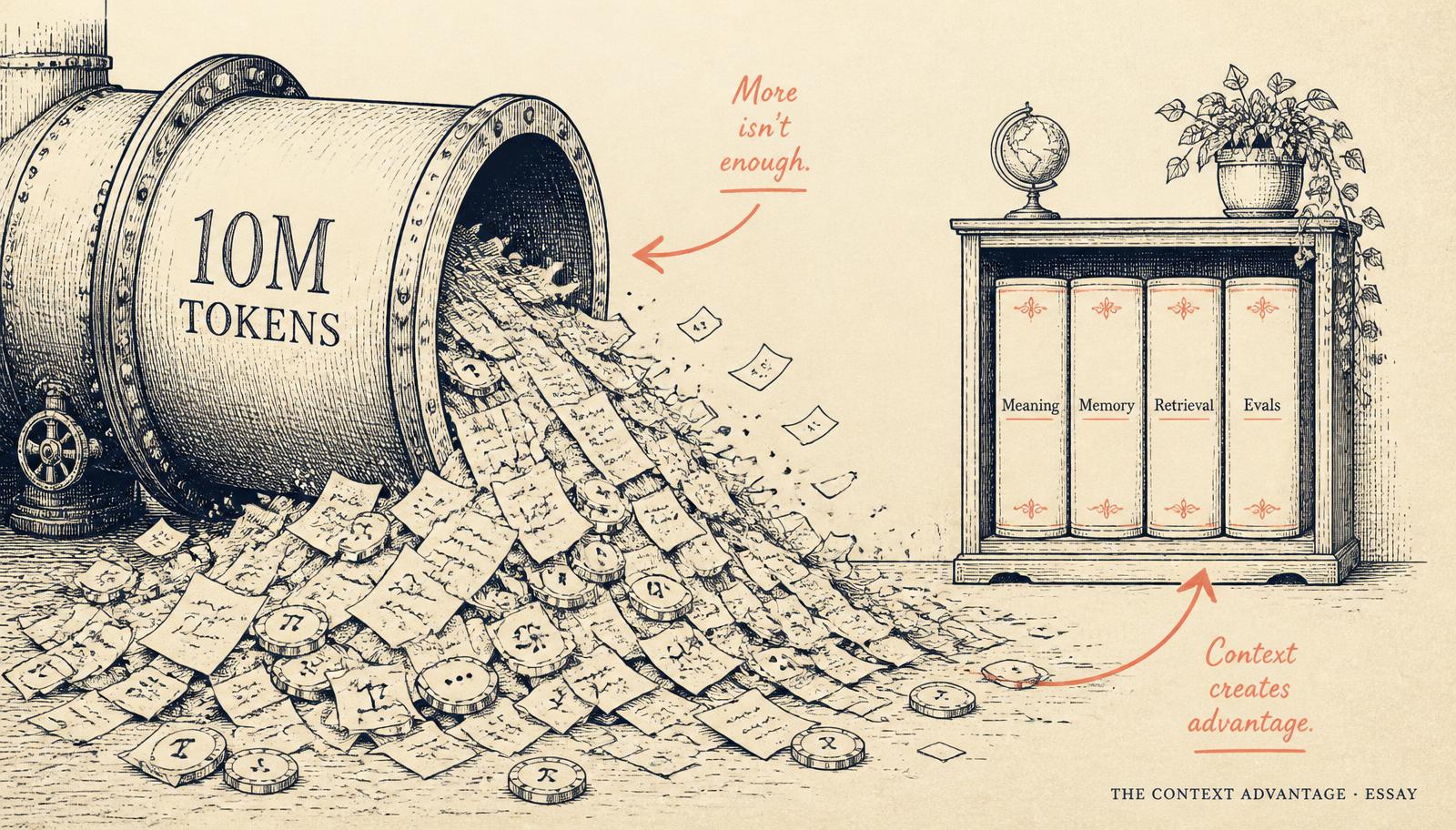
The Context Window Is Not Context
The industry keeps buying bigger pipes and calling it a library. A field manual for the difference that decides which enterprise AI programs quietly compound and which quietly stall.
 Cost
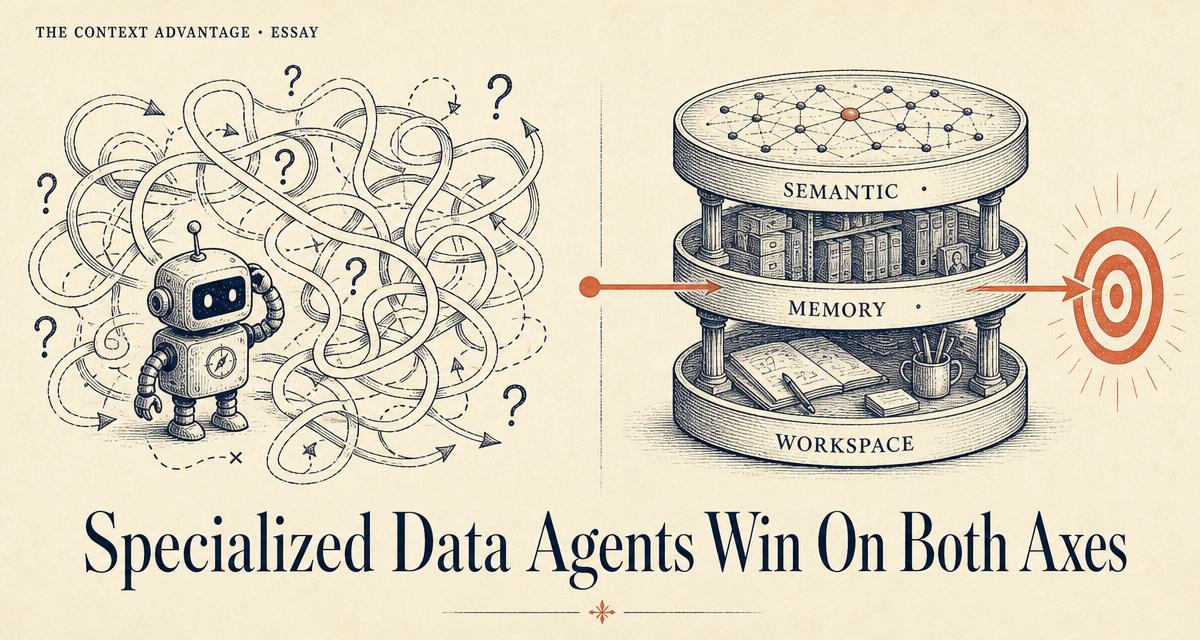
Why Specialized Data Agents Beat General Coding Agents
New Databricks research says a data-native agent hit 76.6 percent accuracy at $0.55 per task — the highest score and the lowest bill in the same run. Here is why that result is not a fluke and what it says about the next two years.
 Context
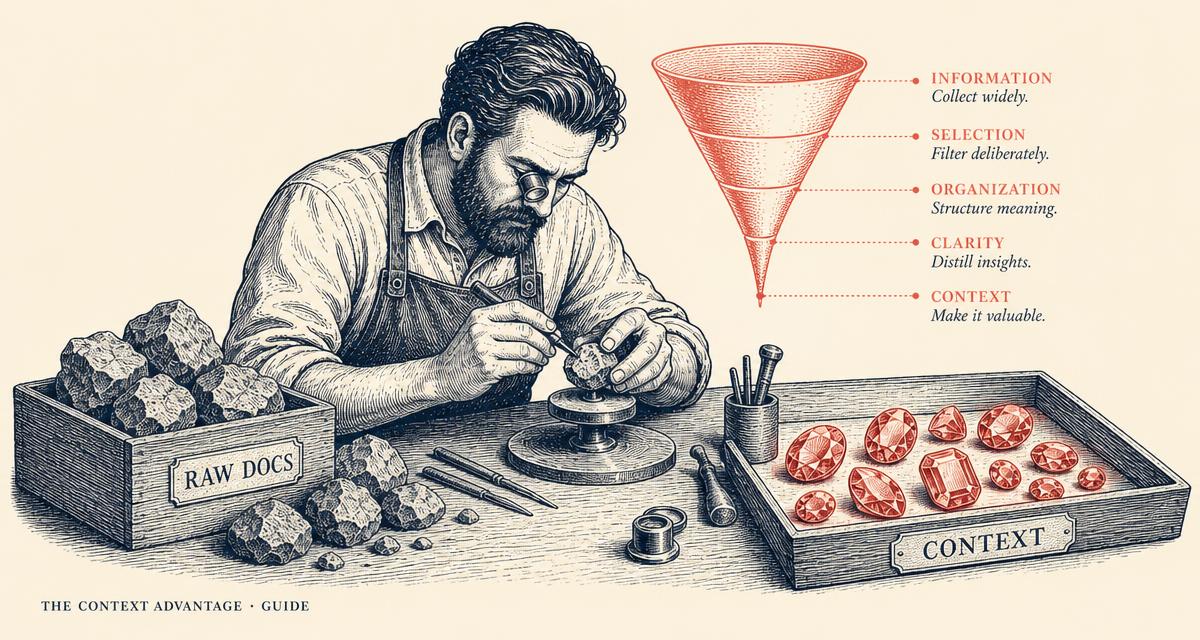
AI Business Context Refinement: A Practical Guide
Retrieval does not fail because your model is weak. It fails because nobody refined the organizational knowledge it retrieves. This is the pipeline that fixes that.
 Vision
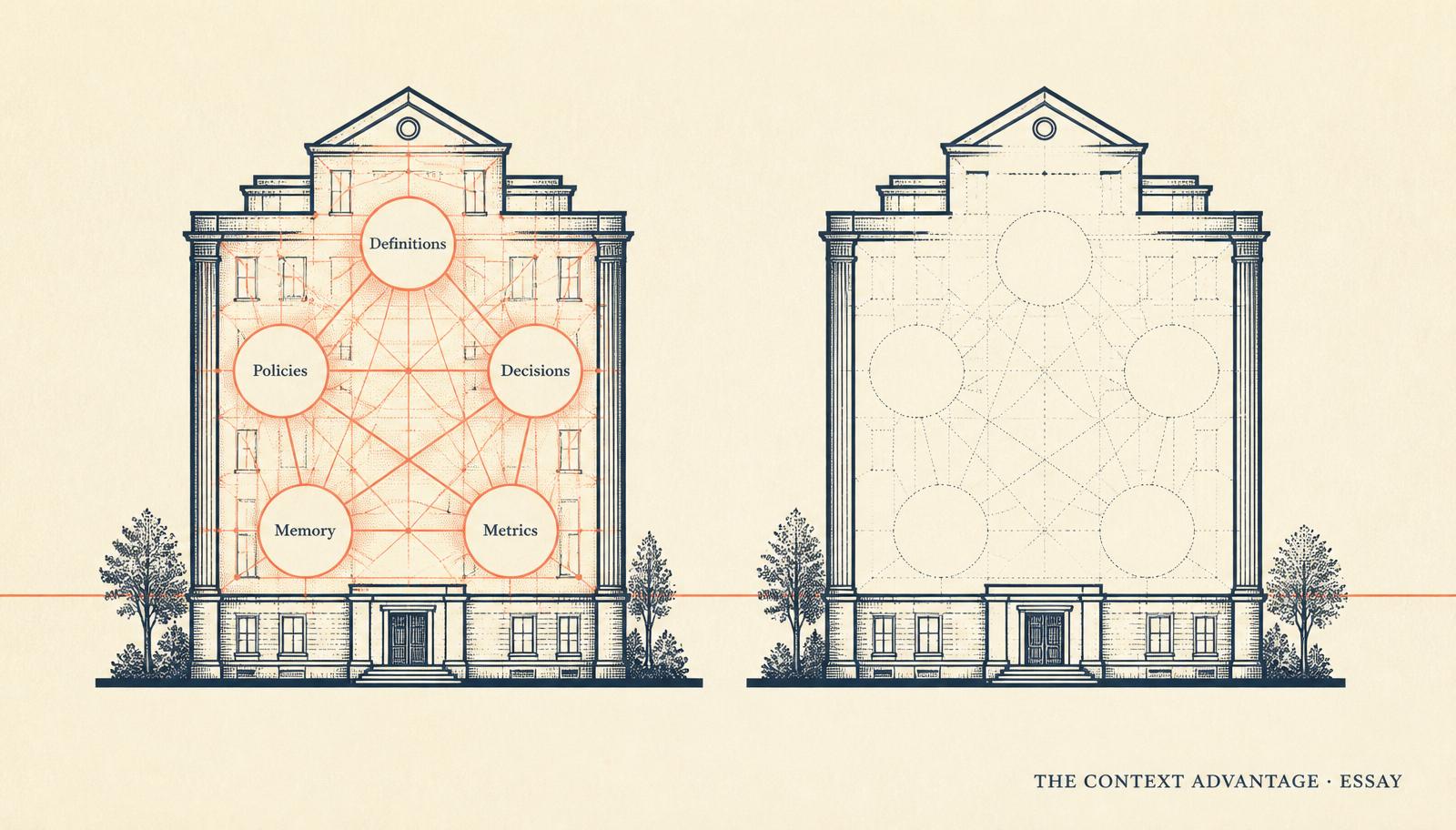
The Future Belongs to Context-Rich Companies
Every enterprise will have the same models. The compounding advantage sits one layer up — in the context they build, govern, and reuse.
 Context
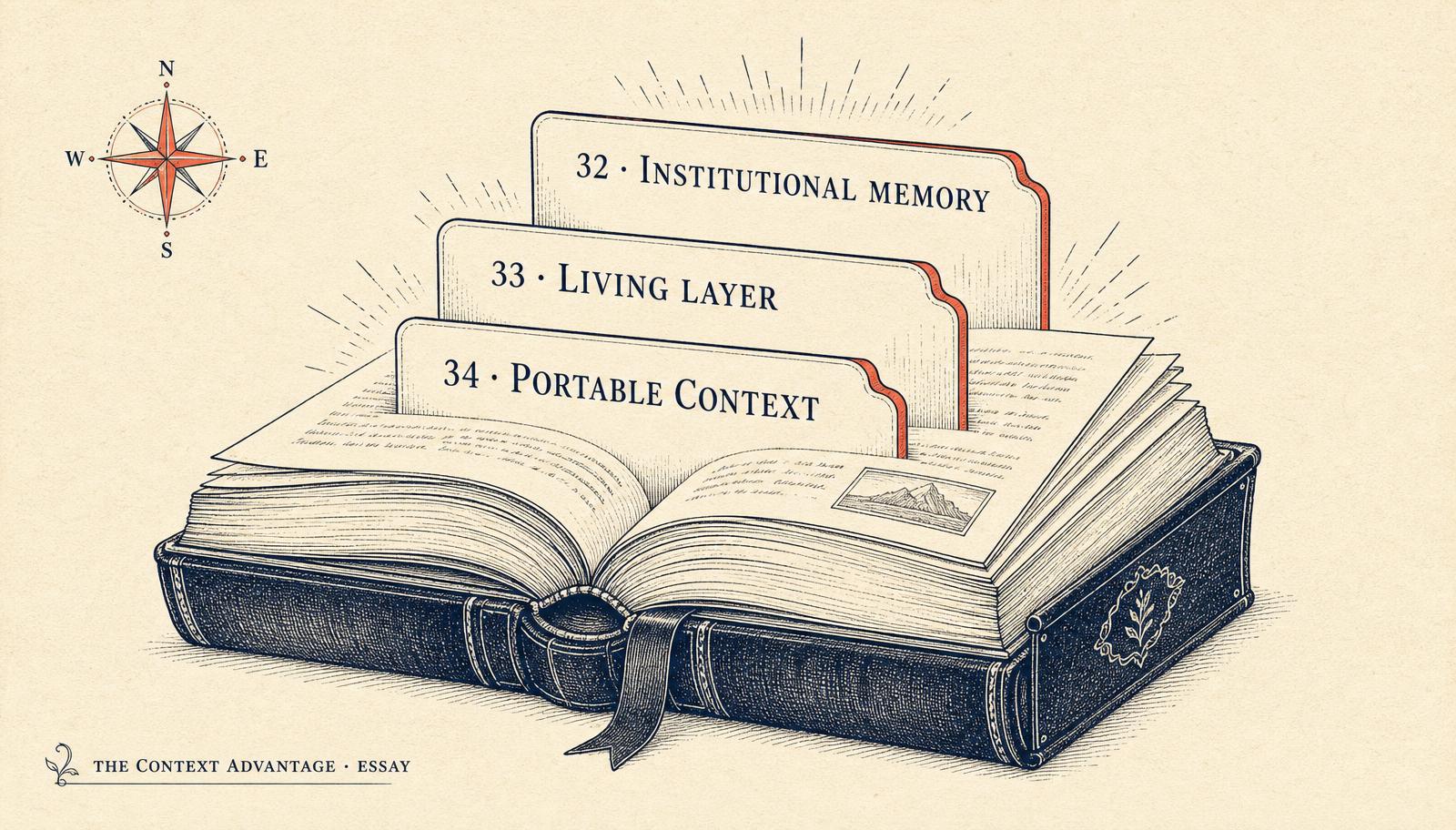
The Book Just Grew: Three New Chapters on the Context Moat
Institutional memory, a living context layer, and portable context — the three ideas that finally close the loop on why some AI programs compound and others quietly rot.
 Context
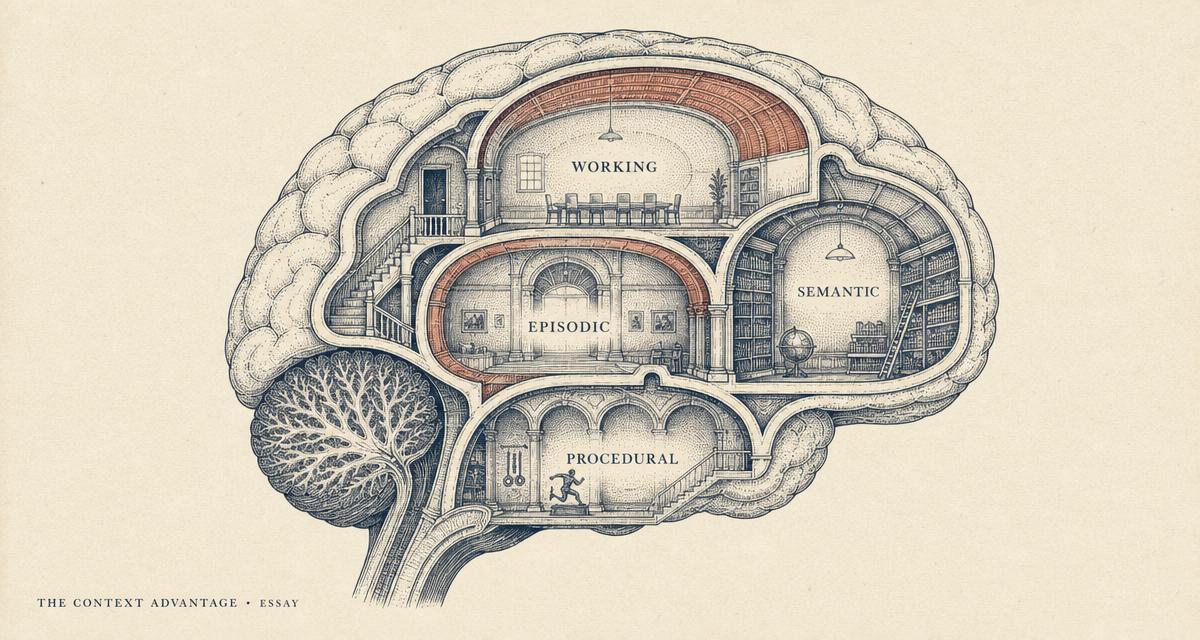
Memory Is the New Moat
Stateless agents are the fax machines of AI — impressive in a demo, useless as a teammate. The next generation of enterprise AI will be judged not by how smart it is in one turn, but by what it remembers across a thousand of them.
 Vision
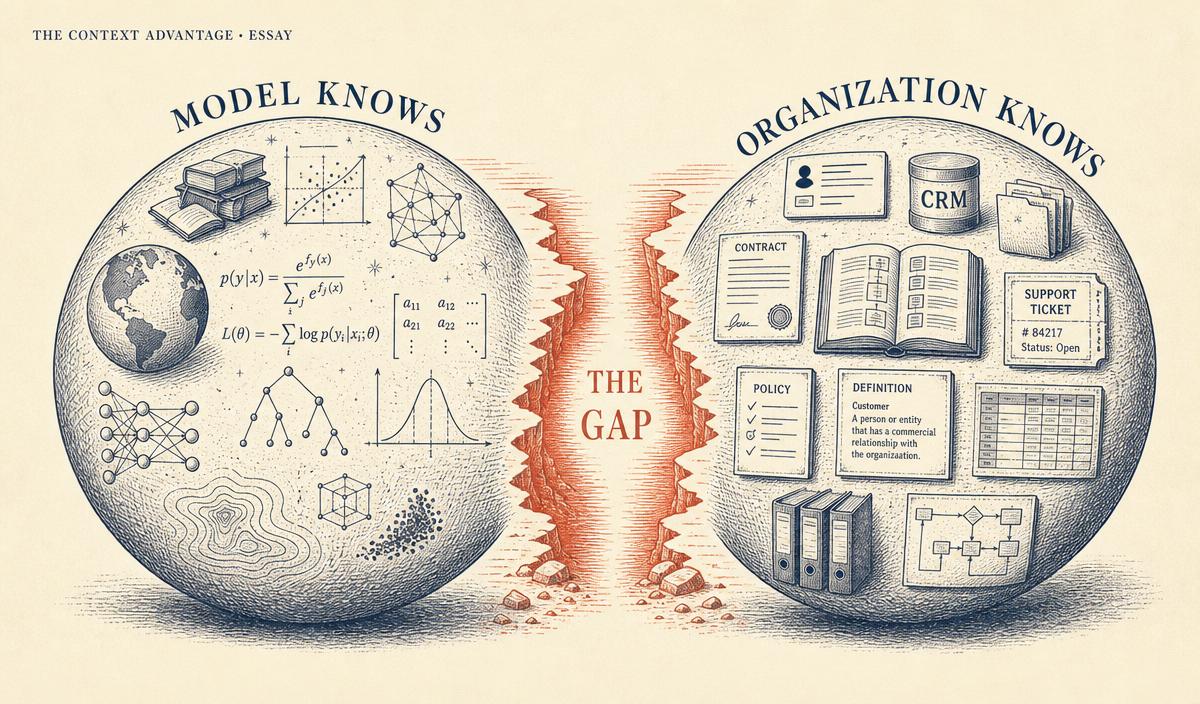
The Model–Organization Gap
The real bottleneck in enterprise AI is not the model. It is the distance between what the model knows and what your organization knows. Companies that close that gap build an advantage that compounds every time their people and agents learn.
 Vision
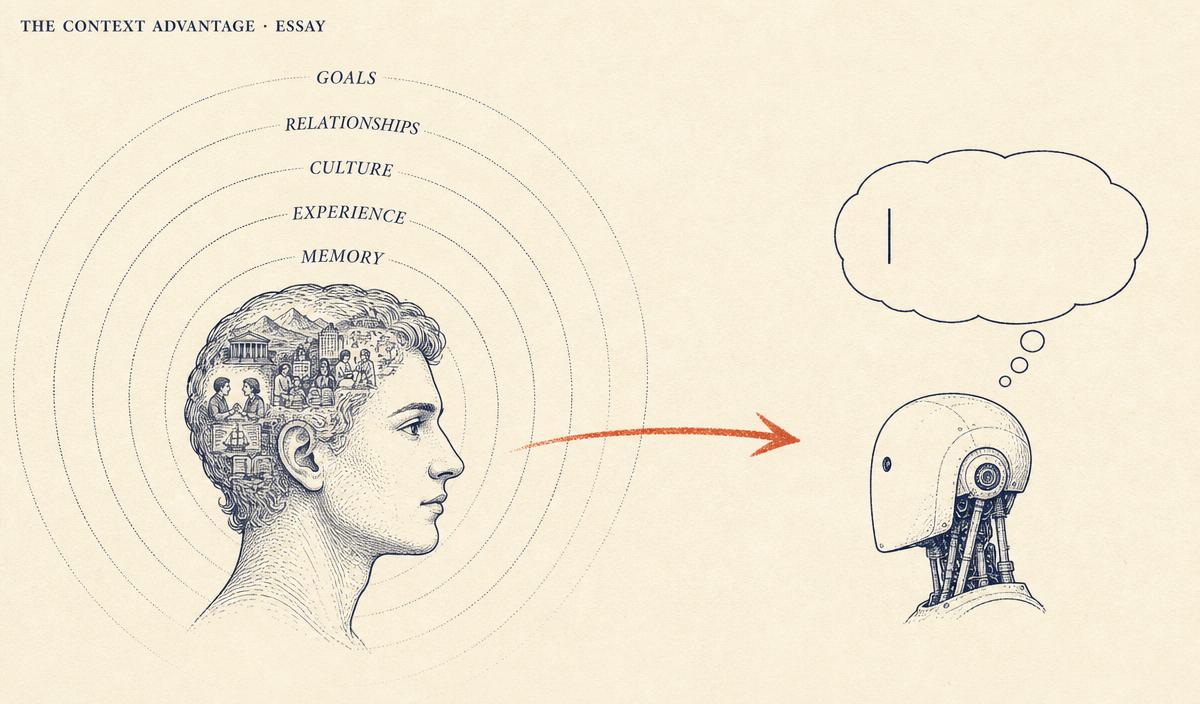
Humans Never Work Without Context. Why Should AI?
Context is not an AI problem. It is a human problem that we solved thousands of years ago. AI is simply forcing us to solve it again — this time for machines.
 Context
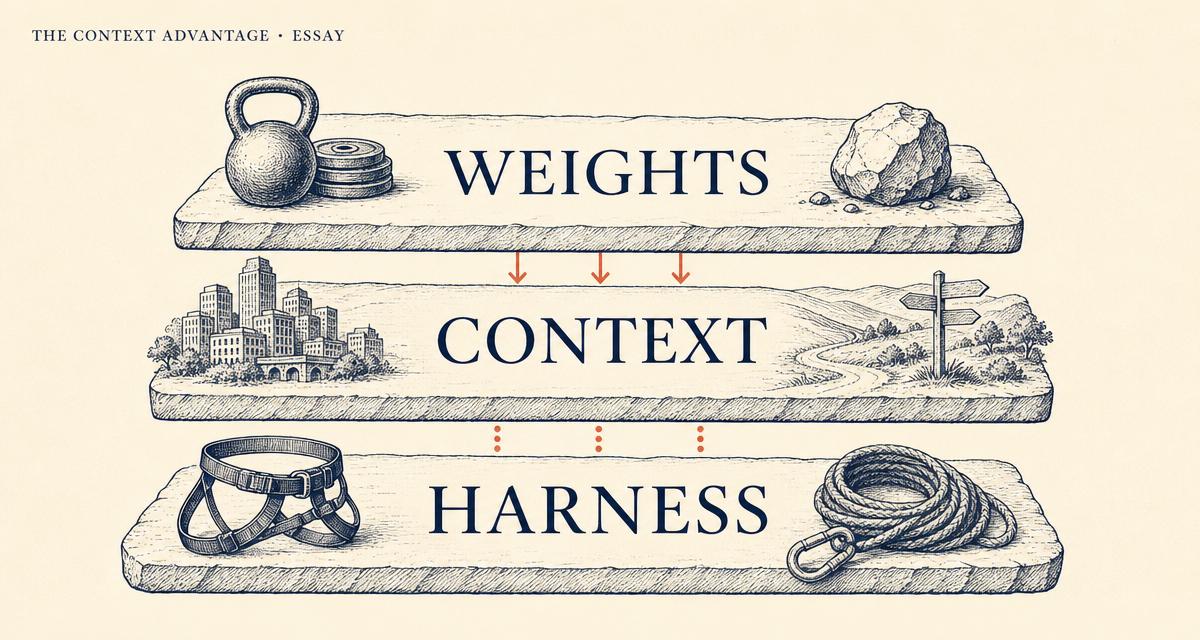
 Engineering Is the New Prompt Engineering
From weights to context to harness. The system prompt is more code than conversation now — and the people who understand that shift are quietly becoming the most valuable engineers in the building.
 Vision
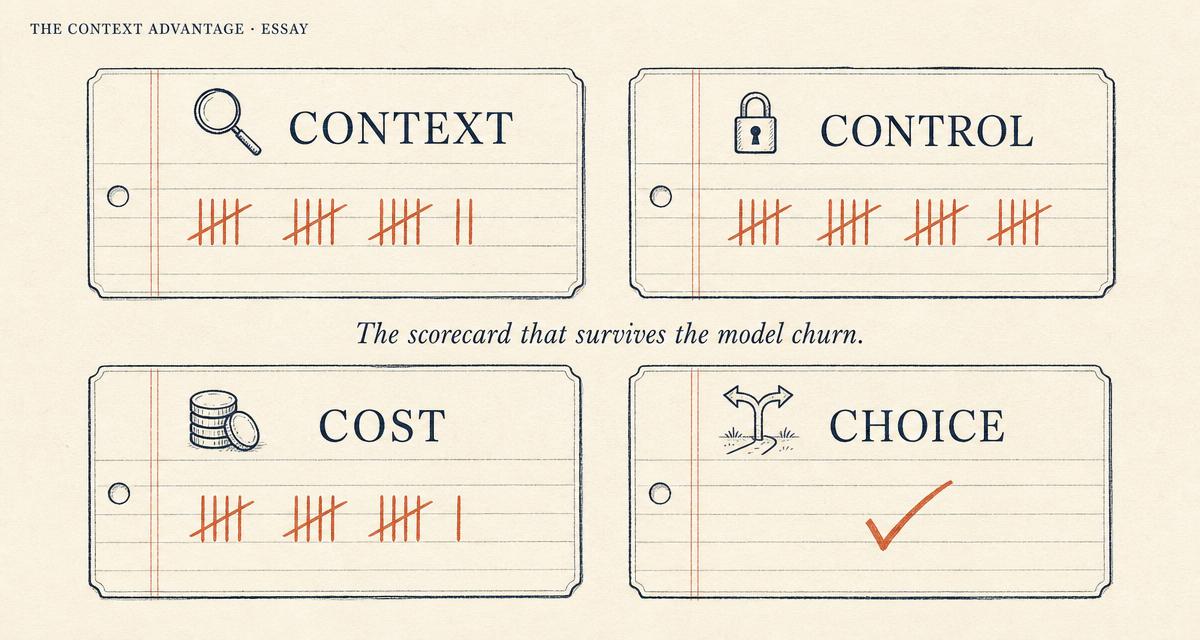
The 4 C's of Enterprise AI: The Only Scorecard That Survives the Model Churn
Every AI post-mortem this year blames a different variable — bad data, wrong model, no evals, runaway spend. They are all right, and all partial. Here is the one framework that unifies them, and the scorecard your team can run this afternoon.
 Vision
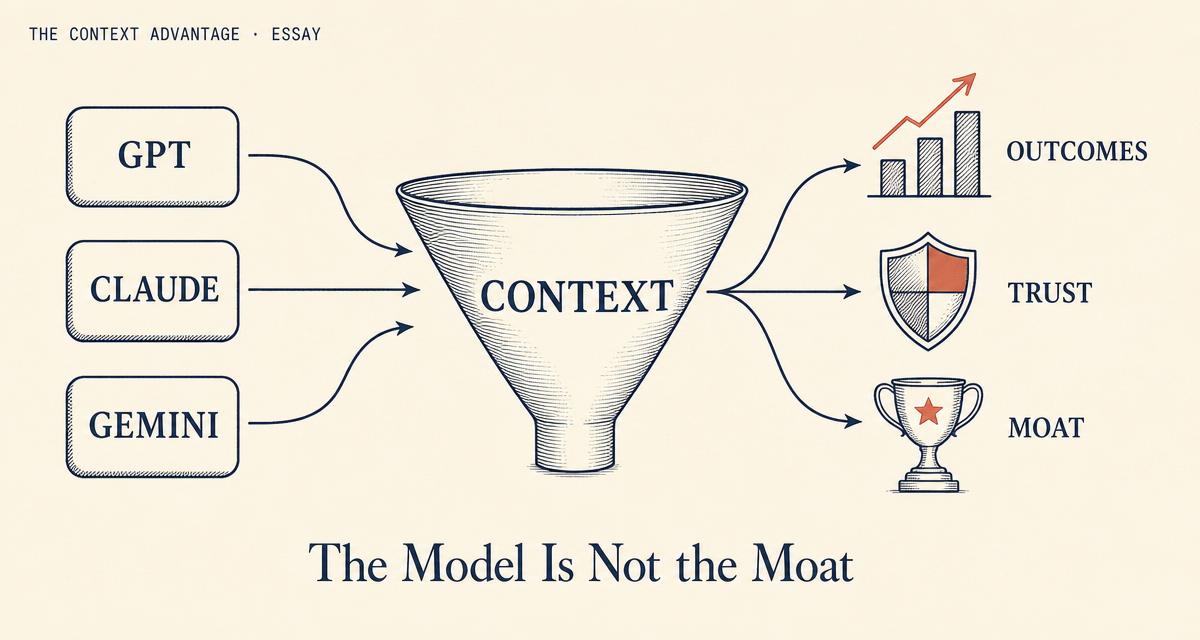
The Model Is Not the Moat — Context Is
Every team can now call the same frontier model at roughly the same price. The advantage has quietly moved one layer down — into the business context you feed it.
 Vision
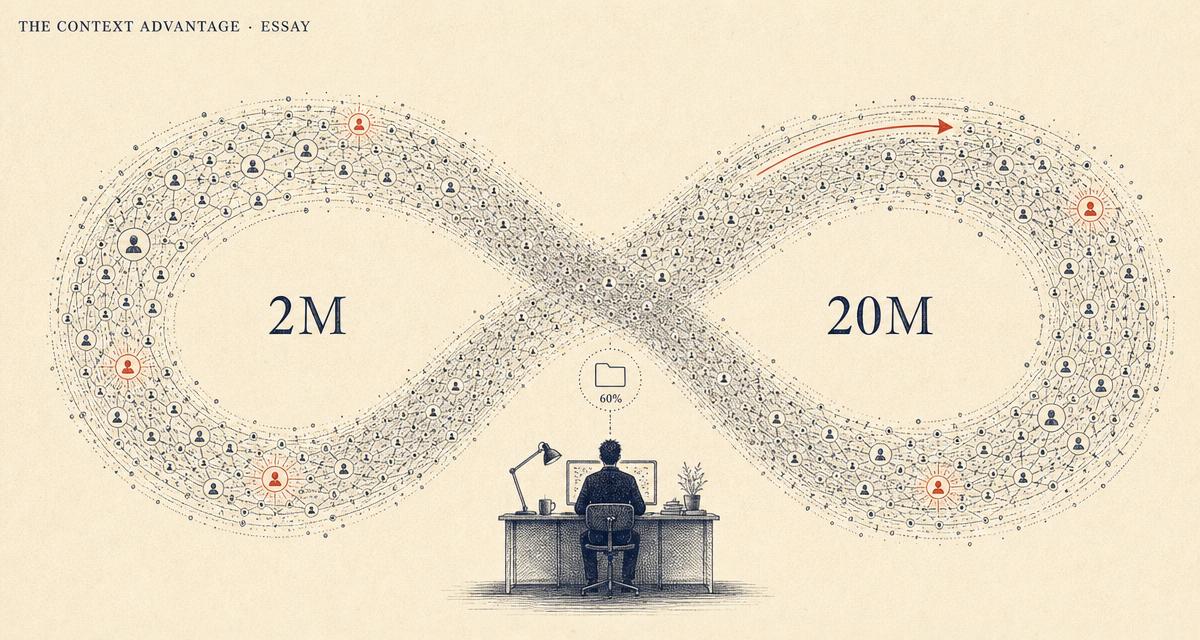
When 60% of the Code Is Already Written by Agents
Microsoft is planning for two to twenty million agents in a loop. The interesting question is not whether that number is real. It is what has to be true in your stack for a number like that to be safe.
 Control
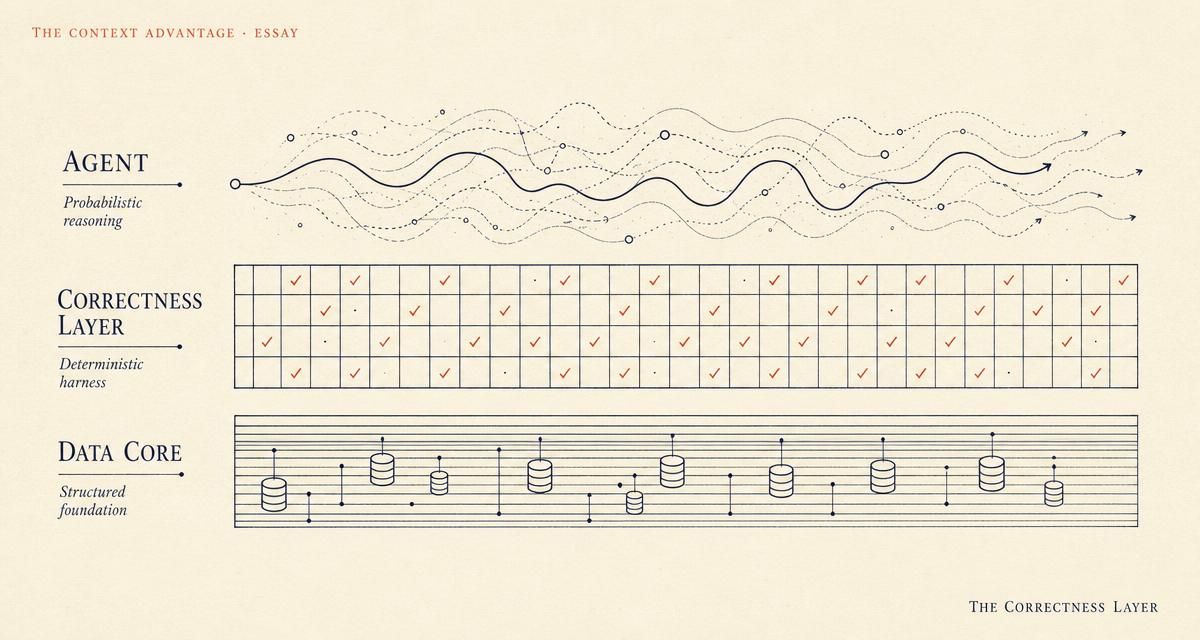
The Correctness Layer
Where AI agents actually belong in a data stack — and why the most important piece of the architecture is the boring, deterministic middle nobody is posting about.
 Context
Stop Prompting AI. Start Thinking With It.
Why the best AI users have shifted from telling agents what to do to asking them what they should do.
 Control
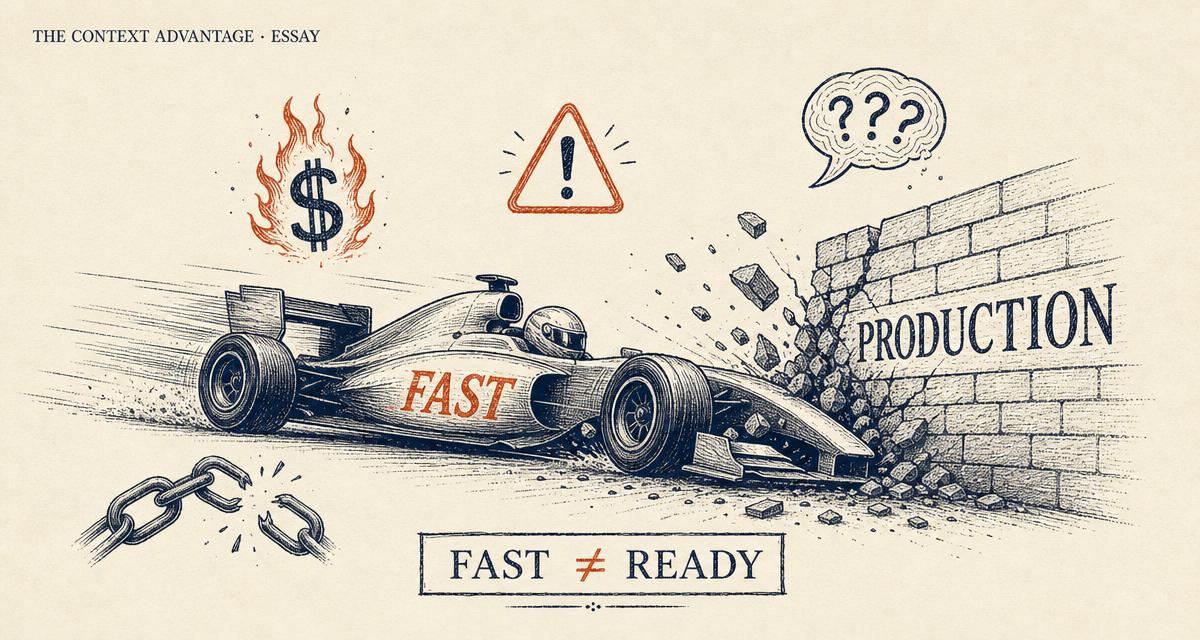
A Fast Agent Is Not Enough
Speed without substance is a fast track to failure. In production, a blindingly fast AI agent that confidently hallucinates, blows through budgets, or breaks down on edge cases is worse than a slow one.
 Career
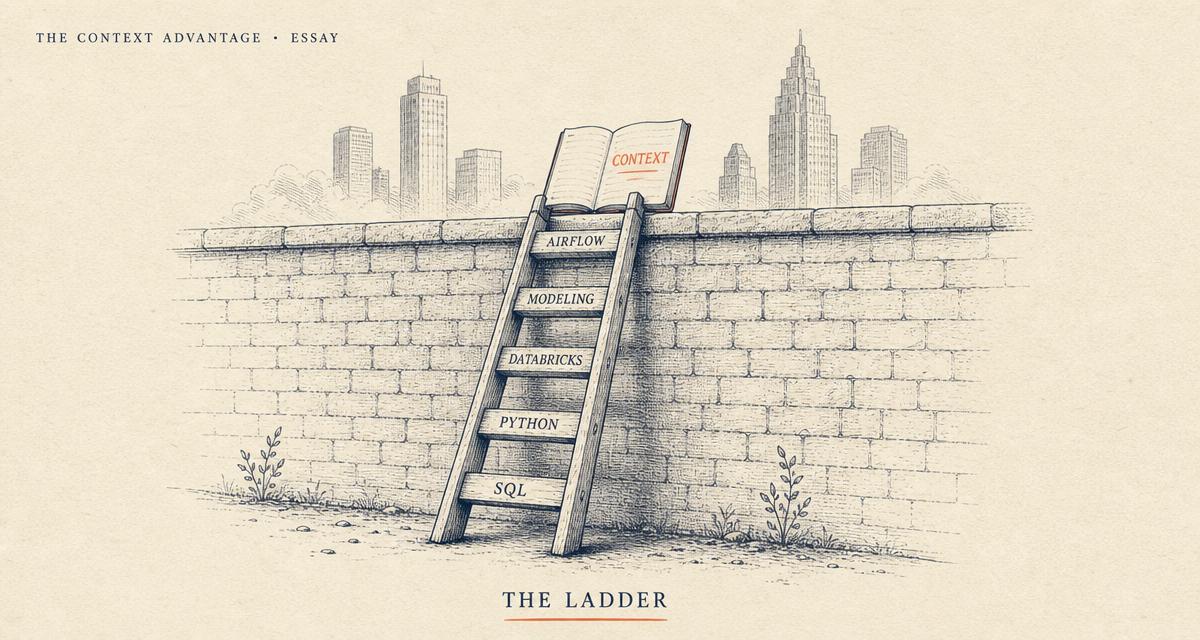
"Getting Into Data Engineering Is Actually Pretty Easy"
A five-line LinkedIn list has been going around. It is not wrong. It is just the first ten percent of the job.
 Context
10 Million Tokens ≠ Context: Why Bigger Context Windows Won't Save Your Enterprise AI
Frontier models now advertise multi-million-token windows. Enterprise teams are quietly discovering that size and understanding are not the same thing.
 Control
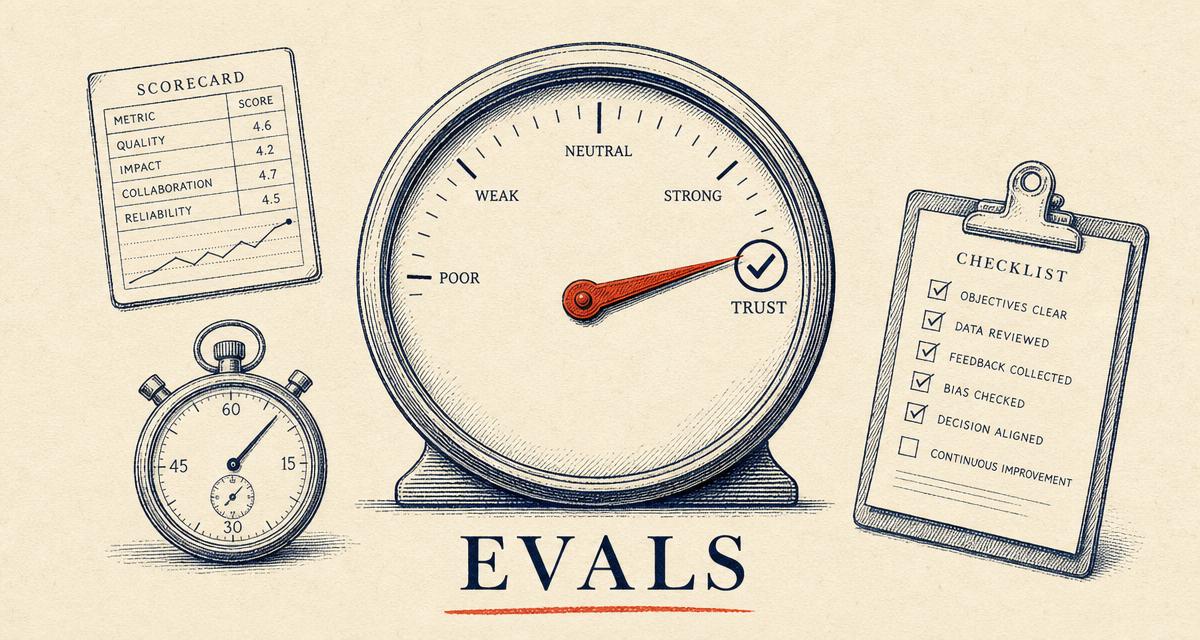
Evals Are the New Dashboards
How enterprise AI teams measure trust in 2026 — and why the eval suite is quietly replacing the KPI deck.
 Vision
Agentic AI vs Generative AI: The Difference That Actually Matters
Generative AI answers. Agentic AI acts. The gap between the two is where enterprise value — and enterprise risk — actually lives.
 Vision
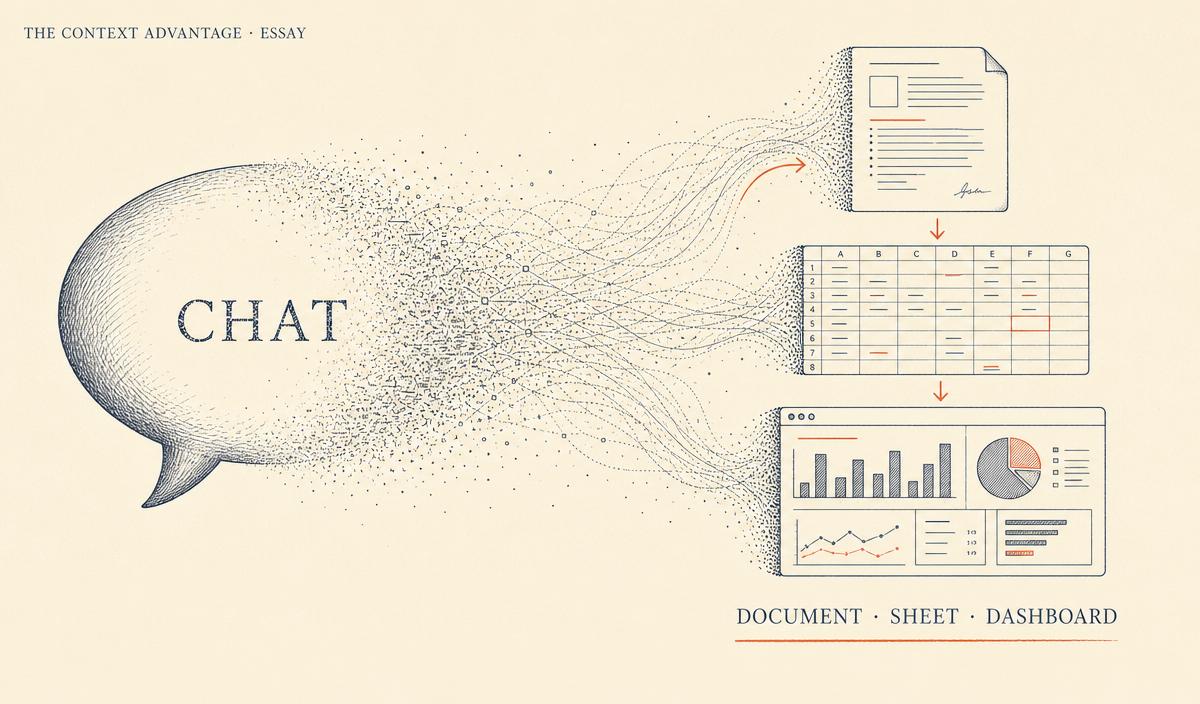
The Death of the Chatbot UI
The text box was training wheels. The next interface is the work surface itself — documents, sheets, dashboards, IDEs — with agents living inside them. Here is what that shift breaks, and what it unlocks for data teams.
 Career
Context Engineering Is the New Analytics Engineering
The craft has not changed. Its consumer has. The work of translating messy, tacit business knowledge into something governed and reusable is being pointed at models now, and the deliverables have quietly grown to include prose, prompts, and policy — not only tables.
 Cost
The Compute and Latency Budget — How Real Teams Cost Agentic Workflows
Agents feel free until the invoice lands. A practical, engineering-grade guide to budgeting tokens, tools, and time before you scale.
 Context
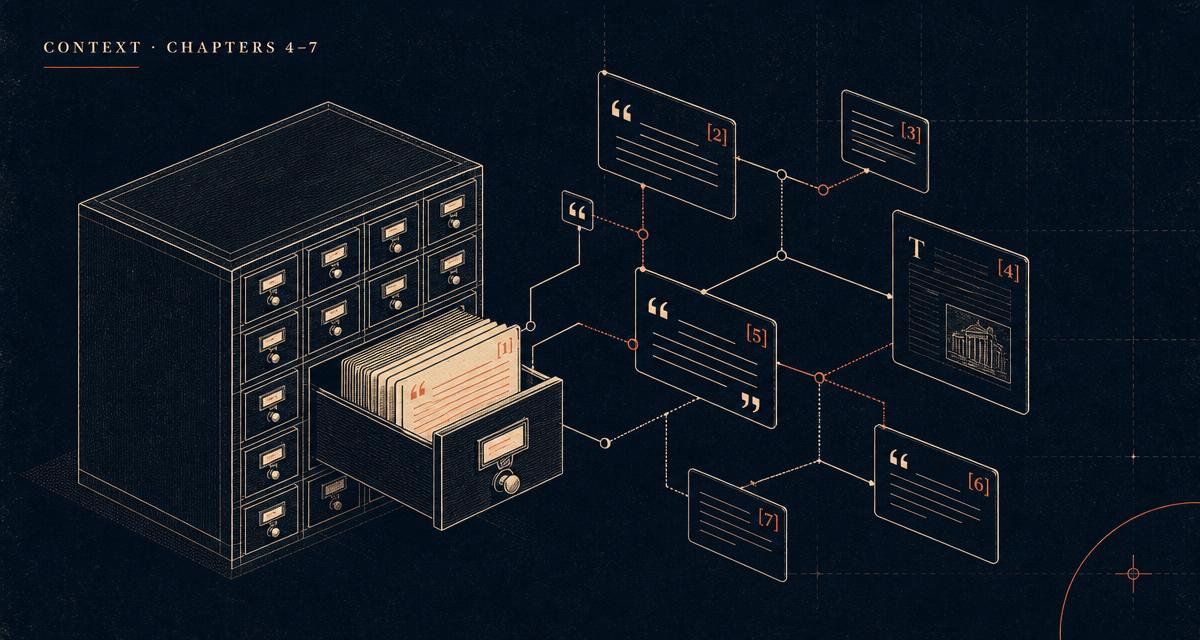
 Building Is the Foundation — RAG, Citations, and Grounding Before Tool Use
Before your agent calls a single tool, it needs to know what is true. A detailed field guide to building context that models can trust and users can verify.
 Career
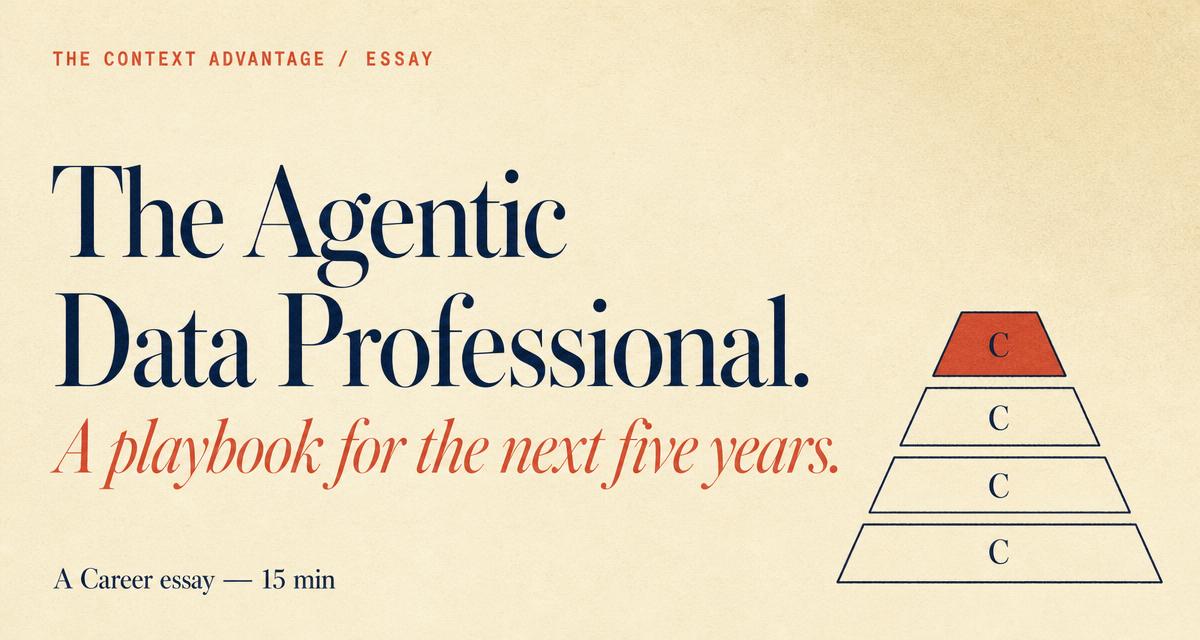
The Agentic Data Professional — A Playbook for the Next Five Years
Jensen says everyone is a programmer. Karpathy says we are in software 3.0. Benioff says the enterprise is agentic. Cut through the slogans — here is what the data professional's job actually becomes.
 Choice
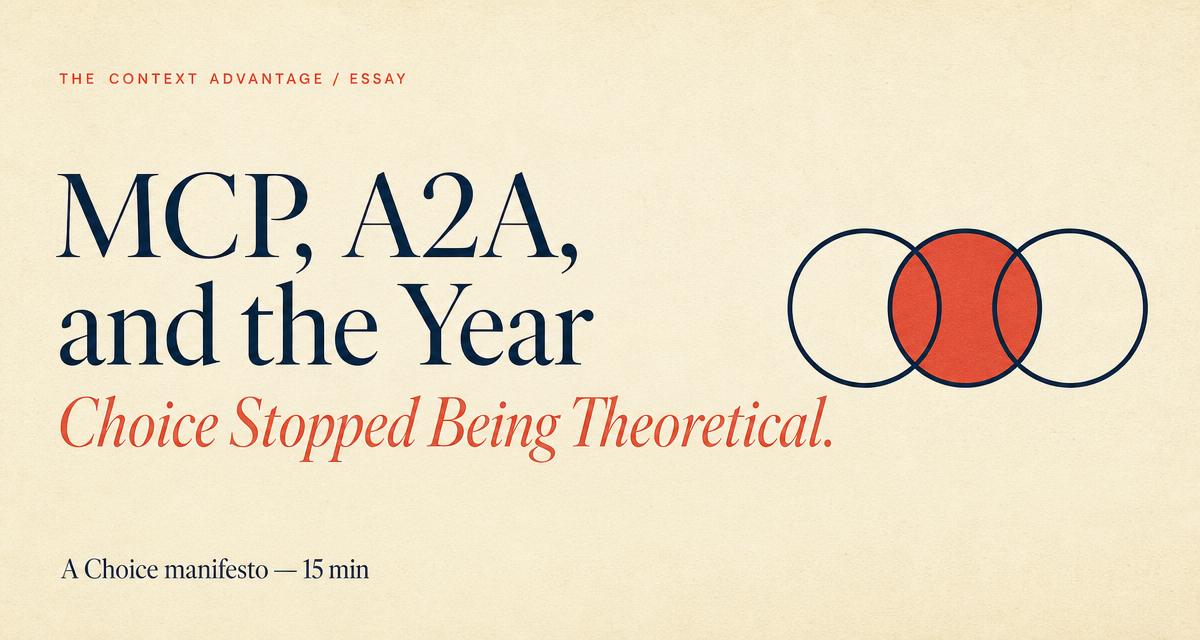
MCP, A2A, and the Year Choice Stopped Being Theoretical
For two years, portability was a principle. In 2026, it became a protocol. Here is why your platform should care more than your procurement team does.
 Cost
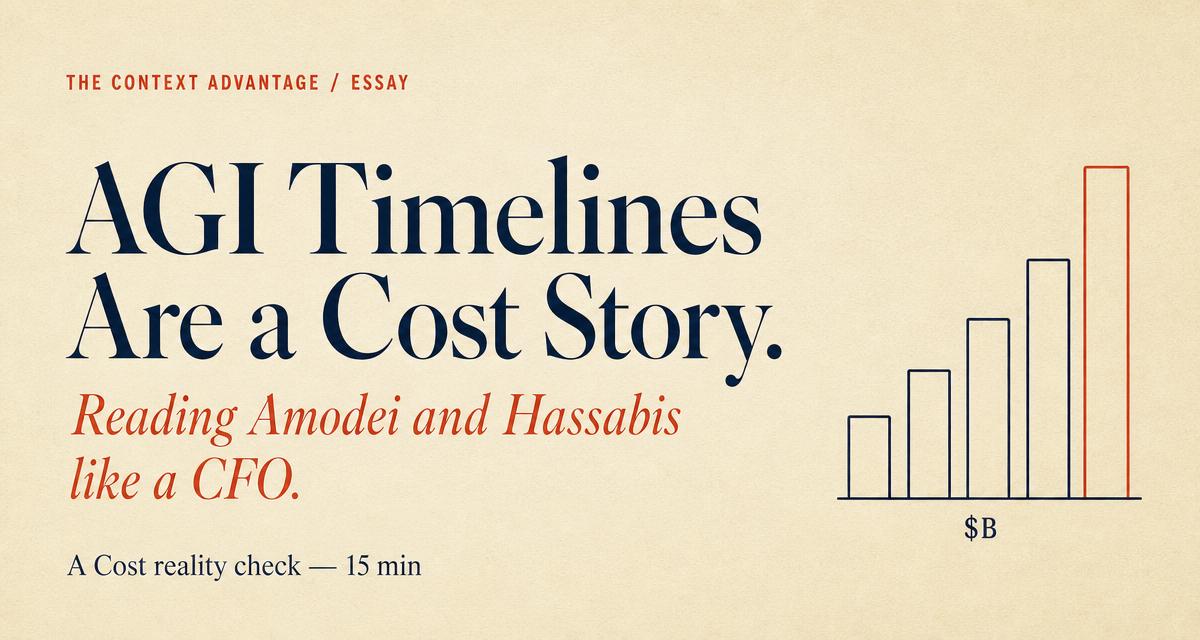
AGI Timelines Are a Cost Story — Reading Amodei and Hassabis Like a CFO
The people building the frontier are telling you, out loud, that inference gets more expensive before it gets cheaper. Your platform has to hear it.
 Control
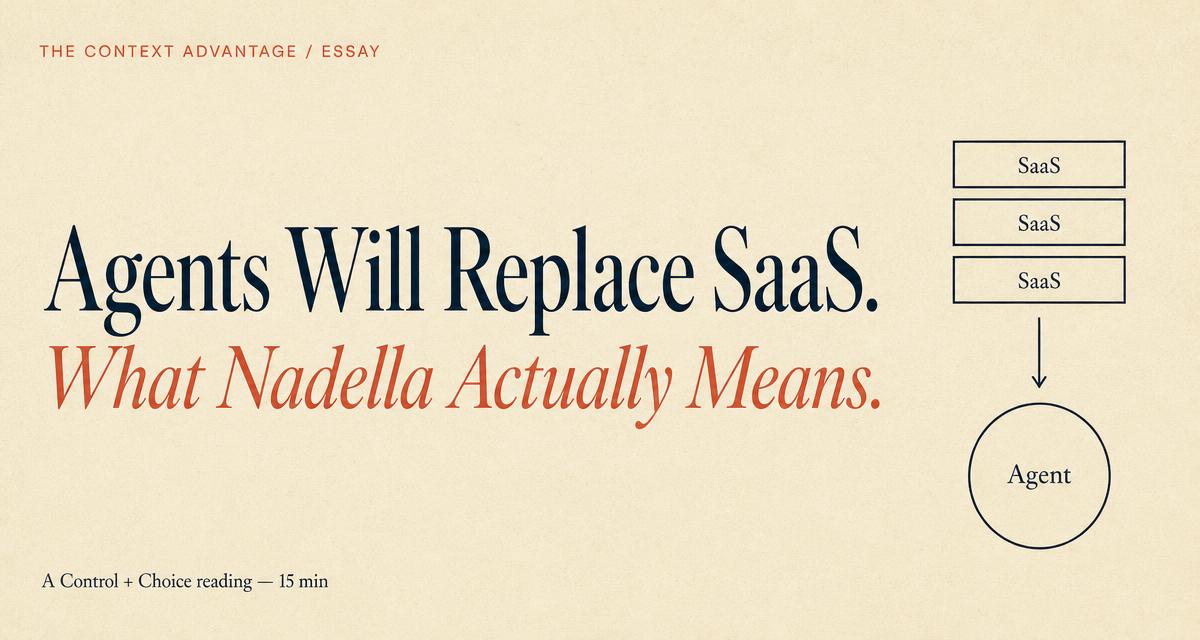
"Agents Will Replace SaaS" — What Nadella Actually Means for Your Data Stack
Satya's viral line is not a product roadmap. It is a governance problem and a portability problem wearing a keynote's clothes.
 Vision
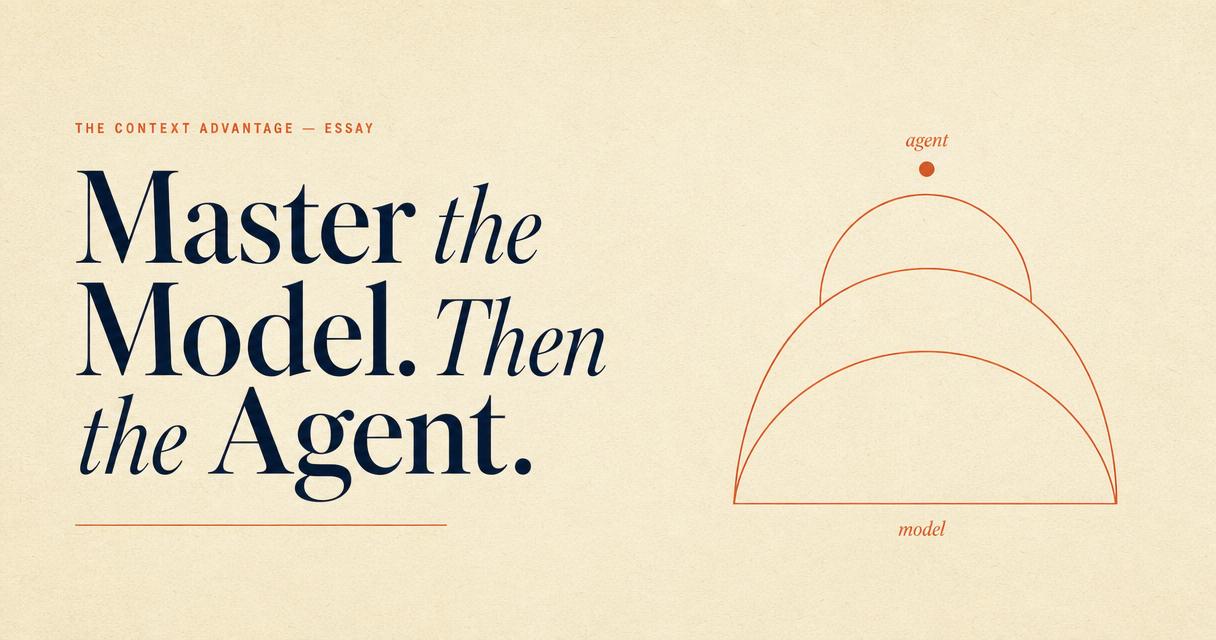
Master the Model Before You Master the Agent
Karpathy said forcing agents to work is the biggest mistake in AI right now. He is right — and the fix is a foundation, not a framework.
 Vision
A Framework for Applying AI in the Enterprise: The 4 C's in Practice
A 180-day implementation guide for teams who want a structured way to deploy AI at scale.
 Vision
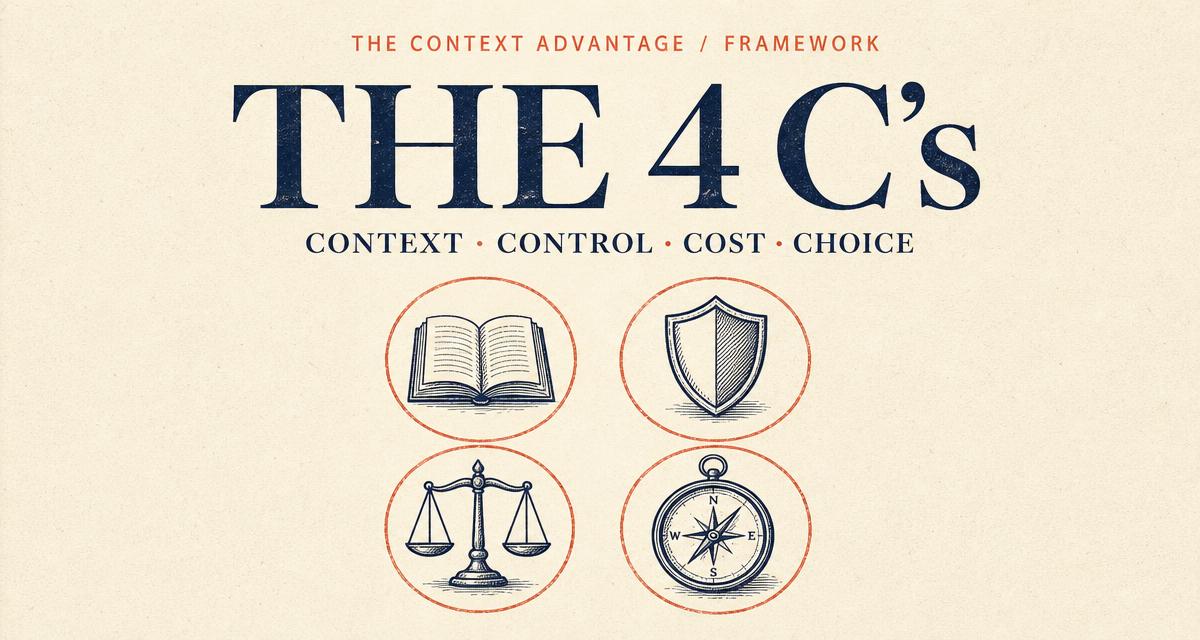
The 4 C's of Trusted Enterprise AI
Context, Control, Cost, and Choice — a simple frame for safe, useful, affordable, future-ready AI.
 Vision
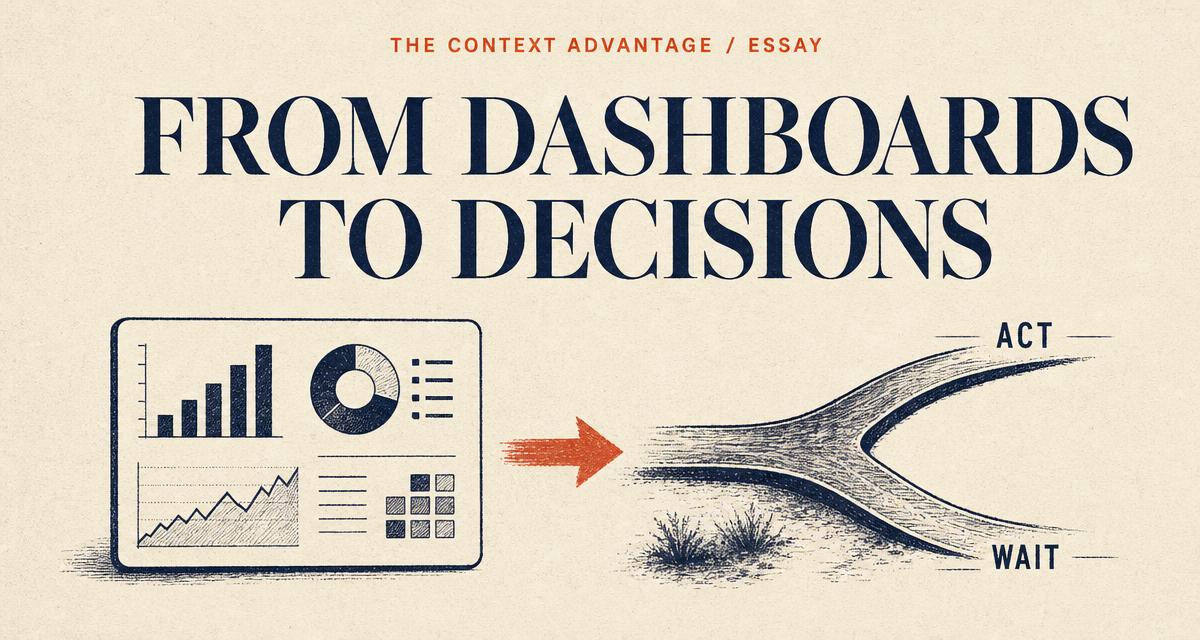
From Dashboards to Decisions
The data platform is moving from reporting history to supporting intelligent action.
 Context
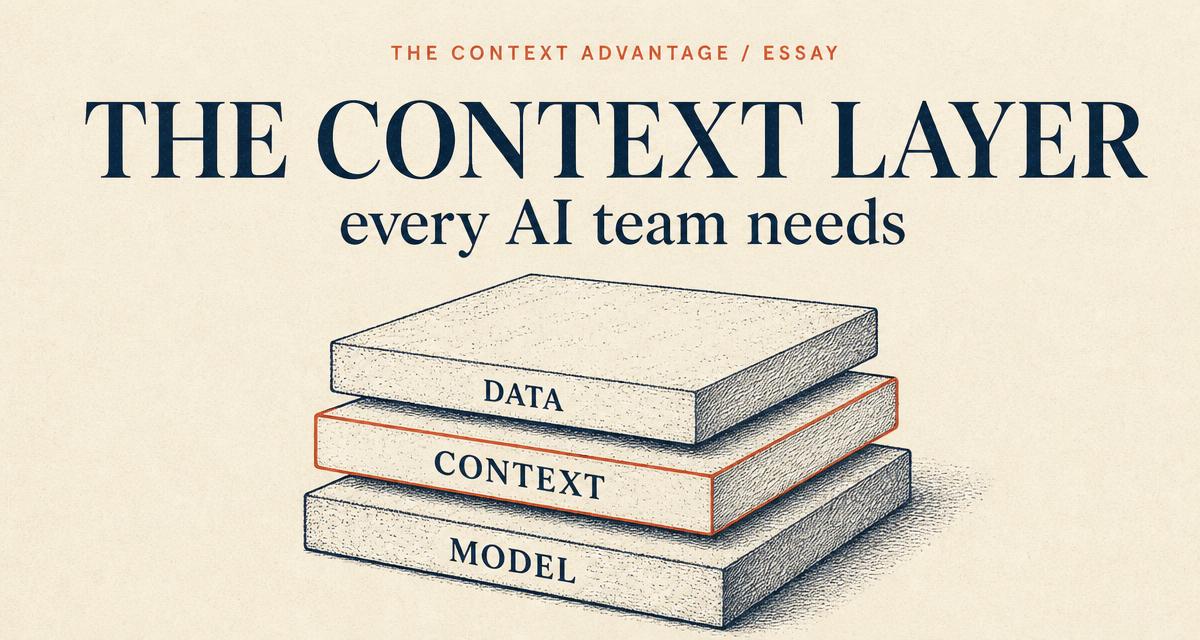
The Context Layer Every AI Team Will Need
One layer that connects business meaning, trusted data, permissions, and agents.
 Context
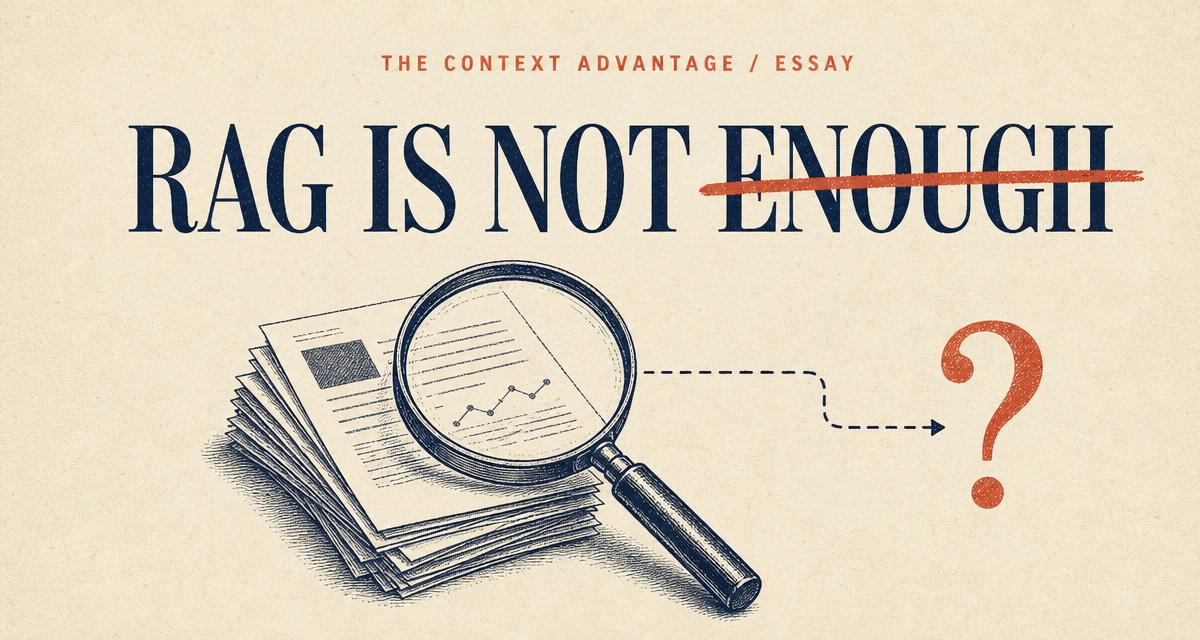
Why RAG Alone Is Not Enough for Enterprise AI
Retrieval helps. Meaning, trusted metrics, and permissions are what make it reliable.
 Career
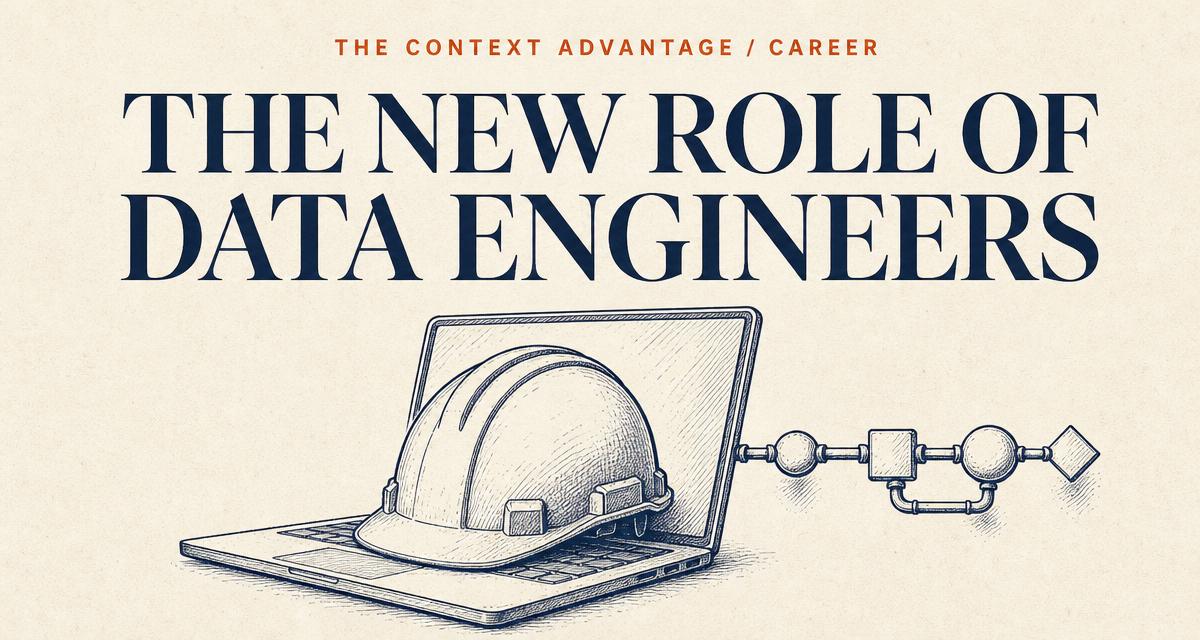
The New Role of Data Engineers in the Agentic Era
Pipelines are still the job. The job is just bigger now.
 Choice
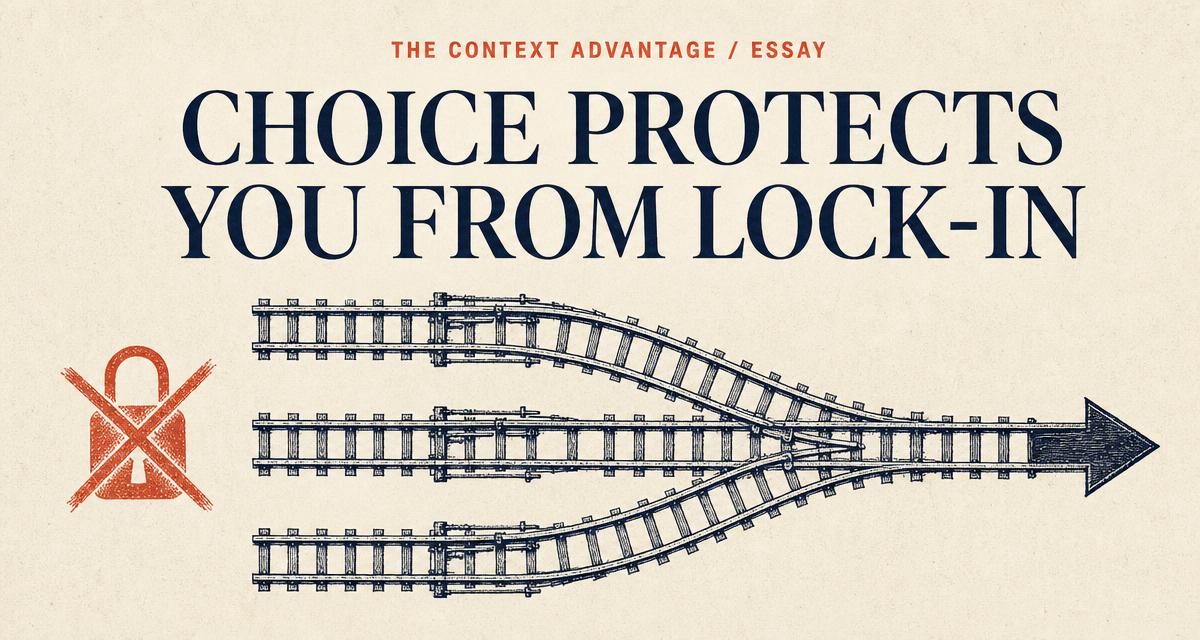
 Is the Best Protection Against AI Lock-In
Yesterday's convenient vendor decision is tomorrow's expensive migration.
 Cost
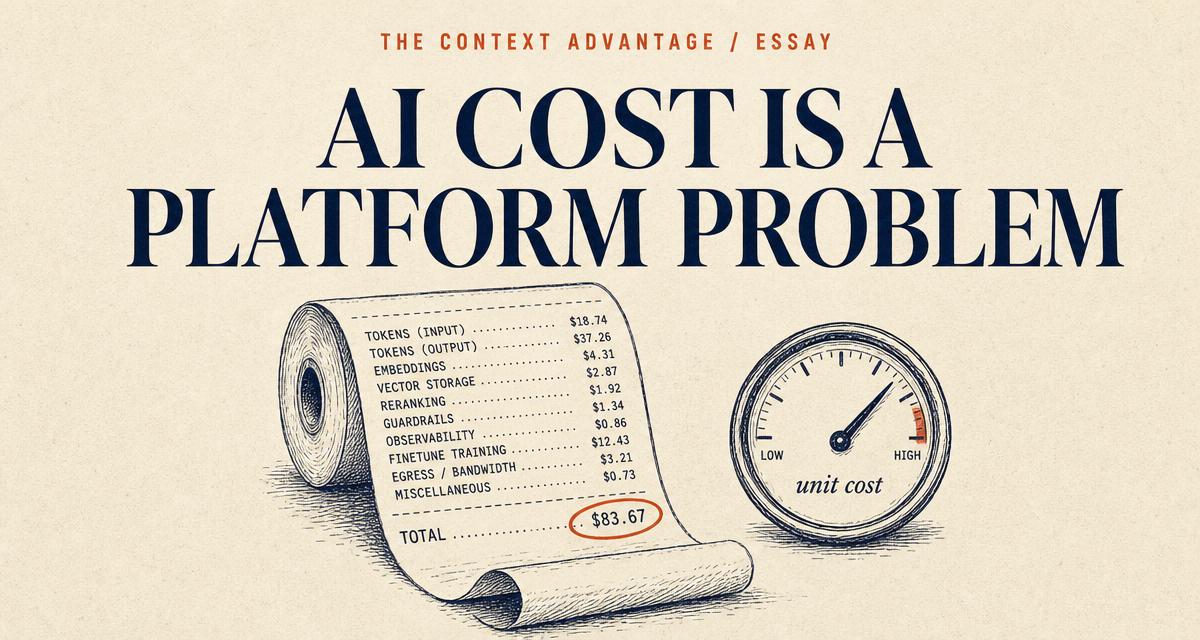
AI Cost Will Become a Data Platform Problem
Token bills do not stay on the AI team's desk. They migrate to yours.
 Control
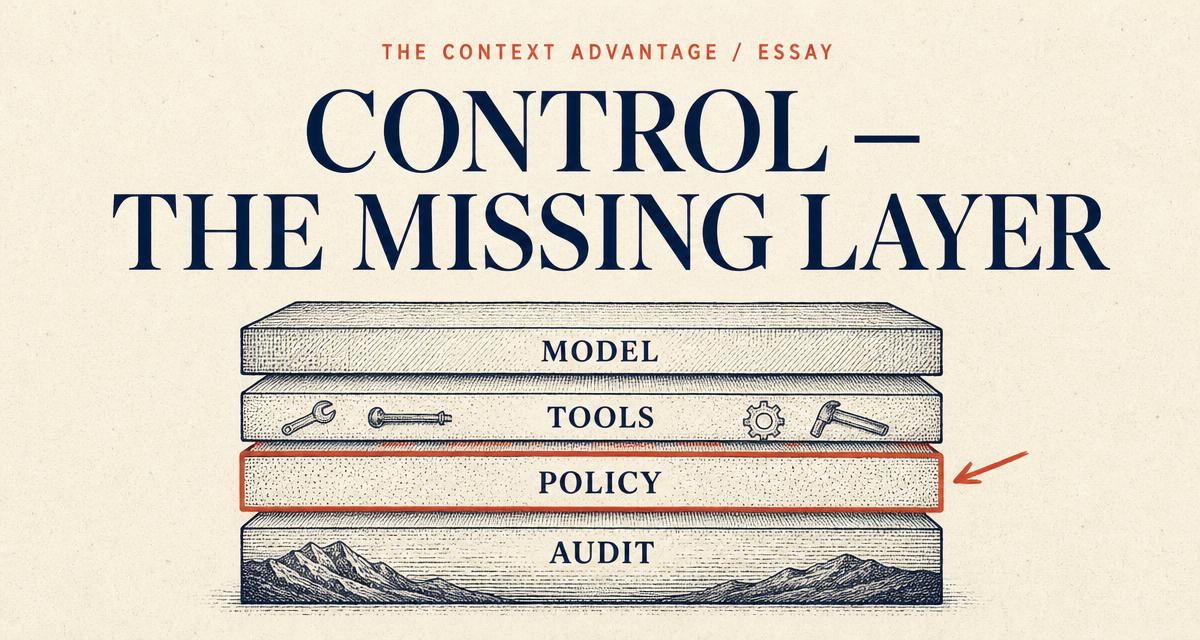
 Is the Missing Layer in AI Agents
Access control was designed for humans. Agents need action control.
 Context
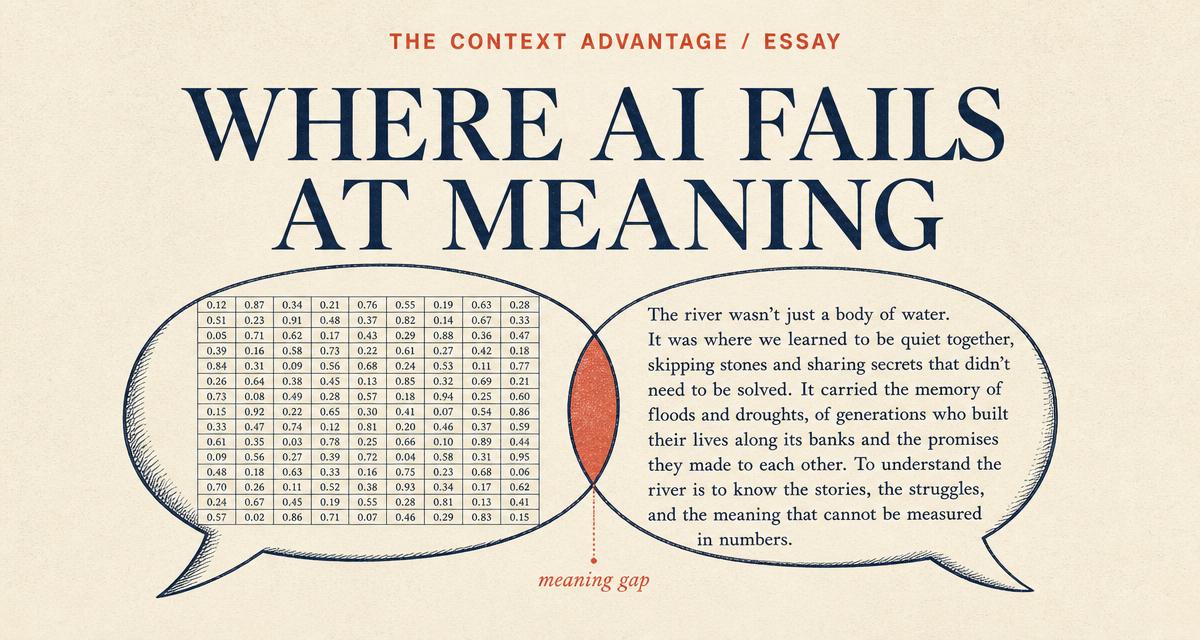
Enterprise AI Does Not Fail at Prompts. It Fails at Meaning.
Prompting is useful. Meaning is what makes the answers trustworthy.
 Context
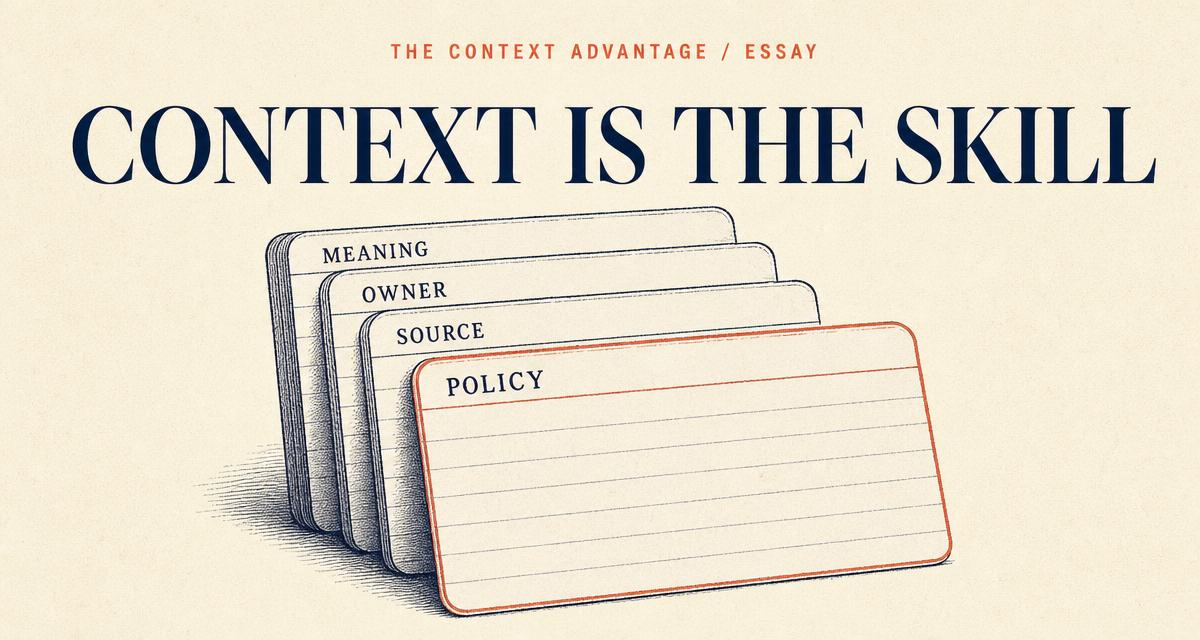
 Is Becoming the Most Important Data Skill
In the agentic era, knowing what the business means beats knowing how the data moves.
 Vision
Why We Built BricksNotes — A Letter to Every Data Professional
A note from the team on why this work matters now.