The first real signal from inside the room
Until this week, everything anyone knew about the Databricks Certified Context Engineer Associate exam came from the official guide. The guide is good. It lists seven domains, publishes weights, names the products, and tells you that code shown in the exam is Python while data manipulation examples may appear in SQL. What a guide cannot tell you is what the room feels like: how long the questions are, how much of the two hours you spend reading rather than deciding, and which kind of thinking the exam actually rewards.
A Databricks partner who sat the beta during Data + AI Summit 2026 has now published that account, and it is worth taking seriously. He has completed seven Databricks certifications, including Data Engineer Professional, which has long been treated as the hardest of the set. His impression of this new exam is that it may be tougher. Not because it plays tricks, but because it asks you to think like somebody designing an agent for a real business, where cost, latency, security, context size, retrieval quality, memory, governance, and answer quality are all live at the same moment.
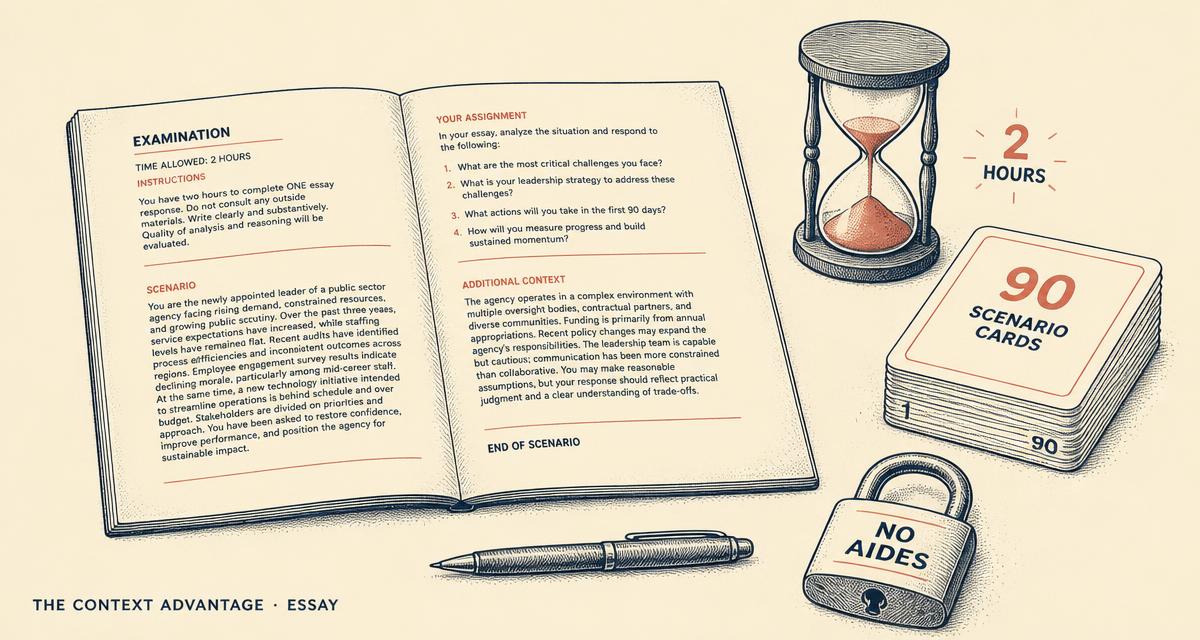
Three format facts stood out. The beta carried approximately ninety multiple choice questions with a one hundred and twenty minute limit. The stems were long, scenario based, and packed with detail. And results were not shown at the end: Databricks expects to notify beta candidates roughly six weeks later, after it validates the item pool. Betas normally carry more items than the released version, so the published forty-five-question, ninety-minute shape is still the number to plan around for the public exam. But the beta shape tells you something the final shape hides, which is how much dense reading this discipline demands of you.
Every question is a tradeoff in disguise
The most useful line in the whole report is this one: many answer choices sound reasonable, and the question is whether the choice is right for the requirement. For one scenario the priority is deterministic, accurate answers from governed data. For another it is latency. For a third it is token cost, because the workflow has become too expensive to run at the volume the business wants. A long-running agent needs persistent state. A customer-facing agent needs hard limits around personal data, permissions, and tool access.
Which means the exam is not really seven separate subject areas. It is one skill, tested seven ways: read the scenario, find the binding constraint, and pick the design that respects it. That is exactly the shape of the framework this book is built on. Chapter 4Chapter 4 · 7 min LockedThe 4 C's FrameworkA simple lens for designing trusted enterprise AI. argues that context engineering is the act of deciding what the model sees, and the four C's — Context, Control, Cost, Choice — exist precisely because those constraints trade against one another. When you cannot name the binding constraint, every option looks defensible.
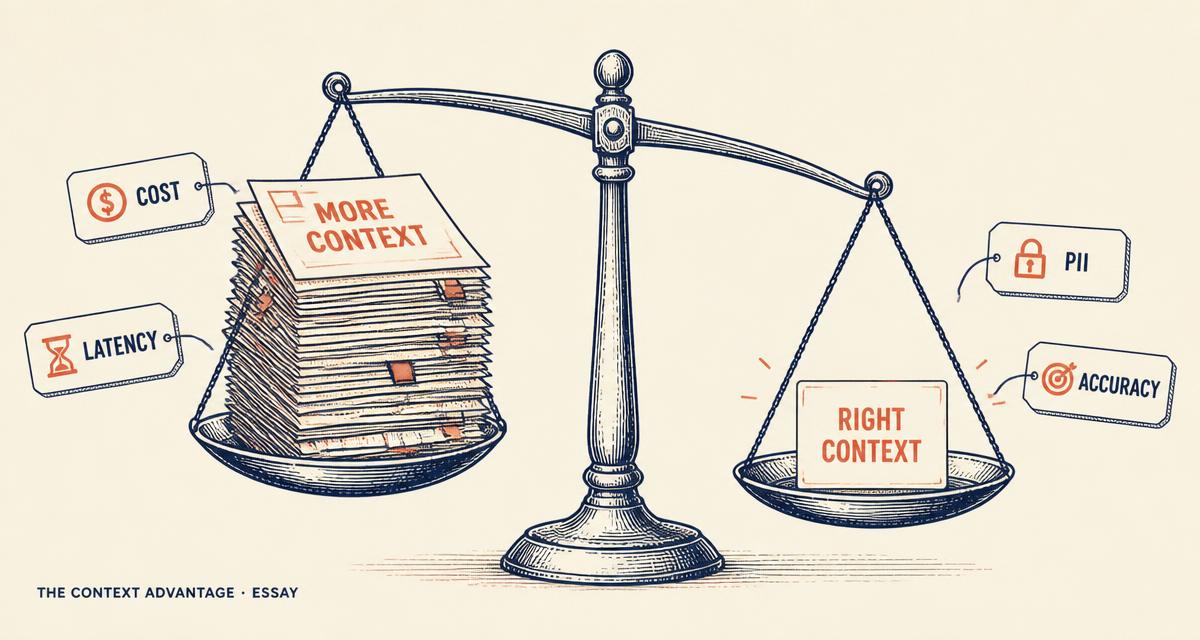
The report also warns against the instinct that ruins most agent builds and most exam attempts: sending more information to the model. More context increases cost, adds latency, introduces conflicting signals, and makes the model less focused. The better answer usually involves selective retrieval, tighter filters, compaction, summarization, memory design, or reducing what the agent is allowed to touch at all. Chapter 36Chapter 36 · 10 min LockedCompaction and the Token BudgetBudget tokens like money, compact history without dropping commitments, and detect degradation before a user does. makes this concrete with token budgets and compaction checkpoints, and Chapter 21Chapter 21 · 6 min LockedQuality, Speed, and Cost TradeoffsHow to balance accuracy, latency, and spend. shows why a bigger window is not the same thing as better context.
Retrieval is graded on relevance, not on plumbing
The candidate is blunt about retrieval: do not study it as the question of how to connect an agent to documents. Study relevance, chunking, metadata filters, freshness, ranking, and source authority. Sometimes retrieving more documents makes the answer worse, because the model receives more unrelated material to reconcile. The exam question is usually about getting the right context, not the maximum amount of it.
This matches what we saw when we built the question bank, and it is the reason we added Chapter 35Chapter 35 · 11 min LockedRetrieval Mechanics: Chunking, Hybrid Search, and RerankingThe engineering layer under every context strategy — chunking, hybrid search, reranking, and how to prove it works. on retrieval mechanics: hybrid search, reranking, chunk boundaries that respect meaning rather than character counts, and the metadata that lets a filter do work a semantic score cannot. Chapter 8Chapter 8 · 8 min LockedFrom Data Catalog to Business MemoryCatalogs describe data. Memory describes meaning. covers grounding and citation discipline, which is what turns a retrieved passage into an answer a business will act on.
One naming update worth noting for anyone studying from older material: the retrieval surface is now described as AI Search in current Databricks language, alongside Genie spaces for governed structured questions. The mechanics are the same ones you already need to reason about, but exam stems use current product naming, and we have updated our retrieval domain description to match.
Memory is state, not chat history
The report separates memory from transcript in the way practitioners eventually learn to. An agent may need to retain task state, prior decisions, user preferences, workflow progress, approvals, evaluation results, and operational history. The study question is not how to append messages. It is when short-term context is sufficient and when persistence across sessions becomes a requirement of the workflow.
Lakebase and MLflow are named explicitly in the certification description for state persistence and for tracing, which tells you the exam expects an architectural answer rather than a conceptual one. Chapter 10Chapter 10 · 9 min LockedInstitutional Memory Is the MoatAs frontier models converge, the durable advantage is the accumulated why — decisions, definition history, and organizational logic. makes the argument that institutional memory is the durable moat, Chapter 11Chapter 11 · 7 min LockedContext Is a Living Layer, Not a DocumentDefinitions drift, macro conditions shift, agents relearn — treat context like code, with ownership, versioning, and continuous review. treats context as a living layer that must be maintained rather than loaded once, and Chapter 12Chapter 12 · 7 min LockedPortable Context: The Open Contract for AgentsContext is your IP — it must move across agents, models, and clouds through an open contract, not sit locked inside one runtime. covers portability, which is the question of whether that memory belongs to you or to a vendor.
Tools, MCP, and the smallest permission that works
Every tool an agent gains is a new control surface and a new security question. The report frames the design rule cleanly: a well-designed agent should not receive broad access when it needs one governed action or one specific data source. Study how MCP connects agents to enterprise tools, then study permissions, scoped access, tool selection, output validation, logging, and policy enforcement around it.
That is the Control pillar of the framework, and it is the part most teams postpone until an incident forces the conversation. Chapter 15Chapter 15 · 6 min LockedGuardrails, Approvals, and Audit TrailsDesigning safe agent behavior in practice. covers tool descriptions as context, Chapter 16Chapter 16 · 5 min LockedTrust Is Designed, Not AssumedHow leaders earn confidence in AI systems. covers action control and approvals, and Chapter 19Chapter 19 · 6 min LockedNot Every Task Needs the Best ModelRouting, cascades, and right-sized intelligence. covers the audit trail that makes an agent decision reviewable after the fact.
Governance is not a separate domain. It is inside every answer.
This is the observation most study plans will underweight. Governance in this exam is not a section you can revise on the last evening. Unity Catalog metadata, data quality signals, personal data handling, permissions, and policy all shape what an agent is permitted to use as context in the first place. Two users asking the same question should receive answers bounded by their own access rights, and an exam scenario set in financial services, healthcare, or the public sector is usually testing whether you noticed that.
The practical version of this is the one we argue in Chapter 29Chapter 29 · 6 min LockedCareer Roadmap for the Agentic EraLearning paths for beginners, intermediates, and senior professionals.: the governed path has to be the easy path, or people route around it. Chapter 22Chapter 22 · 5 min LockedThe Danger of AI Lock-InHow yesterday's choices limit tomorrow's options. covers the metadata and quality signals that let a retrieval layer refuse to serve stale or unapproved material, which is a far stronger control than a warning in a system prompt.
Multi-agent work fails at the seams
When several agents cooperate, context duplicates, drifts, and becomes expensive quickly. Long-horizon workflows need a way to carry useful state forward without replaying the entire history into every model call. The report advises studying how to divide responsibilities, how to hold task state, how to share only the relevant slice, and how to keep the whole workflow traceable.
That is the handoff problem, and it is where most production systems lose accuracy without anyone noticing, because each agent looks correct in isolation. Chapter 30Chapter 30 · 7 min LockedThe Trusted Agent ArchitectureA nine-step end-to-end reference architecture for production agents. covers supervisor patterns and isolation boundaries, Chapter 34Chapter 34 · 7 min LockedDesigning Multi-Agent Systems That Actually WorkWhen one agent is not enough — and how to make many cooperate without chaos. covers long-running task state, and Chapter 27Chapter 27 · 6 min LockedSkills That Will Matter More Than ToolsDurable skills that outlast every framework, model, and platform. covers why a fast agent that loses context is worse than a slower agent that keeps it.
Evaluation is the part that separates candidates
The certification explicitly includes empirical evaluation of context engineering decisions, and the report treats it as a major preparation area rather than an afterthought. Do not assume a larger prompt, more retrieved documents, or more tools improved anything. Measure accuracy, relevance, latency, token usage, cost, safety, and task completion, then decide whether the change earned its place.
We wrote Chapter 23Chapter 23 · 5 min LockedOpen Formats, Open Interfaces, Open ThinkingWhy openness is a strategic moat. around this exact discipline, and it is the reason the essay Evals Are the New Dashboards exists. If you can only prepare one habit before sitting this exam, prepare the habit of asking what evidence would tell you a context change helped.
What we changed in the free practice exam
We built the practice exam against the published guide, so its default shape stays at forty-five questions in ninety minutes. The beta report gave us three concrete improvements, and all three are live now.
First, an endurance mode. The exam page now offers a ninety-question, one hundred and twenty minute sitting drawn across all seven domains at double the normal weighting. Nothing in it is harder than the standard mock. The point is the reading load: two hours of long scenario stems is a different experience from ninety minutes, and the failure mode candidates describe is running out of attention rather than running out of knowledge.
Second, format truth. The exam guide answers on the practice page now state the beta shape, the live proctoring, the absence of test aides, the roughly six week result delay, and the fact that code appears in Python with SQL in data manipulation examples. Anyone who signs up for a beta seat should know they will leave the room without a score.
Third, naming and emphasis. The retrieval domain description now leads with AI Search alongside Genie, and calls out reranking, freshness, and source authority explicitly, because those are the levers the report says the scenarios turn on. Governance and evaluation questions already ran through every domain in our bank, which the report validates as the right structure rather than a separate section.
How I would prepare, in order
Start with the official exam guide as a checklist, because it is the only authoritative statement of scope. Then work the practice bank domain by domain in practice mode, where the explanation appears the moment you answer, and read the linked chapter for anything you get wrong for a reason you cannot articulate. Do not move on from a wrong answer you understood only after reading the explanation.
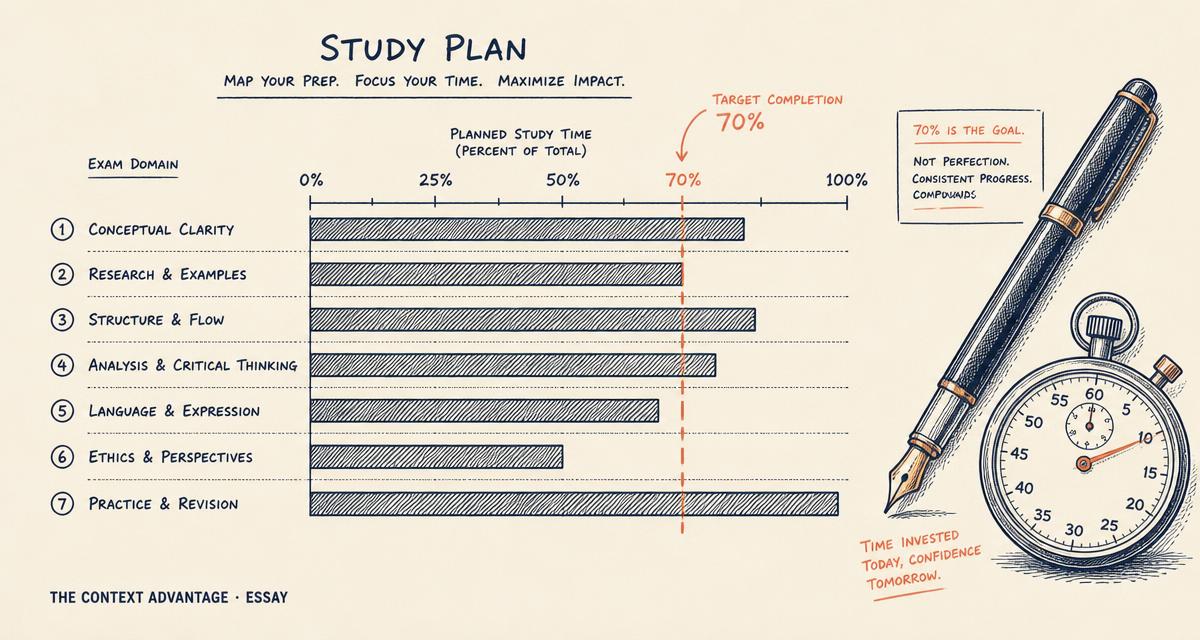
Two weeks out, take the forty-five-question timed mock cold and treat the domain breakdown as your syllabus. Anything under seventy percent gets its chapters and a second pass. One week out, run the ninety-question endurance mock once, in a single sitting, with no phone and no notes, purely to calibrate how you read under fatigue. Most people discover they need to change their reading strategy, not their study plan.
On the day, read each scenario once for the situation, then read the question for what it is actually asking, then hunt for the binding constraint. Cost? Latency? Determinism? Personal data? Context limits? Coordination? Retrieval quality? Once you name the constraint, most of the plausible-sounding options fall away on their own.
Why the preparation is worth more than the badge
The candidate makes one more point that deserves the last word: even if you never sit the exam, the preparation is useful. Most organizations are still shipping basic chat experiences. Production agents need reliable enterprise context, managed retrieval, deliberate memory, scoped tools, controlled token spend, real governance, and a way to know when an answer is uncertain.
That is a job description, and it is now a certified one. The exam turned an informal skill into a public standard in about a year. Whether or not you want the certificate, the standard is now the bar your agent work will be measured against inside your own company.
"The correct answer is often not to send more information to the model. That single sentence is the whole exam, and the whole discipline."
Try this at work
- Name the binding constraint in every scenario before you look at the options.
- Practice reducing context rather than adding it: filters, reranking, compaction, summarization, scoped tools.
- Study retrieval as relevance, freshness, and authority — not as document plumbing.
- Separate memory from transcript, and know when persistence across sessions is a requirement.
- Give every tool the smallest permission that completes the task, and log the action.
- Treat Unity Catalog metadata, quality signals, and personal data handling as part of every context decision.
- For multi-agent flows, carry a compact state handoff instead of replaying the whole history.
- For every context change, state the metric that would prove it helped before you ship it.
- Rehearse the reading load once: ninety questions in one hundred and twenty minutes, no notes.
The seven exam domains map to the chapters this book was already built around. Read the retrieval, memory, tools, compaction, and evaluation chapters, then take the free practice exam and let your domain scores pick your next chapter.
Explore the book →If somebody handed you one of your production agents and asked which single constraint its context design is optimized for, could you answer in one sentence?