1. The upgrade that everyone wanted
Here is an illustrative composite, not a single real team. A provider announces a new model version. The benchmarks are better, the price is lower, and the old version has a retirement date. The team changes one configuration value, runs a few sample questions, and ships it on a Friday because the answers look sharper.
By Monday, three things have happened. The agent now calls the search tool twice as often, so the bill went up instead of down. A downstream job that parsed the agent's output fails because the new model wraps its JSON in a short explanation. And support reports that the agent has started refusing a common, perfectly legitimate request about customer refunds.
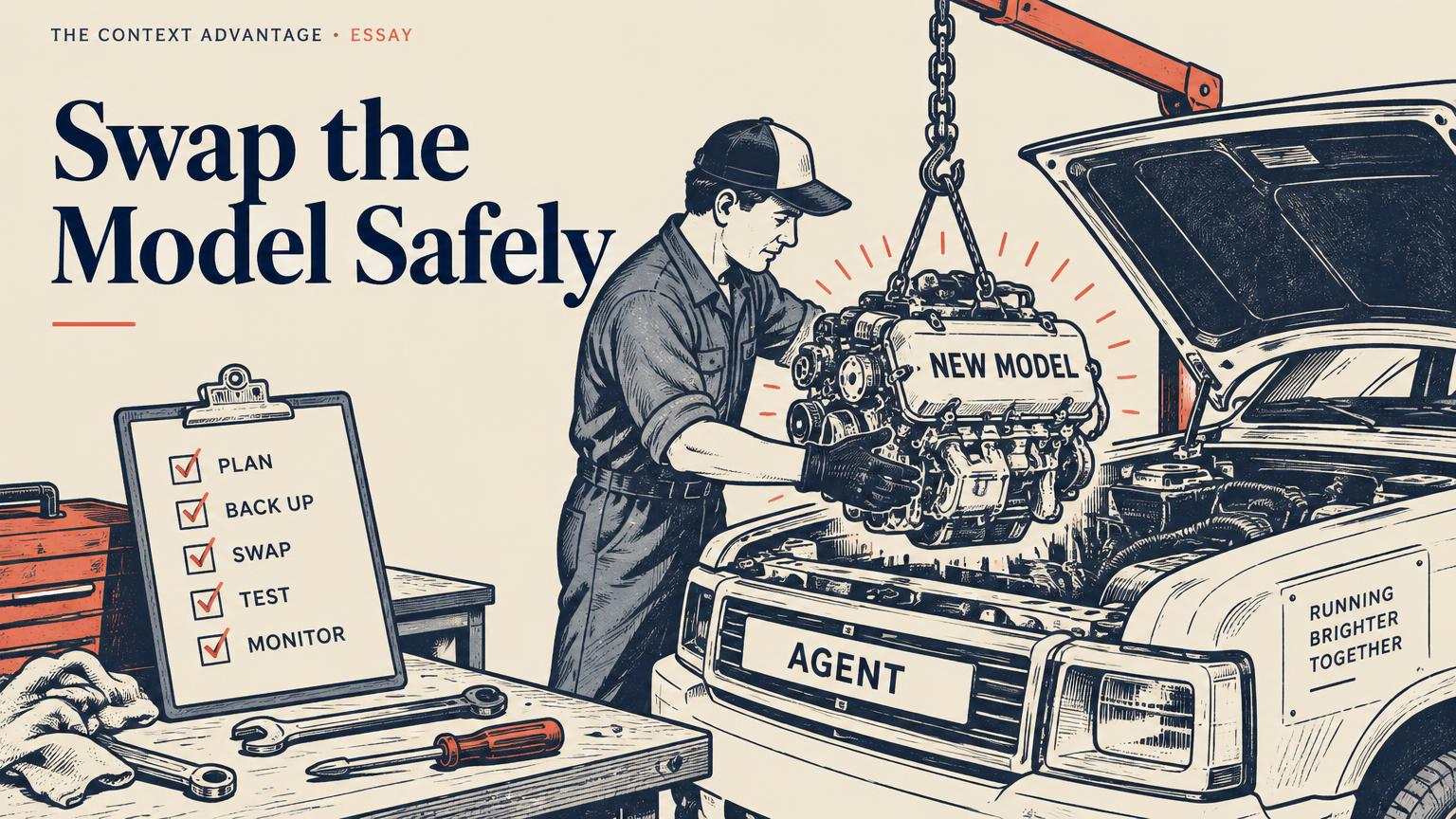
None of this means the new model is worse. It means the new model is different, and the agent had been tuned, mostly by accident, to the old model's habits. This is the hidden cost of model choice: the option to switch exists on paper long before it exists in practice.
2. Better on benchmarks, different in production
Public benchmarks measure general ability. Your agent depends on specific behaviors: how the model reads your instructions, which tool it picks for an ambiguous request, how strictly it follows an output format, when it decides to stop, and what it declines to do. A model can improve on every benchmark and still change all of those.
The most common breakages are predictable. Output format drift, where structured answers gain extra text or change field order. Tool selection drift, where the model prefers different tools or calls them more often. Instruction weighting drift, where a rule that was always followed is now treated as a suggestion. Refusal drift, in both directions. And cost and latency drift, because a model that reasons more or writes longer answers can erase a lower token price.
Chapter 19 makes the point that model choice is a portfolio decision, not a loyalty decision. Upgrades are where that idea gets tested. A portfolio only works if each position can be changed without collapsing the rest.
3. Prompts are quietly fitted to one model
Most production prompts are the result of months of small fixes. Someone added a sentence because the model kept forgetting the currency. Someone repeated a rule in capital letters because it was ignored once. Someone added an example because a particular output was wrong. Each fix was reasonable. Together they form a prompt that is shaped around one model's weaknesses.
A new model has different weaknesses. Some of those old fixes become unnecessary, some become harmful, and the new model has failure modes nobody has patched yet. This is why a prompt copied unchanged to a new model often performs worse than a simpler prompt written fresh.
The durable answer is to move meaning out of prompt tricks and into context the organization owns: definitions, policies, examples, and tool contracts that any capable model can read. That is the argument of Prompt Engineering vs Context Engineering and of Chapter 3. Context that is explicit travels between models. Context that is hidden in prompt workarounds does not.
4. Why this is a Choice problem, not a QA problem
It is tempting to treat upgrade breakage as a testing issue. It is bigger than that. If every upgrade is painful, teams stop upgrading. They stay on an old version until it is retired, then migrate in a hurry. Or they avoid evaluating other providers at all, because a switch looks like a quarter of work. The organization still has choice in theory, but it has lost it in practice.
That is the quiet form of lock-in described in The Exit Test and Open Weights Are Not Freedom. You are locked in not because a contract forbids leaving, but because leaving is too risky to attempt. Every model version change, even with the same vendor, is a small exit test.
Teams that make switching routine get a compounding benefit. They can adopt better models sooner, negotiate from a stronger position, route work to cheaper models when quality allows, and survive a retirement notice without panic. Chapter 34 calls this portable context. The upgrade process is where portability is either proven or exposed.
5. Build the evaluation set before you need it
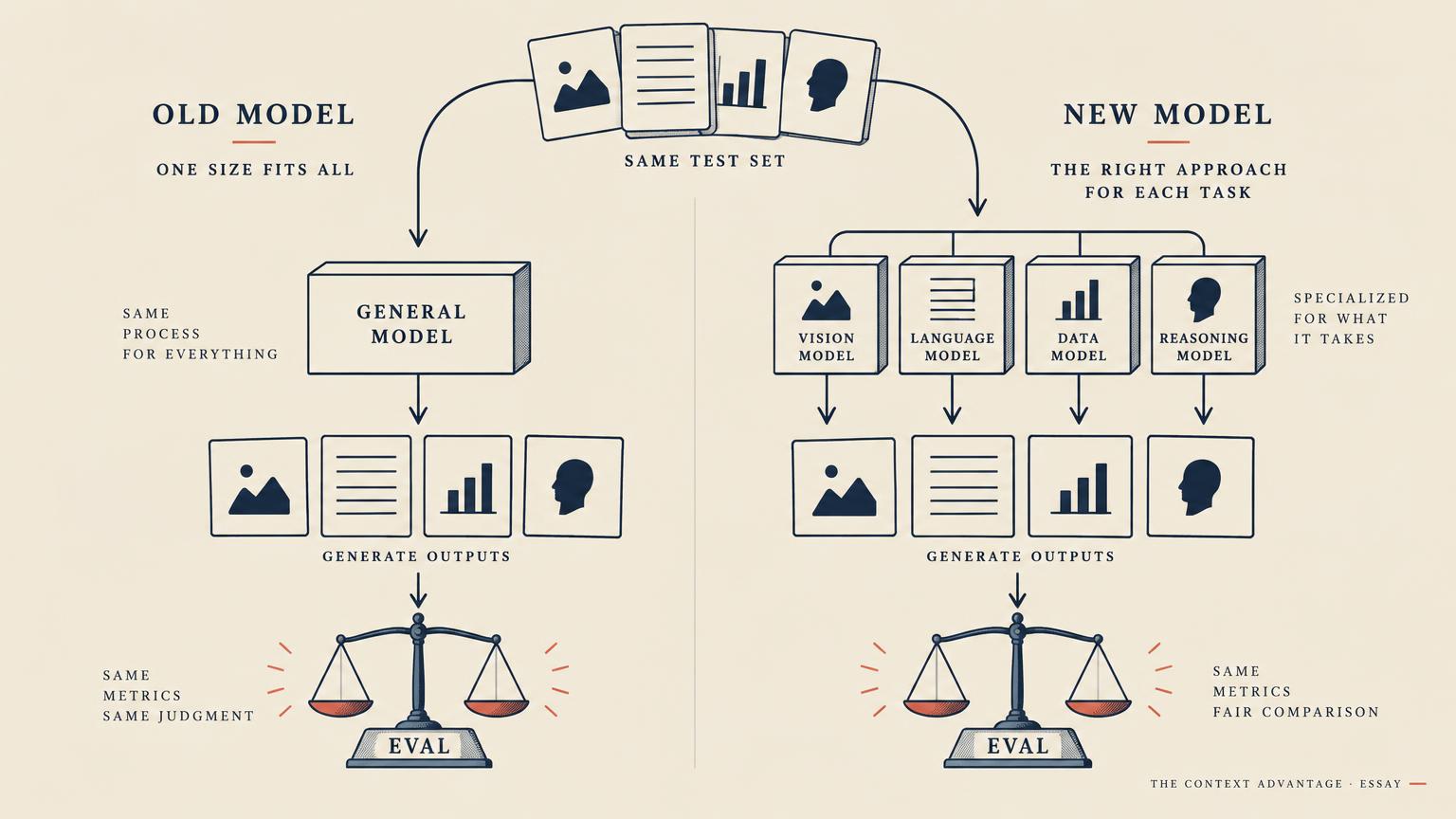
You cannot judge an upgrade with a handful of sample questions read by eye. You need a fixed evaluation set that represents real work: common requests, known hard cases, past incidents, edge cases around permissions, and examples where the right answer is to refuse or ask for clarification. Each case should have a clear expected outcome, not just a reference answer.
Run the same set through the current model and the candidate model with the same context and tools. Compare task success, format validity, tool calls per task, refusals, latency, and cost per resolved task. The goal is not a single score. It is a list of exactly what changed, so a person can decide whether each change is acceptable.
Chapter 21 and The Evaluation Gap explain why demos pass and production fails. An upgrade evaluation set is the most practical place to close that gap, because it gives the team a reason to maintain evals every month, not only at launch.
6. The six-step playbook for switching models safely
First, pin versions. Never point production at a moving alias such as a latest tag. Name the exact model version in configuration, so a change is always a deliberate decision with a record.
Second, put an adapter between the agent and the model. Requests and responses should pass through one layer that handles provider differences, validates output formats, and records usage. The Model Router describes this layer in detail. Without it, a model change touches every part of the code.
Third, run the evaluation set offline and review the differences, not only the totals. Fix prompts and context where the new model needs it, and remove old workarounds that are no longer needed.
Fourth, shadow the new model on live traffic. Send real requests to both models, serve only the current model's answer, and compare results. Shadow traffic finds the cases your evaluation set missed.
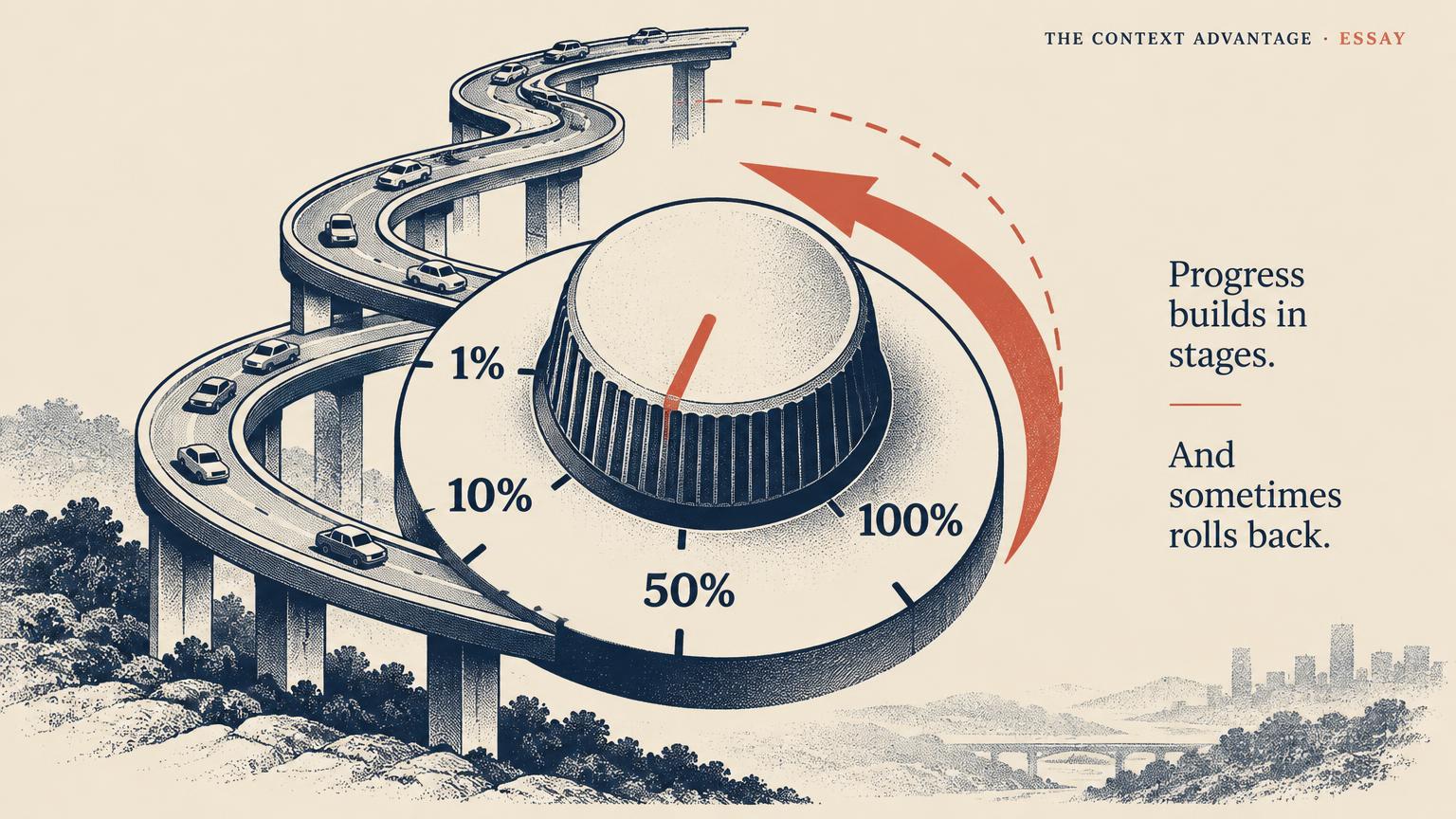
Fifth, roll out in stages, for example a small percentage of traffic, then more, with clear thresholds for quality, cost, and latency at each stage. Sixth, keep rollback instant. The previous version stays configured and ready until the new one has run cleanly for a defined period. The Circuit Breaker Pattern for AI Agents shows how to make that fallback automatic.
7. Control and cost belong in the same review
An upgrade is also a Control event. A new model may follow permission instructions differently, reveal more in its explanations, or take actions an older model would have avoided. Rerun your safety and permission cases with every upgrade, and keep the action gates from The Blast Radius in place regardless of how capable the model appears.
It is also a Cost event. Lower prices per token mean little if the new model writes twice as much, reasons longer, or calls more tools. Measure cost per resolved task before and after, as described in Every Agent Needs a P&L and Chapter 18.
This is the core idea of Chapter 30: Context, Control, Cost, and Choice are one architecture. An upgrade process that checks only answer quality will keep surprising the people responsible for security and budget.
8. Who owns the upgrade
Model upgrades fail most often when nobody owns them. The platform team changes the version, the product team notices the behavior change, and the data team finds the broken downstream job. Each sees one part of the problem.
The context engineer is well placed to own the whole process, because the work is mostly about context: the evaluation set, the instructions, the tool contracts, and the definitions the model relies on. The Agent Org Chart argues that every important piece of context needs a named owner. The model version is one of those pieces.
If you are preparing for the Databricks Context Engineer Associate practice exam, this reasoning appears throughout the evaluation and architecture questions: judging a change by controlled comparison, not by impressions.
9. The ten-point model upgrade checklist
Use this list before any model version change reaches production.
1. Production uses a pinned model version, never a moving alias.
2. All model calls pass through one adapter layer you control.
3. A maintained evaluation set covers common tasks, hard cases, past incidents, and refusals.
4. Both models are compared on the same context, tools, and test cases.
5. Differences are reviewed case by case, not only as a total score.
6. Output formats are validated automatically before downstream systems use them.
7. Permission and safety cases are rerun with every upgrade.
8. Cost per resolved task and latency are measured before and after.
9. The rollout is staged, with shadow traffic and thresholds at each stage.
10. Rollback to the previous version is instant and tested.
If most of these are true, model choice stops being a slogan and becomes an operation your team can run any week. The full framework for Choice, and how it connects to Context, Control, and Cost, is in the book.
"You do not own the choice of model until you can change it on a Tuesday afternoon without a war room."